Question of Privilege
June 10, 1993
Interference with Members—intimidation and immunity: alleged intimidation of Member; service of legal documents within parliamentary precincts
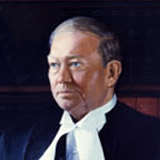
Hon. John Fraser
Speaker of the House
Ruling Text
Madam Deputy Speaker (Mrs. Champagne):
I am now ready to rule on the matter raised by the honourable Member for Humber—St. Barbe—Baie Verte on Friday June 4, 1993. I was hoping the honourable Member would be in the House. He was told but, unfortunately, he was not here yesterday, and he is not here today.
In his submission, the honourable Member stated that in one of the lobbies just before Question Period he received a letter from the solicitors of Mr. Tim Ralfe giving notice of their intention to reserve the right to bring action for libel against the honourable Member. The letter, which I have examined, demands that a full and unconditional apology and retraction be delivered by the honourable Member for a verbal and written statement about Mr. Ralfe which the letter claims was made by the honourable Member outside the precinct of Parliament on June 3, 1993. It is the contention of the honourable Member for Humber—St. Barbe—Baie Verte that the receipt of this letter in the precincts of the House constitutes a question of privilege. He has argued that the action of Mr. Ralfe and his solicitors and the apparent familiarity of the Government House leader with the letter constitutes an attempt to intimidate him and prevent him from performing his duties.
I have reviewed the situation re-examining what was said during Question Period and during the discussion of this matter. I would like to take this opportunity to thank those honourable Members who made interventions.
As the honourable Member for Glengarry—Prescott—Russell pointed out, there are two questions to be answered to determine if this should be considered a prima facie question of privilege. Has there been an attempt to intimidate a Member in the exercise of his duties? Were legal documents served or delivered in the precincts of Parliament, in particular one of the lobbies, without the Speaker's express permission?
Joseph Maingot in [the First Edition of]
Parliamentary Privilege in Canada, page 96, states:
While it is clear that the Member is afforded absolute privilege in law for acts done and words said during a parliamentary proceeding, he speaks outside the House at his peril without the protection of parliamentary privilege. In these same circumstances, however, he is afforded the protection of the common law like anyone else to the extent that it would apply.
While it is the Speaker's duty to maintain decorum in the House, the Speaker, as servant of the House, does not have the power to instigate disciplinary action against a Member for actions taken or words spoken outside the Chamber of the House. What a Member says outside the House about anyone is subject to the laws of the land relating to libel or slander as it would be for any other Canadian—if indeed the comments are actionable. What members say in the Chamber, however, is protected by privilege. Thus, if the situation is as described in the letter to the honourable Member for Humber—St. Barbe—Baie Verte, then this cannot be considered a question of privilege and it is therefore not up to the Speaker to intervene.
There is a long-standing tradition that process cannot be served in the precincts of the House of Commons. The Chair has always maintained that such service of process would be improper without the permission of the Speaker. As regards civil matters, this was forcefully reiterated in a Speaker's ruling of May 19, 1989.
Having carefully examined the letter received by the honourable Member from the solicitors of Mr. Ralfe, the Chair must conclude that it does not fall under the definition of process implicit in the notion of which is issuance from a court of law. It is clear from the text of the letter that no legal proceedings have been begun and delivery of the letter was not a service of process. The letter could just as well have been sent through the mails as delivered by hand. There was no requirement to inform the Speaker, nor are there any grounds for the Chair to intervene in this matter.
For these reasons this situation does not meet the criteria of a prima facie question of privilege. I thank the honourable Member.
F0122-e 34-3 1993-06-10.
[1]
Debates, June 4, 1993, pp. 20375-7.
Edit Metadata
Holding
"The receipt of a solicitor's letter threatening libel for statements made outside the House does not constitute a prima facie question of privilege, as parliamentary privilege does not extend outside the Chamber, and the letter was not formal legal process improperly served."
AI Summary
The Speaker denied a question of privilege regarding a libel threat received in the lobby, ruling that parliamentary privilege does not protect statements made outside the House and the letter was not improper service of legal process.
AI Analysis
- Outcome
- Denied
- Tone
- Educational
- Procedural Stage
- Routine Proceedings
- Significance
Low
High