Point of Order
February 15, 1993
Amendment: notice sent by fax; deadline set down in the Standing Orders; signature of a Member
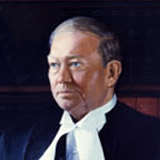
Hon. John Fraser
Speaker of the House
Ruling Text
The Speaker:
Last Friday, February 12, 1993, the honourable Member for Glengarry—Prescott—Russell raised a point of order concerning the notice of a report stage motion for Bill C-76, An Act to amend certain statutes to implement certain fiscal provisions of the budget tabled in Parliament on February 25, 1992, which he stated had been sent by fax by the honourable Member for Ottawa Centre to the Journals Branch prior to the close of the notice period of 6 p.m. on Thursday, February 11. The Deputy Speaker took the matter under consideration and promised to return to the House at the earliest possible opportunity.
The Chair has now had the opportunity to look into the matter. The Member raised two issues in his point of order. First, he stated that the motion had been sent prior to the 6 p.m. closing, and second, he argued that an original signed copy of the document should not be necessary and that a signed notice received by fax should be acceptable.
After carefully reviewing the events, I have determined that the motion submitted in the name of the honourable Member for Ottawa Centre was received by fax at the Journals Branch at 6:02 p.m. on Thursday, February 11, as clearly indicated on the fax copy itself.
The Member's office was immediately notified that the motions were received after 6 p.m. and that an original signature was required and therefore on two counts was not receivable. In addition, the Member's office was also advised that there was some question as to the form of the motions themselves. However, based solely on the late receipt, there is no doubt that the motions did not meet the requirements of the Standing Orders for notice.
There is a long-standing tradition of this House that original signatures by a Member are required for all notices and the advent of new technology has not altered this practice. This practice has existed in order to protect members from any unauthorized use of their names.
The House may wish to consider through appropriate channels whether it wishes to amend this practice to meet the demands of new technology. Meanwhile the current practice must prevail, and all notices submitted for the Notice Paper and received by fax, which members know are really photocopies, are accepted as advance notice and cannot be considered official unless supported by the Member's original signature on the document in question and which must be received shortly thereafter.
Editor's Note In response to this decision, Mr. Boudria asked the Speaker to rule on whether the original copy signed by the Member also had to be received by the Journals Branch before the deadline set down in the Standing Orders. The Speaker clarified his decision, as reproduced in extenso below.
The Speaker:
I thank the honourable Member. I regret that this confusion has existed. I hope that it will not exist any further. I am very pleased to make it very clear to all honourable Members that unless we change the rules, the signed copy must be received prior to the close-off time.
It means that in practice, if honourable Members wish to notify the table early by a fax, it is probably helpful. However, in order to come in within the prescribed time under the rules it will be necessary for a signed copy to be there by six o'clock.
F0406-e 34-3 1993-02-15.
[1]
Debates, February 12, 1993, pp. 15827-8.
Edit Metadata
Holding
"A motion submitted by fax was non-receivable because it was received after the 6 p.m. deadline, and official notice requires the Member's original signature to be physically received by the Journals Branch before the close-off time."
AI Summary
The Speaker ruled that a faxed motion was non-receivable because it was received after the 6 p.m. deadline and official notice requires the Member's original signature to be received by the prescribed time.
AI Analysis
- Outcome
- Denied
- Tone
- Educational
- Procedural Stage
- Points of Order/Rulings
- Significance
Low
High