Ruling
December 11, 1992
Member's right to sit in the House of Commons: inquiry as to course of action to follow upon announcement of conviction of a Member of Parliament on charges of fraud
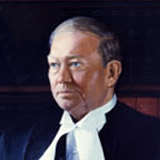
Hon. John Fraser
Speaker of the House
Ruling Text
The Speaker:
The honourable Member for Kamloops has raised a matter which of course is of importance to this House. The right honourable minister has responded on the government side and the honourable Member for Cape Breton—East Richmond on behalf of Her Majesty's Loyal Opposition.
The matter raised is the announcement of the conviction of a Member of Parliament for certain offenses.
There is a convention which I expect would be followed. That is that the court will inform the Chair officially of what has transpired. I do not anticipate receiving that this morning or maybe not even for some days.
The other matter referred to is the question of an appeal. I am not in a position, nor I suppose are honourable colleagues, to know whether an appeal would be taken. I think we should look carefully at that.
Again, we do not know what is likely to transpire at the sentencing or what arguments may be used by the defence at that time, all of which would affect whatever action this place might ultimately take.
We had a matter like this some years ago. Honourable Members will remember that I took the matter under advisement to consider my position and to consider what was appropriate under the circumstances. As it turned out, the matter was resolved without the necessity of the Chair having to make any ruling at all.
Editor's Note On May 23, 1989, Mr. Richard Grisé (Chambly) pleaded guilty to and was convicted of various charges of fraud and breach of trust. On May 25, Mr. Svend Robinson (Burnaby—Kingsway) rose on a question of privilege to argue that Mr. Grisé should be expelled from the House of Commons since his actions constituted a contempt of the House. The Hon. Herb Gray (Windsor West) spoke in support of that argument while the Hon. Doug Lewis (Minister of Justice and Attorney General of Canada) argued that the question of privilege had been raised prematurely, since either Mr. Grisé or the Crown could still appeal the terms of probation or the fine. The Chair noted that while it had anticipated and already considered many of the arguments presented, it was appropriate under the circumstances to reserve on the matter.
[2]
On May 30, 1989, the Speaker announced a vacancy in the electoral district of Chambly and read out Mr. Grisé's letter of resignation to the House [3].
However, the honourable Member for Kamloops has, as he said, brought this matter to the attention of the House at the first possible opportunity. If I understood him correctly, he is not suggesting that the House should take any sudden action today, but when it is appropriate under all the circumstances.
I will take the application of the honourable Member under advisement. As soon as I am in a position to advise the House further I shall do so.
Postscript The matter was not raised in the House again.
F0133-e 34-3 1992-12-11.
[1]
Debates, December 11, 1992, pp. 15083-4.
[2]
Debates, May 25, 1989, pp.
2119 - 29.
[3]
Debates, May 30, 1989, p. 2321.
Edit Metadata
Holding
"The application regarding the convicted Member's status is taken under advisement pending official court notification, sentencing, and resolution of any potential appeal."
AI Summary
The Speaker took under advisement the question of a convicted MP's status, ruling that the House must wait for official court notification and resolution of appeals or sentencing before taking any action.
AI Analysis
- Outcome
- Taken under advisement
- Tone
- Neutral
- Procedural Stage
- Routine Proceedings
- Significance
Low
High