Point of Order
December 8, 1992
Motions: statutory order; notice of motion ultra vires; Speaker does not rule on legal matters
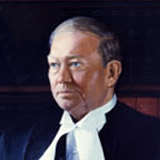
Hon. John Fraser
Speaker of the House
Ruling Text
The Speaker:
I thank both the honourable Member for Cape Breton—East Richmond and the honourable Parliamentary Secretary.
I am going to remove the Chair from the position in which the Chair finds itself by reminding honourable Members that the Speaker has traditionally never been granted the authority to rule on whether or not a bill introduced into the House of Commons or an amendment introduced into the House of Commons is ultra vires. That is a matter for the courts. As a consequence, I must stay with that position.
I listened carefully to the honourable Parliamentary Secretary who I think with some ingenuity was suggesting that if I ruled otherwise I was implicitly supporting an amendment which might or might not be ultra vires. I certainly respect the honourable Parliamentary Secretary's ingenuity in putting it that way.
However, I think I must remain with the long tradition which has been supported by many rulings that it is not the place of the Chair to rule on whether or not a bill or as I said earlier, an amendment to a bill, is ultra vires or otherwise.
I would point out that if I were to rule otherwise we could be in the position where any bill that the Government introduces could be challenged by the opposition or by members of the Government as to whether or not it is ultra vires and that would put the Speaker really in the position of the court and beyond the jurisdiction that was ever envisaged for the Speaker.
The consequence of that is that we are in a position where a motion has been filed. We are bound by a statute which says: "Where a motion for the consideration of a House of Parliament is filed in accordance with subsection 2, that House"—in this case that is this House—"shall not later than the sixth sitting day of that House following the filing of the motion take up and consider the motion unless a motion of the like effect has earlier been taken up and is being considered in the other House", which is not the case.
That is the position we are in. It is up to the House to decide what it is going to do between now and the expiry of the six days which is mentioned in the Bill. We are, of course, bound by that.
I think that is the best I can do to assist the House at this time on this matter.
Postscript Debate on the statutory order took place later that day. The motion was negatived on division.
[6]
F0408-e 34-3 1992-12-08.
[1]
Journals, September 8, 1992, p. 1938.
[2]
Order Paper and Notice Paper, December 3, 1992, pp. 15 and XI.
[3]
Order Paper and Notice Paper, December 3, 1992, pp. 15 and XI.
[4]
Debates, December 8, 1992, pp. 14808-9.
[5]
Debates, December 8, 1992, pp. 14862-3.
[6]
Debates, December 8, 1992, pp. 14873 - 82.
Edit Metadata
Holding
"The Chair will not rule on whether a bill or amendment is ultra vires, as that is a judicial matter outside the Speaker's jurisdiction."
AI Summary
The Speaker denied a request to rule on the ultra vires nature of a bill, affirming that determining legality is solely the jurisdiction of the courts, not the Chair.
AI Analysis
- Outcome
- Denied
- Tone
- Educational
- Procedural Stage
- Government Orders
- Significance
Low
High