Question of Privilege
December 4, 1992
Intimidation of witnesses; protection of witnesses; alleged breach of Members' privileges; matter involving a sub-committee having broken off its proceedings; prima facie question of privilege
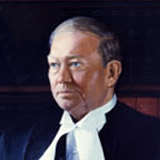
Hon. John Fraser
Speaker of the House
Ruling Text
Mr. Speaker:
First of all I thank the honourable Member for Glengarry Prescott-Russell for bringing this matter to the House, the honourable Member for Victoria who has made a helpful intervention, and the Parliamentary Secretary on behalf of the Government.
Some mention has been made that this matter arose in a committee and honourable Members will have heard me say many times that usually matters should be put back to committee. My own feeling is that under the circumstances which have been explained to me that is not the convenient or appropriate thing to do at this time.
I have listened carefully to what was said. I think this is an appropriate case for the Chair to rule that there is a prima facie case for privilege. I would ask the honourable Member for Glengarry—Prescott—Russell to move his motion.
Postscript The question on the motion was put immediately and adopted without debate. Accordingly, it was ordered, That the matter of the threats by Ms. Kelly Crichton against Mrs. Sheryl Eckstein, a witness before a parliamentary committee, be referred to the Standing Committee on House Management.
The Standing Committee on House Management tabled its Sixty-Fifth Report on February 18, 1993. Having reviewed the issue and having called as witnesses Mr. Boudria, Mrs. Eckstein and Ms. Crichton, the Committee concluded that there was not sufficient evidence that intimidation of a witness had occurred to justify finding a contempt of Parliament. The Committee did comment, however, that Ms. Crichton and the CBC "may have been over-zealous" in asserting concerns about journalistic integrity. The Committee suggested that Ms. Crichton and the CBC were unaware of parliamentary protection for committee witnesses and that this lack of knowledge may have influenced their actions. The Committee also reaffirmed the principles of parliamentary privilege and the extension of privileges to committee witnesses.
It was also concluded that because the Copyright Act does not refer explicitly to the House of Commons, the Act is not applicable to the proceedings of Parliament. Hence, a Member or witness could quote from a work without first obtaining the permission of the copyright holder. Finally, the Committee recommended that the Speaker write to Ms. Crichton and the CBC to advise them of the contents of the report.
The Report of the Committee was concurred in on February 25, 1993.
[2]
F0909-e 34-3 1992-12-04.
[1]
Debates, December 4, 1992, pp. 14629-31.
[2]
Journals, February 25, 1993, p. 2568. The text of the entire Sixty-Fifth Report may be found in the Minutes of Proceedings and Evidence of the Standing Committee on House Management, February 18, 1993, Issue No. 46, pp. 7-11.
Edit Metadata
Holding
"The Speaker found a prima facie case of privilege regarding the alleged intimidation of a committee witness, allowing the matter to be immediately referred to the Standing Committee on House Management."
AI Summary
The Speaker found a prima facie case of privilege concerning the alleged intimidation of a parliamentary committee witness, referring the matter to the Standing Committee on House Management.
AI Analysis
- Outcome
- Sustained
- Tone
- Conciliatory
- Procedural Stage
- Points of Order/Privilege
- Significance
Low
High