Question of Privilege
May 26, 2015
Freedom of speech:sub judiceconvention; question on the Order Paper left unanswered because the matter was before the courts
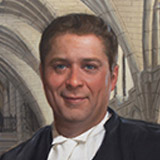
Hon. Andrew Scheer
Speaker of the House
Ruling Text
The Speaker:
I am now prepared to rule on the question of privilege raised on May 11, 2015, by the Member for Timmins—James Bay, related to the Government's response to written question Q-1129, which was tabled in the House on May 8, 2015. I would like to thank the hon.
Member for having raised this matter, as well as the hon.
Leader of the Government in the House of Commons and the House Leader of the Official Opposition for their comments.
In raising this matter, the Member for Timmins—James Bay explained that the response he received to his written question, Question No.
1129, regarding the procedure used by the Government to verify that Senate appointees meet their constitutional residency requirements was that, "...the Government does not comment on matters before the court". He characterized this answer as both completely insufficient and completely incorrect since the matter does not fall within the purview of the courts at this time. Thus, he argued the misleading character of the answer provided constituted a prima facie breach of privilege.
In response, the Government House Leader claimed that the answer put forward was, in fact, a restatement of the sub judice convention. He argued that this was entirely appropriate as the question pertained to a matter rightfully before the courts in criminal proceedings at the present time. In addition, he noted that it is not within the purview of the Speaker to review Government responses to questions and that other avenues were available if the Member was not satisfied with the response.
Members place great importance on obtaining full and accurate information through answers to their written questions, a procedure that exists in part to allow Members to fulfill their obligations as parliamentarians. Thus, the frequency with which the Chair has been called upon to rule on questions of privilege of this kind is, in some respects, understandable.
Invariably, when Members deem that the content or quality of responses to written questions falls short, the Chair is asked to adjudicate. In each instance, the Chair has sought to remind Members of the clear and longstanding limitations of the role of the Speaker in this regard.
House of Commons Procedure and Practice, Second Edition, states at page 522, "There are no provisions in the rules for the Speaker to review government responses to questions", nor does parliamentary convention allow for this.
On February 8, 2005, Speaker Milliken, at page 3234 of House of Commons Debates, confirmed this, stating:
Any dispute regarding the accuracy or appropriateness of this response is a matter of debate. It is not something upon which the Speaker is permitted to pass judgment.
O'Brien and Bosc, at pages 522 to 523 states:...on several occasions, Members have raised questions of privilege in the House regarding the accuracy of information contained in responses to written questions; in none of these cases was the matter found to be a prima facie breach of privilege.
That the answer that the Member received to his question invokes the sub judice convention in no way alters or bolsters the authority of the Chair to review and pronounce itself on the accuracy or validity of that answer, even when it is interpreted to be a refusal to answer.
House of Commons Procedure and Practice, Second Edition, states, at page 522:
There are no provisions in the rules for the Speaker to review government responses to questions.
Based on these precedents and on the information presented, I cannot conclude that the Member has been impeded in the performance of his parliamentary duties. Therefore, I cannot find that a prima facie breach of privilege has occurred.
I thank hon.
Members for their attention..
[1]
Debates, May 11, 2015, pp. 13724–7.
Edit Metadata
Holding
"The Speaker has no authority to review the content or quality of government responses to written questions; an allegedly insufficient or misleading answer is a matter for debate, not a prima facie breach of privilege."
AI Summary
The Speaker denied a question of privilege concerning a government's response to a written question, affirming the Chair has no authority to rule on the content of such answers.
AI Analysis
- Outcome
- Denied
- Tone
- Educational
- Procedural Stage
- Ruling
- Significance
Low
High