Point of Order
March 19, 1992
Mover of a motion not intervening in debate: time limits for second and third speakers
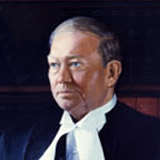
Hon. John Fraser
Speaker of the House
Ruling Text
The Acting Speaker (Mr. DeBlois):
The Chair was of course careful to check this technical aspect. The first speaker was for the Government and is deemed to have spoken, even if he did not actually do so. The Government presented a motion to table this Bill. So that was the first speaker, and his 40 minutes speaking time has expired, although technically, the 40 minutes were really only 15 seconds.
In any case, I can reconsider and check again with the staff of the House regarding the opinion expressed by the honourable Member for Kingston and the Islands, who is an expert on the Standing Orders of the House. However, this is the information I have so far. Consequently, I am prepared to recognize, for not more than 20 minutes, the honourable Member for Labrador, even if it means checking again....
Before resuming debate, since the honourable Member for Kingston and the Islands seems to have some reservations about the ruling I gave earlier today that the honourable Member for Labrador was the third speaker and was therefore entitled to not more than 20 minutes, I just want to mention one of the sources on which I based my ruling. I am referring to the Precis of Procedure of the House of Commons, Fourth Edition, which says that the Speaker may [...] recognize the mover if the latter so desires, and otherwise any other Member. However, the mover must speak first, if he wishes to speak, because by the very fact of presenting the motion, he is deemed to have spoken-this is important, he is deemed to have spoken-and the Chair will not be able to recognize him again later on.
[4]
So even if last night the mover did not speak, according to the Standing Orders he is nevertheless deemed to have spoken because he presented the motion. Technically, the honourable Member for Labrador became the third speaker. I just wanted to add this clarification to the ruling I gave this morning.
Postscript On March 30, 1992, during debate on the motion for third reading of a Government Bill, the Acting Speaker (Hon. Steven Paproski) interrupted Mr. Pierre Vincent (Parliamentary Secretary to the Deputy Prime Minister and Minister of Finance), who was under the impression that he was the second speaker. On this occasion also, the Acting Speaker explained to the House that the mover of the motion is deemed to have spoken even though he or she did not actually speak in debate. Therefore, the Parliamentary Secretary was the third speaker and entitled to make a twenty minute speech only followed by a ten minute Questions and Comments Period.
[5]
F0704-e 34-3 1992-03-19.
[1]
Debates, March 18, 1992, pp. 8451-6 [2]
Debates, March 19, 1992, p. 8479.
[3]
Debates, March 19, 1992, p. 8480.
[4]
Precis of Procedure, 4th ed., pp. 57-8.
[5]
Debates, March 30, 1992, p. 9028.
Edit Metadata
Holding
"The mover of a substantive motion is deemed to have spoken by the act of presenting the motion, regardless of whether they used their allotted time; consequently, the Member for Labrador was the third speaker and limited to 20 minutes."
AI Summary
The Speaker ruled that the mover of a motion is automatically deemed to have spoken, establishing the subsequent Member as the third speaker with a 20-minute time limit.
AI Analysis
- Outcome
- Sustained
- Tone
- Educational
- Procedural Stage
- Government Orders
- Significance
Low
High
AI Keywords
Cited Authorities
- Precis of Procedure of the House of Commons (Fourth Edition)