Ruling
February 26, 1992
Private Members' Public Bills; committee consideration; adjournment sine die
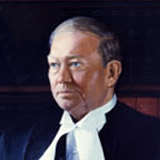
Hon. John Fraser
Speaker of the House
Ruling Text
Mr. Speaker:
[...] I am fully aware of the implications of this particular situation. Some honourable Members have said they had no knowledge this was coming before the House. I hope all honourable Members realize that when I receive a question of privilege, that is the privilege of the Member applying until the Member has risen. I know there was no suggestion the Chair should have communicated with Members, but I hope all Members will know it would have been quite improper for the Chair to do so.
I compliment the honourable Member for Edmonton—Strathcona on his argument and I compliment him on how concise it was. It was brief and to the point. I have listened with great care to the honourable Member for Fraser Valley West (Mr. Robert Wenman) who of course has a very strong personal interest in this particular matter.
The first thing I have to look at, and the [honourable Parliamentary Secretary to the Government House Leader (Mr. Albert Cooper)] mentioned it, is that it is not for the Chair to get involved in matters within a committee unless there is something so egregious and so outrageous that it transcends the normal bounds and amounts to a contempt of the House or, in some extraordinary way, a breach of the privilege of an honourable Member and this does not.
First of all, does it affect any honourable Members' capacity to carry on their duties as Members of the House of Commons? The answer to that is no. All Members can carry on their duties as Members of the Houses of Commons. The second thing is whether there is some other procedural approach that might be taken to deal with this matter in front of the whole House, as my honourable friend from Kamloops (Mr. Nelson Riis) has suggested. Yes, there is. A motion can be put down.
I go back very briefly to a citation which the honourable Member for Edmonton—Strathcona cited. I think I have the exact words: "The House should take cognizance of the matter".
That is really where we are. If the House wishes to take cognizance of this, if the House wishes to exercise its authority, then of course it may do so. But in my view, it would not be correct or proper at the present time for the Speaker to intervene.
F1005-e 34-3 1992-02-26.
[1]
Minutes of Proceedings and Evidence of Legislative Committee H on Bill C-203, February 18, 1992, Issue No. 10, p. 3.
[2]
Debates, February 26, 1992, pp. 7620-22.
[3]
Debates, February 26, 1992, pp. 7622-24.
Edit Metadata
Holding
"The Speaker will not intervene in the committee matter because it does not constitute an egregious breach of privilege or contempt, and the House has alternative procedural remedies available."
AI Summary
The Speaker denied intervention in a committee matter, establishing that the Chair only intervenes if the issue is so egregious as to constitute contempt or a breach of privilege, which this case was not.
AI Analysis
- Outcome
- Denied
- Tone
- Educational
- Procedural Stage
- Routine Proceedings
- Significance
Low
High