Point of Order
December 3, 2012
Motions: denial of unanimous consent
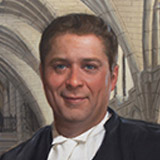
Hon. Andrew Scheer
Speaker of the House
Ruling Text
The Speaker:
[I]f I can get back to the Member for Skeena—Bulkley Valley, it does say in O'Brien and Bosc that if no dissent is detected then the House is obviously allowing the Member to move the motion.
I take the Member's point with regard to the reading of the names. In my view, the Member had moved the substance of the motion and was in the process of reading an abnormally lengthy list of names of lakes that would be added. She had the floor for approximately 10 minutes.
There was a similar case that Speaker Milliken dealt with, wherein the Member at that time was reading a long litany of the names of Members, I believe, and there were several points of order. The Speaker decided that because it was unduly lengthy, and in view of the fact that there was obvious disagreement to the motion being moved, in order to manage the use of the time in the House efficiently he intervened to see if there was consent.
In my view, there is a similar parallel here. As was her right, the Member sought the floor on a point of order to ask for consent to put the substance of her motion, and then got into the part of the amendment that added all of the names of lakes, and perhaps rivers, that she was interested in. Given that it was likely to go on for a significant period of time and that she had already had the floor, in the interests of allowing the House to make a decision on that, and sensing that the House was eager to do so, I asked to see if there was even consent for her to move the motion.
I do not want to get into hypotheticals. However, if the House would have granted consent, I am sure the House would have then wanted to hear the whole term of the motion.
I will hear the hon.
Member again as a courtesy, but I do believe I have made my points on this.
Edit Metadata
Holding
"The Chair has the authority to intervene and test for unanimous consent when a Member is reading an unduly lengthy motion, especially when dissent is apparent, in order to efficiently manage the time of the House."
AI Summary
The Speaker justifies interrupting a Member's lengthy reading of a motion to test for unanimous consent, citing the need to manage House time efficiently.
AI Analysis
- Outcome
- Denied
- Tone
- Educational
- Procedural Stage
- Routine Proceedings
- Significance
Low
High
Cited Authorities
- O'Brien and Bosc (Not specified)