Point of Order
December 12, 1991
Unparliamentary language: expressions not heard by the Speaker and not recorded in the "blues" nor on electronic Hansard
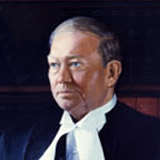
Hon. John Fraser
Speaker of the House
Ruling Text
Mr. Speaker:
The honourable Member for Cape Breton—East Richmond has raised the matter which engaged us yesterday and also this morning. The honourable the Government House Leader has made his position quite clear. I am going to try to deal with the situation we find ourselves in as succinctly as I can.
Yesterday the honourable Members for Winnipeg North Centre, Glengarry—Prescott—Russell (Mr. Don Boudria) and Hamilton East (Ms. Sheila Copps) urged the Chair to review Hansard and the electronic tape, alleging that the Right Honourable the Prime Minister had used unparliamentary language and consequently caused disorder.
There were other Members who wished to be heard, but I took the position that I had the point that was raised and I undertook to the House that I would, as they say here, look at the "blues"; in other words review Hansard and also the electronic Hansard.
This morning when asked by the Opposition House Leader (Mr. Dingwall) I reported that I had reviewed both Hansard and the broadcast tape and neither lend any support to the claim or the allegation that the Right Honourable the Prime Minister used unparliamentary language. This morning the honourable Government House Leader asserted the view that the Right Honourable Prime Minister did not utter the words that had been attributed to him.
I ask honourable Members to listen carefully because I am rendering a procedural decision. There is a dispute as to what happened. There have been statements made outside the House of which I am aware, but as is our tradition the Speaker cannot and should not make any ruling based on comments outside the House or in media reports.
In a situation like this, which is not easy, the first condition is: Did the Speaker hear words or a phrase of an unparliamentary nature? I have to say to all honourable Members that the first condition was not met yesterday as the Chair did not hear the alleged utterance.
Honourable Members will say: "Well, why didn't the Chair hear it?" The Chair cannot hear all comments made in the Chamber. All honourable Members, I am sure, can accept that and know that.
The second condition if the Chair has not heard the words complained of is to verify our records to establish if they are reported by Hansard or audible on the recording.
Having done so there is no supporting entry in Hansard, nor does the electronic Hansard demonstrate that an offending phrase was used by the Right Honourable Prime Minister....
I suggest to the House that is where we are now. I am asking honourable Members to listen carefully. That is where we are now. I suggest to the House that the Chair can go no further. I have done what I was requested to do and I have reported on it. The Speaker has no power to compel any Member's attendance nor can I force any Member to make a statement.
I want it clearly understood that some weeks ago on an unhappy day when a Member was brought to the Bar of this place, it was not done so by the order of the Speaker. It was done so by the order of this House after debate. There is a distinction.
The Chair is faced with a dispute and is unable to resolve it. When the official records are not supportive of the allegations, I am convinced that it is not the duty of the Chair to try to resolve it.
As far as I am concerned from a procedural point of view and in keeping with our conventions the matter is closed.
F0723-e 34-3 1991-12-12.
[1]
Debates, December 11, 1991, pp. 6142-4.
[2]
Debates, December 12, 1991, pp. 6167-9.
[3]
Debates, December 12, 1991, p. 6218.
Edit Metadata
Holding
"The Point of Order regarding alleged unparliamentary language is dismissed because the official records do not verify the utterance, establishing the procedural limit of the Speaker's ability to investigate such claims."
AI Summary
The Speaker denied a Point of Order regarding alleged unparliamentary language by the Prime Minister, ruling that since the words were neither heard by the Chair nor recorded in Hansard, the matter could not be procedurally resolved.
AI Analysis
- Outcome
- Denied
- Tone
- Educational
- Procedural Stage
- Debate Process
- Significance
Low
High