Question of Privilege
Date Unknown
Questions on the Order Paper; questions from a previous Parliament; authority of the SpeakerMarch 21 and 22, 2001
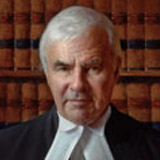
Hon. Peter Milliken
Speaker of the House
Ruling Text
The Speaker:
I am quite familiar with the argument the hon. Member is making. I recall making a similar one myself at one time or another. I am very sympathetic to the plight he describes, but might I suggest that he go to the Procedure and House Affairs Committee at the earliest opportunity, or the new committee that has been struck to deal with changing the rules of the House, and seek changes to allow him to put even more questions on the Order Paper or seek changes that might have some penalty for non-answer to the questions.
It is not for the Chair on questions of privilege to deal with the fact that answers are not being given. What power does the Chair have to enforce this rule now? None.
We can say that these questions should be answered. I can stand here and say it until I am blue in the face, but if they are not answered, they are not answered. I know the problem. It is an old problem.
Mr. Greg Thompson:
That is why we are here, to be heard.
The Speaker:
That is why I am suggesting the hon. Member go to the Committee and raise it there because the Committee is charged with this responsibility.
I am not in a position to do something to solve the problem. The Parliamentary Secretary may be able to help by giving further solace to the hon. Member in respect of the answers, and perhaps that is what he will do now.
Editor's Note At this point, Derek Lee (Parliamentary Secretary to the Leader of the Government in the House of Commons) rose to state that he had shared a draft of the response with Mr. Thompson and that he is at liberty to ask that the matter be transferred for debate. Bill Blaikie (Winnipeg–Transcona) then rose to note that the rules governing written questions were amended in the early 1980s in order to prevent the inundation of the Order Paper with questions. In turn, the Government would provide answers to written questions within 45 days.
The Speaker:
I sympathize with the hon. Member. I remember making the same arguments. However, the rules are the rules and the Speaker, as a servant of the House, must enforce those rules.
Editor's Note At this point John Duncan (Vancouver Island North) rose to state that there were only 18 questions on the Order paper.
The Speaker:
Let me address the issue by citing to the House the decision of Mr. Speaker Fraser on a similar matter, not the one referred to by the hon. Member for New Brunswick Southwest in his argument. The decision was delivered by Mr. Speaker Fraser on May 18, 1989, and appears on page 1890 of Debates for that day. The Speaker said:
As far as I am concerned, I do not think that it is appropriate that the time of this House has to be taken up by Members having to get up and ask why somebody has not given them the answer.
The hon. Member for Churchill made it quite clear. If there is a case where something is so complicated that it is impossible for the Government to give the answer within 45 days, I think hon. Members would be patient and understanding if the Parliamentary Secretary or Minister got up and said that that was the dilemma they found themselves in. For the most part, there is no real reason in the world why these answers cannot be given. As I say, I cannot order them to be given because I do not have the power. But I do ask that those who are asked to prepare these answers take a look at this rule and realize that when they do not get the answer back to their Minister in time, they are putting all of us through a lot of difficulty and taking up the time of the House, because undoubtedly there will be more points of order raised on exactly this issue.
Short of the authority to order somebody to do something, I cannot make my own feelings on the matter any more clear than I have just done. I agree with what Mr. Speaker Fraser said. I made arguments on occasion to Mr. Speaker Fraser on this point when I was not in the Chair of the House. I sympathize, but I respectfully suggest to hon. Members that I cannot do anything. I agree with what Mr. Speaker Fraser said. We must consider the matter closed.
When questions come up and the Parliamentary Secretary asks that all questions stand, I have no doubt that we will hear from the hon. Member for New Brunswick Southwest and others on points of order as to why their questions have not been answered in a timely way. As Speaker I am prepared to entertain those points of order, but I do not think it is appropriate to treat this as a question of privilege. As indicated by Mr. Speaker Fraser, there is nothing I can do..
[1]
Debates, March 22, 2001, pp. 2083-4.
[2]
Debates, March 22, 2001, p. 2130.
Edit Metadata
Holding
"The failure of the government to provide timely answers to written questions on the Order Paper is not a matter for a question of privilege, as the Speaker has no authority to compel a response."
AI Summary
The Speaker ruled that the government's failure to answer written questions in a timely manner is not a valid question of privilege because the Chair lacks the power to compel an answer.
AI Analysis
- Outcome
- Denied
- Tone
- Conciliatory
- Procedural Stage
- Routine Proceedings
- Significance
Low
High