Point of Order
April 9, 1991
Amendment to the Standing Orders, allowing a Minister to move a "motion upon Routine Proceedings" if unanimous consent is refused, found to be acceptable
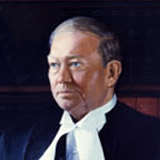
Hon. John Fraser
Speaker of the House
Ruling Text
The Speaker:
On Tuesday, March 26, 1991, when Government Motion No. 30 to amend the Standing Orders was first before the House, the honourable Member for Kamloops rose on a point of order to ask the Chair to rule that certain aspects of that motion were "in whole or in part improperly before the House" and "in whole or in part out of order." His focus of attention was on paragraph 30 which he characterized as proposing "to amend the right of the Commons to debate supply before it is granted to the Crown," and on paragraph 20 which he said introduces "a new Standing Order which can override the failure of the Minister to obtain unanimous consent from the House."...
I turn now to that aspect of the honourable Member's point of order which dealt with proposed Standing Order 56.1. This would be a completely new addition to the rules of the House. It provides that if, at any time during a sitting of the House, unanimous consent is denied for the presentation of a routine motion, then a Minister of the Crown may request during Routine Proceedings that the Speaker put the motion. If 25 or more Members rise to oppose the motion, it shall be deemed withdrawn; otherwise it shall be deemed adopted.
The routine motions to which this new process applies are delineated in paragraph (b). They are those motions made upon Routine Proceedings, which may be required for the observance of the proprieties of the House; the maintenance of its authority; the management of its business; the arrangements of its proceedings; the establishing of the powers of its committees; the correctness of its records, or the fixing of its sitting days, or the times of its meeting or adjournment.
Accordingly, there is a very limited range of motions to which this proposed process can apply.
The honourable Member for Kamloops claims that the proposal would "override unanimous consent". In his opinion, that clause "proposes to change our notion of unanimous consent and to enable the rules of procedure and operations of the House to be changed by an agent of the Crown unless 25 Members of the House object." He also pointed out that the proposal would establish "two classes of Members, those who by virtue of being Ministers of the Crown can obtain unanimous consent as long as 25 Members do not object, and those ordinary Members for whom unanimous consent means no one objects".
In considering the honourable Member's claims, the Chair's attention was drawn to the fact that there are precedents for the type of process suggested in the new proposal. Standing Order 26(2) deals with the conditions under which any Member may move to extend a sitting and sets at 15 the number of Members required to foreclose a move to extend the sitting. Similarly, Standing Order 53(4) provides for the suspension of certain Standing Orders to deal with a matter of an urgent nature. Only a Minister of the Crown can propose such a motion and if 10 Members rise the motion is deemed withdrawn; otherwise, the motion shall have been adopted. Similarly, Standing Order 98(3), which sets out the terms under which an extension of sitting hours during report and third reading stages of a private Members' bill may be sought, also stipulates that if fewer than 20 Members support the motion to extend, the motion is deemed withdrawn.
There are certain similarities also between the proposal and existing Standing Order 78 respecting time allocation in that both use a ladder-like type of approach depending upon the extent of agreement forthcoming to securing the right to propose a motion.
Examples also abound in our Standing Orders of discrimination among types of Members. Ministers of the Crown have certain prerogatives that private Members do not; private Members may put questions to Ministers of the Crown during Question Period, but Ministers may not question private Members; party leaders are afforded certain recognitions denied to all other honourable Members; the government and opposition Whips have certain rights peculiar to them alone and finally, and perhaps most personally pertinent, the Speaker is denied the right to participate in a debate or to vote on any question before the House, except in the case of an equality of voices. So, the concept of affording differing powers to various groups or individuals is not foreign to our Standing Orders, and, while it may well be the subject of debate, is not reason enough on its own to cause the Chair to intervene on procedural grounds to prevent the proposal from being debated by the House.
During his intervention in the discussion of this point of order, the honourable Minister of State and Leader of the Government in the House of Commons emphasized that the type of motion envisaged in the proposed new rule could only be introduced during Routine Proceedings when this House is habitually full. He termed the 25-member requirement a significant and major inhibition to the abuse of the rule.
The honourable Member for Kamloops is quite correct in stating that proposed new Standing Order 56.1 would "override unanimous consent"—indeed, it is a condition precedent to putting the motion during Routine Proceedings that unanimous consent must have been previously denied. However, this "override" provision can operate, as the Chair understands it, only with respect to a certain very limited range of motions offered at a specific time in our daily agenda by a Minister of the Crown. What the Chair must decide is, is this proposal so offensive, does it challenge the authority of the House and impede Members in the performance of their duties to such an extent that it should not be allowed to be put to the House for debate and decision. Based on the fact that we have similar procedures existing with respect to other types of motions and given the very limited application of the new proposal, the Chair cannot accede to the request of the honourable Member for Kamloops that paragraph 20 of the motion respecting the Standing Order amendments be ruled out of order.
The Chair commends the honourable Member for Kamloops for bringing his concerns to the attention of the House and for the cogency and seriousness of his argument. The Chair does not take lightly any decision respecting the privileges of this Chamber or of an individual Member of it. It is only by constant vigilance that we can ensure the preservation of the privileges necessary to the carrying out of our responsibilities as elected representatives. In Citation 21 of Beauchesne Fifth Edition, it is stated:
The most fundamental privilege of the House as a whole is to establish rules of procedure for itself and to enforce them.
In coming to a decision on the point of order raised by the honourable Member for Kamloops, the Chair was very much aware that this House is about to embark upon an exercise of that fundamental privilege. In the view of the Chair, it would be incongruent to deprive this Chamber, by fiat from the Chair under the guise of protecting privilege, of the opportunity to fully explore the options available to the House in the exercise of its most basic privilege. The privilege which this House enjoys to set its own binding rules of procedure and to regulate its own internal affairs must be guarded just as jealously as the rights, immunities and privileges of individual Members of the House of Commons. When the two are in conflict, or apparent conflict, it should be the House and the Members thereof who resolve the difference.
Traditionally the House has accommodated concerns about the text of its current and proposed Standing Orders through the process of debate, amendment and clarification through agreement. Furthermore, the House and all honourable Members may seek to clarify, to modify and to interpret House rules and practices by recourse to points of order, questions of privilege and to the committee charged with the review of and report on the Standing Orders and procedures in the House and its committees.
So seriously does the House view its duty to review and to evaluate, to establish and revise its Standing Orders, that it has even designated by Standing Order 51 that they shall be automatically reviewed and debated at the beginning of the First Session of every Parliament.
While the honourable Member does not have a point of order, he will have several future opportunities to propose changes to the Standing Orders.
Again, I emphasize that the argument raised by the honourable Member for Kamloops was obviously very carefully considered. The matters are important matters and I hope that he will be able to accept the basis of this ruling, which is that ultimately it is the House that must make up its mind as to the orders by which we are governed.
I thank the honourable Member.
F0416-e 34-2 1991-04-09.
[1]
Debates, March 26, 1991, p. 19025.
[2]
Debates, March 26, 1991, pp. 19042-6.
[3]
Debates, April 8, 1991, pp. 19132-3.
Edit Metadata
Holding
"The Chair will not rule the proposed amendment to the Standing Orders (S.O. 56.1, concerning ministerial motions following denial of unanimous consent) out of order, as the House retains the fundamental privilege to debate and decide its own rules, and similar numerical thresholds exist in current procedures."
AI Summary
The Speaker denied a Point of Order challenging a proposed Standing Order that allowed ministerial routine motions to proceed despite denied unanimous consent unless 25 members objected, asserting that the House must retain the privilege to debate and establish its own rules.
AI Analysis
- Outcome
- Denied
- Tone
- Educational
- Procedural Stage
- Debate on Government Motion to Amend Standing Orders
- Significance
Low
High