Point of Order
April 9, 1991
Amendment to the Standing Orders: reduction in the number of allotted days in proportion to the number of sitting days
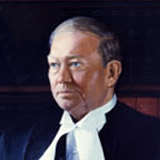
Hon. John Fraser
Speaker of the House
Ruling Text
Mr. Speaker: On Tuesday, March 26, 1991, when Government Motion No. 30 to amend the Standing Orders was first before the House, the honourable Member for Kamloops rose on a point of order to ask the Chair to rule that certain aspects of that motion were "in whole or in part improperly before the House" and "in whole or in part out of order." [...]
The honourable Member sought to establish four points which he set out as follows:
First, that these provisions seek to erode the historic authority of the House and the rights of its Members and are thus contemptuous of the House as they will tend to diminish its dignity and impede Members in the discharge of their functions.
Second, these proposals exceed those limits imposed by the Constitution and by statute and the power of the House to regulate its internal affairs.
Third, adoption of these proposals would be a de facto amendment to those limiting statutes and are thus an attempt to achieve by simple motion changes which should both be statutory and constitutional.
and, Fourth, our traditions and practice require that they be found out of order.
The honourable Member's second and third points involving as they do a definition of the limits of the Constitution and other statutes have given the Chair some pause. The honourable Member argues that acceptance of the proposals at issue would make a de facto change to the Parliament of Canada Act and to the Constitution Act by amending our privileges by means of simple Standing Order changes.
In his ingenious argument the honourable Member likens this to changing statute by means of an appropriation act and based on the Chair's own recent decision prohibiting such a practice, invites the Chair to make a similar ruling in this instance.
The problem with that is that, were the Chair to agree to the honourable Member's request, the Speaker would then be placed in the situation of having to interpret the Constitution and the Parliament of Canada Act. There are many precedents showing that the Chair should not venture into such an area.
As my predecessors have so often reminded the House, the Speaker has no role in interpreting matters of either a constitutional or legal nature. On May 2, 1989, I had occasion to refer honourable Members to Citations 117(6) and 240 of Beauchesne Fifth Edition and to a decision of Mr. Speaker Lamoureux of July 8, 1969. At that time I explained:
The reasons for these citations are straightforward. The Speaker should not sit in judgment on constitutional or legal matters. That role belongs more properly to the courts and the administration of justice. Previous Speakers have been very careful in strictly addressing themselves to matters of a parliamentary or procedural nature while avoiding dealing with constitutional or legal matters.
[5]
Again, on February 7, 1990, as recorded at page 7954 of Debates when the honourable Member for Kamloops had presented a detailed, intriguing argument, in fact, one not dissimilar to the present argument, to the effect that closure contravenes the Constitution of the country, I said:
I am not prepared again to rule on it because if I did I would be straying into an area in which I am not allowed to go. He states that our rule in the House contravenes our Constitution. That may or may not be, but the authorities for many, many years back make it quite clear that I cannot rule on a legal or a constitutional issue.
Likewise, the Chair must avoid interpreting in any way, even indirectly, the limits set in the Constitution or the Parliament of Canada Act. It must be noted however that the constitutional limits relating to our quorum and the need to get a Royal Recommendation in relation to any appropriation bill also appear in the Standing Orders of the House, being procedural matters of course.
Accordingly, I would set aside the second and third points advanced by the honourable Member for Kamloops. I hasten to add, however, that these arguments have not been dismissed lightly, nor is their disposition fatal to the honourable Member's case for there is ample substance still to be considered in respect of the remaining two points he formulated.
The honourable Member argues that the provisions in paragraphs 20 and 30 "seek to erode the historic authority of the House and the rights of its Members and are thus contemptuous of the House as they will tend to diminish its dignity and impede Members in the discharge of their functions." This aspect of the issue involving as it does both privilege and contempt is clearly an area into which the Chair not only may, but must, venture.
The honourable Member for Kamloops takes objection to that part of paragraph 30 of the motion which proposes that:
-if the House does not sit on days designated as sitting days pursuant to Standing Order 28, the total number of allotted days in that supply period shall be reduced by a number of days proportionate to the number of sitting days on which the House stood adjourned- The honourable Member is quite clear in distinguishing between those aspects of the proposal which reduce the number of supply days in an ordinary session from 25 to 20 and the proposal to reduce the number of allotted days in proportion to the number of sitting days. The former, he quite properly recognizes as quantitative change which is not a procedural concern; the latter is, he submits, a qualitative change to the rights of the House over supply. As the Chair understands the honourable Member 's argument it is that in tying the number of supply days to the number of sitting days, the proposal ruptures the linkage between allotted days and the granting of supply and consequently infringes upon Members' historic right to air grievances and petition the Crown before supply is granted. The honourable Member supports his claim that the proposed new Standing Orders might lead to the government claiming supply without hearing grievances or resort to a hypothetical example.
Although the Chair has no intention of dealing with hypothetical matters—that is not the role of the Speaker—and should not lay the rules governing House proceedings, the Chair does take seriously any claim that the fundamental rights of this House have been or could be misrepresented. So, the Chair has examined the proposal in question and its potential effect on the supply process.
The purpose of our existing Standing Order 81(8) is to establish for any calendar year three supply periods ending December 10, March 26 and June 30 in which different aspects of the business of supply are considered. In the proposed amendment, Standing Order 81(8)( a ), this purpose remains unchanged, but the date of the June supply period is altered to June 23. The number of allotted days is reduced from 25 to 20, proportionately, within each period. Proposed new sections 8( b ) and 8( c ) are also added to the Standing Order. Section 8( b ) introduces the concept that should the House not sit on days designated as sitting days in the Standing Orders, then the total number of allotted days in that supply period would be reduced proportionately. New Section 8( c ) provides that should the House sit more than the prescribed number of days, extra allotted days would be added, again proportionately.
Viewed in context, it is very difficult to see these changes as anymore than an adjustment to the supply process. Arguably, rather than divorcing the allotted days from the supply period, the proposed changes might make them a more integral part of that process by adding a condition which makes them more responsive to the actual process. In the past, when the House did not sit for extended periods during a supply cycle, as, for example, when a new session of Parliament opened in the middle of a supply period, adjustments to the number of allotted days were subject to negotiation and were usually achieved through special orders of the House. Such Special Orders were passed in 1971, 1974, 1980 and 1989.
It seems that the proposed changes, by establishing a set formula to determine how such adjustments are to be made, would add an element of certainty in what has been, admittedly, an ad hoc process.
In this way it appears to the Chair that rather than detracting from the right of Members to air grievances before supply, it might be argued that the proposed changes secure that right. [...]
The Chair commends the honourable Member for Kamloops for bringing his concerns to the attention of the House and for the cogency and seriousness of his argument. The Chair does not take lightly any decision respecting the privileges of this Chamber or of an individual Member of it. It is only by constant vigilance that we can ensure the preservation of the privileges necessary to the carrying out of our responsibilities as elected representatives. In Citation 21 of Beauchesne Fifth Edition, it is stated:
The most fundamental privilege of the House as a whole is to establish rules of procedure for itself and to enforce them.
In coming to a decision on the point of order raised by the honourable Member for Kamloops, the Chair was very much aware that this House is about to embark upon an exercise of that fundamental privilege. In the view of the Chair, it would be incongruent to deprive this Chamber, by fiat from the Chair under the guise of protecting privilege, of the opportunity to fully explore the options available to the House in the exercise of its most basic privilege. The privilege which this House enjoys to set its own binding rules of procedure and to regulate its own internal affairs must be guarded just as jealously as the rights, immunities and privileges of individual Members of the House of Commons. When the two are in conflict, or apparent conflict, it should be the House and the Members thereof who resolve the difference.
Traditionally the House has accommodated concerns about the text of its current and proposed Standing Orders through the process of debate, amendment and clarification through agreement. Furthermore, the House and all honourable Members may seek to clarify, to modify and to interpret House rules and practices by recourse to points of order, questions of privilege and to the committee charged with the review of and report on the Standing Orders and procedures in the House and its committees.
So seriously does the House view its duty to review and to evaluate, to establish and revise its Standing Orders, that it has even designated by Standing Order 51that they shall be automatically reviewed and debated at the beginning of the first session of every Parliament.
While the honourable Member does not have a point of order, he will have several future opportunities to propose changes to the Standing Orders.
Again, I emphasize that the argument raised by the honourable Member for Kamloops was obviously very carefully considered. The matters are important matters and I hope that he will be able to accept the basis of this ruling, which is that ultimately it is the House that must make up its mind as to the orders by which we are governed.
F0609-e 34-2 1991-04-09.
[1]
Debates, March 26, 1991, p. 19025.
[2]
Debates, March 26, 1991, pp. 19042-6.
[3]
Debates, April 8, 1991, pp. 19132-3.
[4]
This question is considered in the chapter on "The Decision-Making Process".
[5]
Debates, May 2, 1989, p. 1179.
Edit Metadata
Holding
"The Point of Order is denied because the Chair cannot rule on constitutional or legal interpretations, and the proposed amendments to the Standing Orders regarding Supply days do not infringe upon the fundamental privileges of the House, which retains the right to set its own rules."
AI Summary
The Speaker denied a Point of Order challenging amendments to Standing Orders regarding Supply days, ruling that the Chair lacks jurisdiction to interpret constitutional or statutory limits and affirming the House's fundamental privilege to regulate its own procedure.
AI Analysis
- Outcome
- Denied
- Tone
- Educational
- Procedural Stage
- Government Orders
- Significance
Low
High
AI Keywords
Cited Authorities
- Beauchesne's Parliamentary Rules and Forms
- Parliament of Canada Act (1985)
- Constitution Act, 1867 (sections 53 and 54)