Question of Privilege
November 26, 2009
Evidence: alleged intimidation of public servant
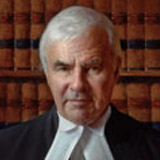
Hon. Peter Milliken
Speaker of the House
Ruling Text
The Speaker:
I have heard enough on this point.
I would like to thank the hon. Members who raised this issue, especially the hon. Member for St. John's East, whom I thank for his interventions on this.
In my view this is not a matter of privilege for the House at this time, and I say, "at this time". It may become one.
The witness in question is testifying before a committee of this House, not before the House. The question of privilege, in my view, is one that should be raised in the Committee. The Committee has full power to decide whether or not its privileges have been breached and it will want to do so when it sees what information is submitted by the witnesses to the Committee.
They may not have had all the papers with them on the day they appeared, but they may be tabled later before the Committee or brought to the Committee later. The Committee can decide whether or not it has received what it was entitled to receive and whether or not there has been a breach of its privileges, and it can then present a report to the House.
If a report comes to the House, it is up to the Speaker to decide whether that report then allows a Member to raise a question of privilege arising from the report, which will then get priority treatment in this House as befits a question of privilege.
I refer hon. Members to pages 151-2 of O'Brien and Bosc, and this is in committee, where it states:
If, in the opinion of the Chair, the issue raised relates to privilege... the committee can proceed to the consideration of a report on the matter to the House. The Chair will entertain a motion which will form the text of the report. It should clearly describe the situation, summarize the events, name any individuals involved, indicate that privilege may be involved or that a contempt may have occurred, and request the House to take some action. The motion is debatable and amendable, and will have priority of consideration in the committee. If the committee decides that the matter should be reported to the House, it will adopt the report which will be presented to the House at the appropriate time under the rubric "Presenting Reports from Committees" during Routine Proceedings.
Once the report has been presented, the House is formally seized of the matter. After having given the appropriate notice, any Member may then raise the matter as a question of privilege. The Speaker will hear the question of privilege and may hear other Members on the matter, before ruling on the prima facie nature of the question of privilege. As Speaker Fraser noted in a ruling, "... The Chair is not judging the issue. Only the House itself can do that. The Chair simply decides on the basis of the evidence presented whether the matter is one which should take priority over other business". Should the Speaker rule the matter a prima facie breach of privilege, the next step would be for the Member who raised the question of privilege to propose a motion asking the House to take some action.
In my view this is clearly a matter that the Committee can consider. If it decides that its privileges and its Members' privileges have been breached, it can report the matter to the House and we can deal with the matter when that report arrives here in the Chamber.
But in my view the privileges of the House itself at this moment have not been breached. Possibly there has been a breach in the Committee, I am making no judgment on that matter, but when the Committee presents a report, I will hear argument on it if necessary and give a ruling in accordance with practice at that time.
However, I believe it would be premature for the Speaker of the House to decide a matter that is currently before a committee, and has not come back to the House from the Committee except in submissions by the hon. Member. The Committee will have to decide on its own initiative whether or not the privileges of the Committee or of its Members have been breached by what has transpired.
We will leave the matter there for the time being and move on at this point to Orders of the Day.
Postscript The Special Committee on the Canadian Mission in Afghanistan presented its Third Report to the House on this matter and regarding its request for the production documents, [4]
and a question of privilege was raised by Paul Dewar (Ottawa Centre) on November 30, 2009 based on the Report. The Speaker stated that the Report did not contain adequate information regarding an alleged breach of the Committee's privileges and therefore he could not rule at that time.
[5]
The Speaker delivered a ruling on a related question of privilege on April 27, 2010.
[6].
[1]
Special Committee on the Canadian Mission in Afghanistan, Minutes of Proceedings, November 18, 2009, Meeting No. 15.
[2]
Special Committee on the Canadian Mission in Afghanistan, Minutes of Proceedings, November 25, 2009, Meeting No. 16.
[3]
Debates, November 26, 2009, pp. 7236-9.
[4]
Third Report of the Special Committee on the Canadian Mission in Afghanistan, presented to the House on November 27, 2009 (Journals, p. 1101 ).
[5]
See Debates, November 30, 2009, pp. 7386-7.
[6]
See Debates, April 27, 2010, pp. 2039-45.
Edit Metadata
Holding
"Matters of privilege arising within a committee must first be adjudicated and reported on by that committee before they can be raised as a question of privilege in the House."
AI Summary
Speaker rules that a question of privilege regarding a committee witness must be handled by the committee first before being brought to the House.
AI Analysis
- Outcome
- Denied
- Tone
- Educational
- Procedural Stage
- Transition to Government Orders
- Significance
Low
High