Question of Privilege
November 1, 2001
Sending for persons: refusal by the Government to allow officials to appear before an ad hoc committee
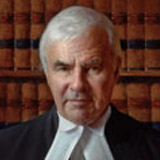
Hon. Peter Milliken
Speaker of the House
Ruling Text
The Speaker:
The Chair wants to thank the hon. Parliamentary Secretary to the Government House Leader for his remarks and the hon. Member for Ancaster–Dundas–Flamborough–Aldershot for raising this matter.
I am inclined to say that the matter was raised at the earliest possible time, given the hon. Member deliberately waited until his report was ready so that as it were, his question of privilege had grown into full blossom by the time he brought it to the attention of the House.
Having raised the question and suggested that it was a question of privilege, I have to say that in my view the matter is not a question of privilege.
The Member who raised this issue is an experienced Member. I think he is well aware that Members do have certain privileges but I do not believe that any one of us has the right to call before us a Government official and insist on answers to questions. That is in effect what he is saying because by his own admission in the course of his remarks, he stated that the committee that he was chairing was an ad hoc caucus of Members. It clearly was not a committee of this House. Had he wished to have a committee in place, he could have introduced a motion under Private Members' Business to establish a committee for the very purpose of studying the materials and issues that his ad hoc group in fact studied.
Had he done so, I have no doubt that the motion establishing the committee would have empowered the committee in accordance with Standing Order 108(1) to send for persons, papers and records. That great power that our committees have would have enabled his committee to summon these officials, whether or not the Government House Leader said they were to appear, because had they failed to appear, the committee could have reported the matter to the House. Of course the House could then have summoned the individuals to appear at the Bar of the House for chastisement for contempt of Parliament.
An hon. Member:
Caning.
The Speaker:
An hon. Member suggests caning but that has not been in our lexicon of punishments. However, there is the fact that people can be called to the Bar of the House and chastised for contempt.
Of course the ad hoc group had no such powers and so it was perfectly legitimate in my opinion for some to say, "No, you may not appear", and for people to refuse to appear either on instructions or because they themselves chose not to appear, because the ad hoc group had no power to compel attendance.
In the circumstances, I am unable to find there was any breach of the hon. Member's privileges. I would urge him in future to look to the other options that are available to him and to all hon. Members in asserting their claims, by going through the proper channel of a parliamentary committee with all the wondrous powers that each of those committees enjoys..
[1]
Debates, November 1, 2001, pp. 6845-6.
Edit Metadata
Holding
"An ad hoc caucus of Members is not a formal committee of the House and does not possess the power to compel the attendance of witnesses; therefore, the refusal of officials to appear before such a group does not constitute a breach of privilege."
AI Summary
The Speaker ruled that an informal ad hoc caucus of Members is not a formal parliamentary committee and therefore has no power to compel the attendance of witnesses.
AI Analysis
- Outcome
- Denied
- Tone
- Educational
- Procedural Stage
- Routine Proceedings
- Significance
Low
High