Question of Privilege
December 13, 1990
Political affiliation: request for research funds for the Bloc Québécois
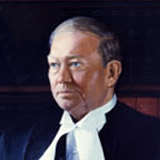
Hon. John Fraser
Speaker of the House
Ruling Text
The Speaker:
On Tuesday, November 27, 1990, the honourable Member for Shefford raised a question of privilege related to a request he had submitted to the Board of lnternal Economy to fund research for his group and to fund the office of the leader of the group. As chairman of the Board of Internal Economy, I wrote to the honourable Member to inform him of the Board's decision.
The honourable Member had read the letter into the record and went on to challenge the fairness of the board's decision, arguing with some vigour that "all honourable Members should be treated the same" and that he and his colleagues must have the same rights and privileges as any other Member in this House. The honourable Member concluded with these words "...I beseech you to reverse your decision and if you refuse, you should at least have the decency to explain why." These are strong words indeed. It appears to me that in presenting his impassioned case for additional funding for his group, the honourable Member for Shefford has implied that the Chair has dealt in a high-handed and unfair manner towards certain Members of this House. Furthermore, his words leave the entirely erroneous impression that the independent members in his group are being discriminated against.
As your Speaker, I cannot allow these erroneous impressions to stand unchallenged for they cast doubt on the impartiality of the Chair and risk tarnishing the whole House with the brush of unfairness.
First, let me state clearly that board decisions are made by the Board of Internal Economy, not by your Speaker. As Speaker, I am the Chairman of that Board and I preside over the deliberations of Members, from all sides of the House, who sit as voting members of the Board. These include the Deputy Speaker (Hon. André Champagne), the honourable Government House Leader (Hon. Harvie Andre), the honourable President of the Treasury Board (Hon. Gilles Loiselle), the House Leader of the Official Opposition (Mr. Jean-Robert Gauthier), the House Leader of the New Democratic Party (Nelson Riis), the Chief Government Whip (Mr. Jim Hawkes), the Whip of the Official Opposition (Mr. David Dingwall), and the honourable Member for Lachine—Lac-Saint-Louis (Hon. Bob Layton).
The Board considered the request made by the honourable Member for Shefford that additional funds be made available to his group for research and for the office of the leader of the group. The Board decided not to make an exception in this case and not to make additional funds available at this time. The Board could have decided differently. For the moment, the decision stands and I can only reaffirm it.
That being said, however, it is important to note that the decision does not mean that the members in this group are impeded from full participation in the work of the House or that they are being deprived of support necessary to represent their constituencies adequately. The honourable Member for Shefford argues that the nine independent Members for whom he speaks require additional resources. Each Member of this House receives a global budget which covers basic staff salaries, normal operating expenses of a constituency office, and related travel expenses. It is important to note that each of these Members, like every other Member of the House, enjoys the full flexibility to assign these financial resources as he sees fit. For example, under their global allocation, most members of the House will employ up to five staff persons to whom they assign research or administrative duties either in Ottawa or in the constituency, as they judge appropriate. The global budgets of these nine members taken together total close to $1.5 million.
In addition to the global budget, the House provides each Member with a fully funded Ottawa office and coverage of important ancillary costs like telephone, postage, printing and travel. Such then is the level of support that the House of Commons offers to each and every individual duly elected to serve as a Member of Parliament. It is in this context that the case of the honourable Member for Shefford should be viewed.
One can well understand the reasons the honourable Member for Shefford may have for pressing the Board of Internal Economy to recognize himself and his colleagues as an entity and to grant them additional funds accordingly. To date, these efforts have proven unsuccessful, but it is a long and dangerous leap to conclude from there that the basic rights and privileges of those Members are somehow being abrogated.
A search of the Debates will show, on the contrary, that the honourable Member for Shefford and his colleagues have been extended every courtesy by this House and that the Chair has safeguarded their participation in ways that are fully in keeping with our procedure and practices.
In Question Period the group was recognized for questions immediately on the return of the House in September and have since been recognized most days when they sought to question the government or to make statements pursuant to S.O. [Standing Order] 31.
These brief remarks have sought to explain to all honourable Members and to the public who are watching the House of Commons funding of an infrastructure supporting the honourable Member for Shefford and his colleagues. I trust that they will dispel any incorrect perceptions about the situation and clarify that the support and funding available to every private Member of whatever political persuasion is fully available to Members who have identified themselves as the Bloc Québécois.
There are profound differences of opinion as to the best solution to the political and constitutional dilemmas we now face. The depth of the conviction with which these opinions are held and the very complexity of the issues before us make for a highly volatile situation. The Chair pledges to do its utmost to continue to serve this House in as even-handed and impartial a manner as possible. Meanwhile I ask for the continued cooperation of all honourable Members so that, however vigorous and hard-fought our political battles, the work of this place will reflect the seriousness and the civility our constituents have a right to expect.
F0132-e 34-2 1990-12-13.
[1]
Debates, November 26, 1990, pp. 15716-7.
[2]
Debates, November 27, 1990, pp. 15799-801.
[3]
Debates, December 12, 1990, pp. 16636-7.
Edit Metadata
Holding
"The Board of Internal Economy's decision not to provide additional funding to the Member for Shefford's group is reaffirmed, as the existing global budget and resources available to each individual Member are sufficient to protect their rights and privileges."
AI Summary
The Speaker denied a question of privilege, affirming the Board of Internal Economy's decision to refuse extra funding for the Bloc Québécois, stating that existing resources for all MPs are sufficient.
AI Analysis
- Outcome
- Denied
- Tone
- Educational
- Procedural Stage
- Speaker's Ruling on a Question of Privilege
- Significance
Low
High