Statement
November 18, 2004
Establishment of first Order of Precedence: Speaker's statement regarding royal recommendation
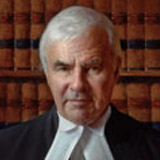
Hon. Peter Milliken
Speaker of the House
Ruling Text
Skip to main content
Parliament of Canada
Visit Parliament
Visit
Français
FR
Share
Email
Facebook
LinkedIn
Twitter
Menu
Parliamentary Business
Parliamentary Business - Home
The House
Sitting Calendar
House Publications
Bills (LEGIS
info
)
Written Questions
Petitions
Votes
Search the Debates (Hansard)
Status of House Business
Committees
List of Committees and Overview
Meetings
Bills in Committee (LEGIS
info
)
Studies, Activities and Reports
Search the Transcripts
Participate
Resources
Procedural Information
Library of Parliament
Legislative Summaries
Research Publications
Parliamentary Historical Resources
(1867-1993)
Parliamentary Diplomacy
Parliamentary Diplomacy - Home
Speakers' Activities
Parliamentary Associations
Visits and Events
Conferences
Parliamentary Officers' Study Program
Members
Members - Home
Members and Roles
Members of Parliament
The Speaker
Ministry (Cabinet)
Parliamentary Secretaries
Party Leaders and other House Officers
Related Information
Party Standings
Seating Plan
Members' Expenditures
Registry of Designated Travellers
A Member's Typical Week
Resources
Contact Members of Parliament
Constituencies
Library of Parliament
Historical Information (PARLINFO)
Participate
Participate - Home
The House
Attend Live Debates
Watch and Listen to Chamber Proceedings
Create or Sign a Petition
A Typical Week at the House
Contact a Member of Parliament
Follow a Bill (LEGIS
info
)
Committees
Attend Meetings
Watch and Listen to Committee Proceedings
Current Consultations
How to Submit a Brief and Appear
Layout of a Typical Committee Room
Contact a Committee
Resources
Procedural Information
Library of Parliament
Classroom Activities
Teacher Resources
Teachers Institute
About the House
About the House - Home
Transparency and accountability
Board of Internal Economy
By-Laws and Policies
Members' Allowances and Services
House Administration
Reports and Disclosure
Conflict of Interest Code for Members
Accessibility
Arts and Heritage
History, Art and Architecture
Future of the Parliamentary Precinct
Memorial Chamber
Carillon
In pictures
Virtual Tour of the House
Live Hill Cam
Photo Gallery
Employment
Employment - Home
Working for the administration
Current Opportunities at the House of Commons
Eligibility and Selection
General Application
Who We Are and What We Offer
Student Opportunities
Student Employment
Page Program
Parliamentary Internship Programme
Working for a Member of Parliament
Current Listed Opportunities Working for a Member of Parliament
Search
Search
Search
Search Source
Full website
Member
Bill
Topic
Petition
Writen Question
Parliamentary Business
Parliamentary Business - Home
The House
Sitting Calendar
House Publications
Bills (LEGIS
info
)
Written Questions
Petitions
Votes
Search the Debates (Hansard)
Status of House Business
Committees
List of Committees and Overview
Meetings
Bills in Committee (LEGIS
info
)
Studies, Activities and Reports
Search the Transcripts
Participate
Resources
Procedural Information
Library of Parliament
Legislative Summaries
Research Publications
Parliamentary Historical Resources
(1867-1993)
Parliamentary Diplomacy
Parliamentary Diplomacy - Home
Speakers' Activities
Parliamentary Associations
Visits and Events
Conferences
Parliamentary Officers' Study Program
Members
Members - Home
Members and Roles
Members of Parliament
The Speaker
Ministry (Cabinet)
Parliamentary Secretaries
Party Leaders and other House Officers
Related Information
Party Standings
Seating Plan
Members' Expenditures
Registry of Designated Travellers
A Member's Typical Week
Resources
Contact Members of Parliament
Constituencies
Library of Parliament
Historical Information (PARLINFO)
Participate
Participate - Home
The House
Attend Live Debates
Watch and Listen to Chamber Proceedings
Create or Sign a Petition
A Typical Week at the House
Contact a Member of Parliament
Follow a Bill (LEGIS
info
)
Committees
Attend Meetings
Watch and Listen to Committee Proceedings
Current Consultations
How to Submit a Brief and Appear
Layout of a Typical Committee Room
Contact a Committee
Resources
Procedural Information
Library of Parliament
Classroom Activities
Teacher Resources
Teachers Institute
About the House
About the House - Home
Transparency and accountability
Board of Internal Economy
By-Laws and Policies
Members' Allowances and Services
House Administration
Reports and Disclosure
Conflict of Interest Code for Members
Accessibility
Arts and Heritage
History, Art and Architecture
Future of the Parliamentary Precinct
Memorial Chamber
Carillon
In pictures
Virtual Tour of the House
Live Hill Cam
Photo Gallery
Employment
Employment - Home
Working for the administration
Current Opportunities at the House of Commons
Eligibility and Selection
General Application
Who We Are and What We Offer
Student Opportunities
Student Employment
Page Program
Parliamentary Internship Programme
Working for a Member of Parliament
Current Listed Opportunities Working for a Member of Parliament
Search
Search
Search
Search Source
Full website
Member
Bill
Topic
Petition
Writen Question
Search all ProceduralInfo
Overview
Procedure and Practice
Standing Orders
Speakers' Decisions
Our Procedure
Glossary
Selected Decisions of Speaker Peter Milliken
2001 - 2011
Selected Decisions
Peter Milliken
Private Members’ Business
Financial Limitation
Table of Contents
Previous
Next
Private Members’ Business / Financial Limitation
Establishment of first Order of Precedence: Speaker’s statement regarding royal recommendation
November 18, 2004
Debates,
pp. 1553-4
Context
On October 29, 2004, the House concurred in the Twelfth Report of the Standing Committee on Procedure and House Affairs. This had the effect of extending, until the last sitting day of June 2005, the provisional Standing Orders relating to Private Members’ Business, adopted by the House on March 17, 2003, and subsequently amended on February 16, 2004, and October 20, 2004. In addition, Standing Orders 68(4)(
b
) and 68(7)(
b
) (whereby a private Member and not only a Minister of the Crown could present a motion to have a committee prepare and bring in a bill) were to remain suspended for the same period.
[1]
On November 18, 2004, to mark the establishment of the first complete Order of Precedence in the Thirty-Eighth Parliament, the Speaker made a statement with respect to the provisional Standing Orders on Private Members’ Business. He explained that all items of Private Members’ Business would be votable unless specifically designated as non-votable. The Speaker also reminded Members that any bill authorizing the expenditure of public funds required a royal recommendation, which can only be transmitted to the House by a Minister of the Crown, before the question could be put for third reading. He added that bills proposing to impose or increase taxes require ways and means motions and may not be introduced by private Members. Thus, bills requiring ways and means motions would be identified early and would not be placed on the Order of Precedence.
Statement of the Chair
The Speaker:
I wish to make a statement to the House regarding Private Members’ Business.
Members will recall that on October 29, 2004, the House concurred in the Twelfth Report of the Standing Committee on Procedure and House Affairs concerning the provisional Standing Orders on Private Members’ Business. The effect of that Report is to continue the provisional Standing Orders concerning Private Members’ Business until the last sitting day in June 2005.
The complete Order of Precedence for Private Members’ Business was published this morning in the Order Paper.
The provisional Standing Orders provide that Private Members’ Business will not operate on a sessional basis. That is to say that proceedings on Private Members’ Business originating in the House will not expire on prorogation, and that the Order of Precedence will continue from one session to the next.
It is therefore very important that Members be clear on the workings of the provisional Standing Orders, as they may not have a second opportunity to present an item even should the House be prorogued. Members should also note that unless specifically designated as non-votable, all Private Members’ Business items will be votable.
I would like in particular to draw to the attention of Members the possibility that a proposed private Members’ bill may require a royal recommendation or a ways and means motion.
First of all, I wish to address the royal recommendation. Any bill which authorizes the spending of public funds or effects an appropriation of public funds must be accompanied by a message from the Governor General, recommending the expenditure to the House. This message, known formally as the royal recommendation, can only be transmitted to the House by a Minister of the Crown.
House of Commons Procedure and Practice
, page 710 states:
In 1994, the Standing Orders were again amended to remove the requirement that a royal recommendation had to be provided to the House before a bill could be introduced. The royal recommendation can now be provided after the bill has been introduced in the House, as long as it is done before the bill is read a third time and passed… The royal recommendation accompanying a bill must still be printed in the
Notice Paper
, printed in or annexed to the bill and recorded in the Journals.
With respect to private Members’ bills, it is stated on pages 711 and 712:
—since the rule change of 1994, private Members’ bills involving the spending of public money have been allowed to be introduced and to proceed through the legislative process, on the assumption that a royal recommendation would be submitted by a Minister of the Crown before the bill was to be read a third time and passed. If a royal recommendation were not produced by the time the House was ready to decide on the motion for third reading of the bill, the Speaker would have to stop the proceedings and rule the bill out of order. The Speaker has the duty and responsibility to ensure that the Standing Orders on the royal recommendation as well as the constitutional requirements are upheld.
Where it seems likely that a bill may need a royal recommendation, the Member who has requested to have it drafted will be informed of that fact by the Legislative Counsel responsible for drafting the bill. Members may wish to consult with Legislative Counsel or with Private Members’ Business Office to obtain further advice with respect to individual cases.
It remains my duty as Speaker to make the final decision concerning the need for a royal recommendation. I remain open to hear the submissions of hon. Members from both sides of the House who may wish to assist the Chair in reaching a decision on particular bills.
As the House has not yet begun to debate items of Private Members’ Business, I felt that it would be of assistance to alert hon. Members to the important impact that the requirement for a royal recommendation may have on their bills. The Standing Orders leave no doubt that the House cannot be asked to decide on the motion for the third reading of a bill requiring the expenditure of public funds unless proper notice of a royal recommendation has been given. Should Members have any concerns about the provisions of individual bills in this regard, it would be prudent for them to raise such concerns well before the third reading stage is reached.
With regard to ways and means, any bill which imposes or increases a tax on the public must be preceded by the adoption of a motion of ways and means. Such a motion can only be proposed by a Minister of the Crown. As
House of Commons Procedure and Practice
states at pages 758 and 759:
The House must first adopt a ways and means motion before a bill which imposes a tax or other charge on the taxpayer can be introduced… Before taxation legislation can be read a first time, a notice of a ways and means motion must first be tabled in the House by a Minister of the Crown—
Furthermore, it goes on, at page 898, to state:
With respect to the raising of revenue, a private Member cannot introduce bills which impose taxes. The power to initiate taxation rests solely with the government and any legislation which seeks an increase in taxation must be preceded by a ways and means motion.
A Member who has requested to have a bill drafted that proposes the imposition or increase of taxation will be so advised by the Legislative Counsel responsible for drafting the bill. Members may wish to consult with Legislative Counsel or with [the]
[2]
Private Members’ Business Office to obtain further advice with respect to individual cases.
The Standing Orders are more restrictive with regard to ways and means bills. The Speaker will identify such bills at an early stage to prevent them from being placed on the Order of Precedence.
I have made this statement as part of my responsibility to ensure the orderly conduct of Private Members’ Business. If Members should have specific questions on a particular item, I would invite them to contact the Private Members’ Business Office.
I would like to inform the House that under the provisions of Standing Order 88, at least two weeks shall elapse between the first and second reading of private Members’ public bills.
The second reading of Bill C-333, standing as the first item on the Order of Precedence in the name of the hon. Member for Durham, could only have been considered on or after Monday, November 29, 2004.
The debate at second reading of the Bill can therefore not take place as scheduled tomorrow. Accordingly, I am directing the Table Officers to drop that item of business to the bottom of the Order of Precedence in the Order paper.
Private Members’ Hour will thus be cancelled and the House will proceed with the business before it prior to Private Members’ Hour tomorrow.
Postscript
In its Twelfth Report, presented to the House and concurred in on October 29, 2004,
[3]
the Standing Committee on Procedure and House Affairs charged the Subcommittee on Private Members’ Business with reviewing the provisional Standing Orders. The Subcommittee reported on its review in its Second Report, adopted by the Committee on May 10, 2005.
[4]
It observed that there appeared to be a significant degree of satisfaction with the provisional Standing Orders, that no major problems had been identified, and that they had redressed many of the concerns and complaints that had been previously expressed by Members. The Subcommittee noted that the “vast majority” of Members were in favour of the new regime: 48% of the 103 Members who responded to a survey on the new regime felt that the changes should be permanently adopted, and another 27% wished to see them continue, albeit still provisionally. The Subcommittee recommended, therefore, the permanent adoption of the rules. The Standing Committee agreed with the Subcommittee’s recommendation and reported it to the House, which concurred in the Committee’s Thirty-Seventh Report on May 11, 2005.
[5]
Accordingly, the provisional Standing Orders were adopted as permanent, effective June 30, 2005.
Editor’s Note
See similar statements to mark the publication of the first complete Order of Precedence of the Thirty-Ninth Parliament on May 31, 2006, and of the Fortieth Parliament on February 25, 2009.
Some third-party websites may not be compatible with assistive technologies. Should you require assistance with the accessibility of documents found therein, please contact
accessible@parl.gc.ca
.
[1]
Debates, October 29, 2004,
pp. 959-60
.
[2]
The word “the” is missing from the published
Debates.
[3]
Twelfth Report of the Standing Committee on Procedure and House Affairs, presented to the House and concurred in on October 29, 2004 (Journals,
pp. 170-1
).
[4]
Standing Committee on Procedure and House Affairs, Minutes of Proceedings, May 10, 2005,
Meeting No. 34
.
[5]
Journals, May 11, 2005,
pp. 738-9
.
For questions about parliamentary procedure, contact the Table Research Branch
613-996-3611
trbdrb@parl.gc.ca
Top of page
Senate
Library of Parliament
Parliamentary Protective Service
Employment at Parliament
Follow Us
Important Notices
Open Data
Info for Media
Site Map
Accessibility
Contact Us
Edit Metadata
Holding
"Private Members' Bills that require a royal recommendation are not eligible to be included in the draw to establish the Order of Precedence."
AI Summary
The Speaker clarifies that Private Members' Bills requiring a royal recommendation cannot be included in the Order of Precedence until the recommendation is provided.
AI Analysis
- Outcome
- Other
- Tone
- Educational
- Procedural Stage
- Routine Proceedings
- Significance
Low
High
AI Keywords
Cited Authorities
- House of Commons Procedure and Practice (1st)