Question of Privilege
June 29, 2000
Voting: allegation of incorrect information influencing voteOctober 19, 2000
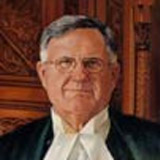
Hon. Gilbert Parent
Speaker of the House
Ruling Text
The Speaker:
I am now ready to rule on the question of privilege raised by the honourable member for Ancaster—Dundas—Flamborough—Aldershot on June 15 concerning interference with a vote in the House.
Editor's Note The riding of Wentworth-Burlington was changed to Ancaster-Dundas-Flamborough-Aldershot on June 29, 2000.
I would like to thank the honourable member for raising this matter, as well as the Parliamentary Secretary to the Minister of Justice, the honourable member for Winnipeg South and the House leader of the official opposition for their submissions on this issue.
The honourable member for Ancaster—Dundas—Flamborough—Aldershot stated that the Department of Justice had wilfully misled members with respect to the views of the Privacy Commissioner concerning Bill C-206, An Act to amend the Access to Information Act and to make amendments to other Acts by circulating a document in which the commissioner was characterized as opposing the bill.
He claimed both that the Privacy Commissioner had indicated support for the bill and that, in any case, the commissioner had not made his views with respect to the bill known when the Department of Justice had prepared the document which it provided to members.
The Parliamentary Secretary to the Minister of Justice, in his intervention, indicated that the government considered the comments in the document to be a fair and accurate assessment of the Privacy Commissioner's view. He cited a number of sources in support of this position, including a meeting with officials of the Office of the Privacy Commissioner as well as the Privacy Commissioner's annual report tabled in the House on May 16, 2000.
I examined with care the document submitted and I have reviewed all the arguments presented to me. This is a matter which the Chair views with extreme seriousness.
Speaker Jerome, when dealing with a case related to the misleading of a member, quoted the procedural principle at issue which is clearly set out in Erskine May [ [2]
]:
It is a breach of privilege to present or cause to be presented to either House or to Committees of either House, forged, falsified or fabricated documents with intent to deceive such House or Committees— Clearly, there is disagreement in the present case over the interpretation of the views of the Privacy Commissioner available to the government prior to the vote on Bill C-206. However, it is not the Speaker's role to adjudicate concerning such matters of interpretation. What I am required to rule on is a more narrow procedural issue: whether a wilful attempt has been made to mislead the House. While members may disagree with the way in which others view a situation, at times disagree very strongly, that is a different matter than the serious charge that such an interpretation is knowingly and wilfully false. Only on the strongest and clearest evidence can the House or the Speaker take steps to deal with cases of attempts to mislead members.
In the present case, on the basis of the statements made in the House and of the documents presented for the Chair's consideration, I can find no support for a claim that the privileges of the House have been breached in this way.
I would like to thank the honourable member for Ancaster—Dundas—Flamborough—Aldershot for drawing this matter to the attention of the House.
P0107-e 36-2 2000-10-19
Edit Metadata
Holding
"There is no evidence to support a claim that a wilful attempt was made to mislead the House, and therefore the privileges of the House have not been breached."
AI Summary
The Speaker ruled that a disagreement over the interpretation of the Privacy Commissioner's views did not constitute a wilful attempt to mislead the House, finding no breach of privilege.
AI Analysis
- Outcome
- Denied
- Tone
- Neutral
- Procedural Stage
- Question of Privilege
- Significance
Low
High