Question of Privilege
March 12, 1996
Charge against member: alleged sedition-prima facie question of privilege
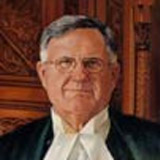
Hon. Gilbert Parent
Speaker of the House
Ruling Text
The Speaker:
My colleagues, on your behalf I do take this as a very serious situation. It is probably one of the more serious situations that I as your Speaker have been confronted with since I was chosen as your Speaker.
We do have on the floor a specific charge of one member to another member. Before I declare whether or not this is a prima facie case, I would make a passing comment.
This communiqué is dated October 26, 1995. I mention that because although contempt can stand by itself, it comes under the aegis of privilege. In privilege members are admonished and encouraged to bring up such a matter at the earliest possible moment. I mention that only to put this matter into perspective.
I will now recognize the House leader of the Bloc Québécois.
Editor's Note The Speaker then recognized a number of members for their comments on the matter.
The Speaker:
My colleagues, as I said to you at the beginning of my remarks in the House, as your Speaker I view the matter we have now undertaken as a very serious one.
The House has always been indulgent with me. It would be my intention for the next few minutes to call a recess of the House. I wish to inform myself on a few points and then I will come back to the House.
For the next little while I will recess the House.
Editor's Note The sitting of the House was suspended at 10:43 a.m. and resumed at 11:23 a.m.
The Speaker:
The House today is being faced with one of the more serious matters we have been faced with in this 35th Parliament. As a matter of fact, in my view it is so serious that the matter being raised at the first opportunity, which I have brought up in passing, is moot.
The ultimate act in which one member may confront another member is by making a charge against that member. Mr. Speaker Michener noted that there should be no investigation of any member's conduct unless there is a specific charge. This specific charge must be made by way of a substantive motion.
I am of the opinion that nothing will be gained by delaying consideration of this issue to a later date.
I believe the charges are so grave against one of our own members that the House should deal with this accusation forthwith. I invite the honourable member for Okanagan—Similkameen—Merritt to put his motion before the House.
Postscript After the matter was debated for about a half-hour, Paul Zed (Parliamentary Secretary to the Leader of the Government in the House of Commons) moved that the debate be adjourned.
[3]
When debate resumed the next day, [4]
Mr. Zed moved to amend Mr. Hart's motion by removing the charge of sedition and referring the "matter of the communiqué" to the Standing Committee on Procedure and House Affairs.
[5]
With the debate continuing unabated, Alfonso Gagliano (Minister of Labour and Deputy Leader of the Government in the House of Commons) gave notice of the government's intention to move closure.
[6]
Jim Abbott (Kootenay East) then moved a subamendment to put the charge of sedition back into the motion.
[7]
When the orders of the day were called the next day, [8]
the minister moved that debate not be further adjourned, and the motion carried on a recorded division.
[9]
Don Boudria (Chief Government Whip), then moved, with the unanimous consent of the House, that all recorded divisions on the amendments and the main motion be deferred to the following Monday, March 18.
[10]
When the votes where taken, Mr. Abbott's subamendment was defeated, Mr. Zed's amendment carried, and the main motion carried as amended.
[11]
On June 18, 1996, the Standing Committee on Procedure and House Affairs presented its 22nd report to the House.
[12]
The committee concluded that Mr. Jacob's actions were "irresponsible" but did not constitute a contempt of the House. The committee added that it did not feel that Mr. Hart had acted in an entirely non-partisan manner in raising the matter as a question of privilege. Later that day Mr. Jacob sought the floor to make a "solemn declaration". However, the Speaker intervened when Mr. Jacob began to criticize Mr. Hart for having raised the question of privilege. The Speaker reminded the House that a solemn declaration was not intended to make additional accusations or incite debate.
[13]
Another Bloc Québécois member, Gilles Duceppe (Laurier—Sainte-Marie) subsequently rose on a point of order to demand a public apology from Mr. Hart. The Speaker replied that the proper way of proceeding would be to debate the report itself on a motion for concurrence.
[14]
On June 20, Chuck Strahl (Fraser Valley East) moved concurrence in the committee's report and Ray Speaker (Lethbridge) moved an amendment to recommit the report with instruction to amend it so as to recommend that the House find Mr. Jacob in contempt of Parliament. The chief government whip later moved the adjournment of the debate and the motion carried on a recorded division.
[15]
Consequently, the concurrence motion was moved to Government Business on the Order Paper. The order was not called again for debate.
P0112-e 35-2 1996-03-12
Edit Metadata
Holding
"A prima facie question of privilege was found due to the gravity of the charge of sedition against a member, requiring the House to deal with the matter immediately via a substantive motion."
AI Summary
The Speaker finds a prima facie question of privilege regarding a grave charge of sedition against a member and allows a substantive motion to proceed immediately.
AI Analysis
- Outcome
- Sustained
- Tone
- Stern
- Procedural Stage
- Question of Privilege
- Significance
Low
High