Question of Privilege
April 11, 1997
Access to information: denial of access to media briefings by departmental officials
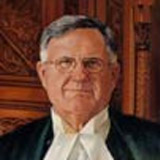
Hon. Gilbert Parent
Speaker of the House
Ruling Text
The Deputy Speaker:
Dear colleagues, I am now prepared to rule on the question of privilege raised by the honourable member for Surrey—White Rock—South Langley on Friday, March 21, concerning the actions allegedly taken by officials of the Department of Citizenship and Immigration.
I would like to thank the Leader of the Government in the House of Commons and Solicitor General of Canada, as well as the honourable member for St. Albert for their comments in this matter.
The honourable member for Surrey—White Rock—South Langley claimed that on the morning of March 21 officials of the Department of Citizenship and Immigration refused to allow her to attend a briefing on changes to the Immigration Investor Program. The honourable member argued that, by making this information available to the media before members of Parliament, the department acted in a way which constituted a contempt of Parliament as well as a breach of her parliamentary privileges.
I have reviewed the facts surrounding the incident, and after further consultations, my understanding of the matter is as follows: a notice was issued to the media by the office of the Minister of Citizenship and Immigration announcing that the minister would be holding a press conference regarding the Immigrant Investor Program in the National Press Gallery theatre at 10:15 a.m. on Friday, March 21. The notice further specified that the press conference would be preceded by a technical briefing by departmental officials at 9:00 a.m.
It was also confirmed to me that the National Press Gallery applies certain restrictions on the number of people permitted to attend a press conference in the theatre. Yet no such restrictions exist for briefings which, I am told, are frequently held in the theatre by government departments. Finally, the Chair was informed that the briefing in question was "off the record," which meant that it would not be televised on the closed-circuit system of the House of Commons and, consequently, could not be viewed by members of Parliament.
In the case which is presently before us, the Chair must address two issues. I will first deal with the issue of whether or not there has been a breach of privilege insofar as the member was denied access to information by departmental officials. I will then examine the claim that the actions of the department constituted a contempt of Parliament.
On December 1, 1992, when a member complained that the media had been given information by the government concerning financial assistance to Canadian Airlines when the same information was denied to members of Parliament, Speaker Fraser ruled on page 14360 of the Debates there was no question of privilege. He also reminded the House that:
Privilege is properly raised only when something has happened that makes it impossible or nearly impossible to carry out the obligations that a member has as a member of this House.
On December 15, 1987, a member objected to the fact that the government had established a press lock-up and briefing regarding a proposed agricultural program and that members were denied access to the information. Speaker Fraser's ruling which can be found at page 11788 of the Debates, stated that this was not a prima facie question of privilege because it did not impinge on the member's ability to carry on his duties as a member of Parliament.
In the matter submitted by the member for Surrey—White Rock—South Langley, the Chair cannot find that she has been obstructed in the performance of her parliamentary duties. The question raised did not involve access to parliamentary proceedings, either in the Chamber or in a committee meeting room. Ultimately, as the honourable member pointed out in her presentation, the officials offered to give her the same briefing after Question Period.
On the issue of contempt, I would refer again to Speaker Fraser. In a ruling given on October 10, 1989, Speaker Fraser said:
Broadly speaking, contempts are offences against the authority or the dignity of the House of Commons.
Does the fact that the media was given information before it was going to be made available to the member constitute a contempt of the House of Commons? At page 125 of the 21st edition of Erskine May, in chapter 9 dealing with contempts, it is stated:
The House will proceed against those who obstruct members in the discharge of their responsibilities to the House or in their participation in its proceedings.
It seems to me that members of Parliament were not denied information or obstructed in their duties in the House. There was, after all, a press conference scheduled for that same morning and it was broadcast on the closed-circuit television system of the House, making it accessible to all members. The Chair finds it difficult to conclude that the actions in question were an affront to the authority and dignity of the House.
For the reasons previously stated and in light of the precedents dealing with similar matters, I do not consider that this is a prima facie case of privilege.
The Speaker has no control and should have no control over such events, whether it be the manner in which they are organized or how access to them is managed.
The honourable member for Surrey—White Rock—South Langley may have a valid grievance which she may wish to pursue elsewhere; however, procedurally the matter has been settled in that it does not amount to a breach of parliamentary privilege, nor does it constitute a contempt of Parliament.
I thank the honourable member for having brought this matter to the attention of the Chair.
P0113-e 35-2 1997-04-11
Edit Metadata
Holding
"The denial of a Member's access to a technical briefing for the media by departmental officials does not constitute a prima facie breach of privilege or contempt of Parliament, as it does not obstruct the Member in the performance of their parliamentary duties."
AI Summary
The Speaker ruled that denying an MP access to a departmental media briefing is not a breach of privilege as it does not prevent them from performing their parliamentary duties.
AI Analysis
- Outcome
- Denied
- Tone
- Educational
- Procedural Stage
- Ruling on a Question of Privilege
- Significance
Low
High