Ruling
March 13, 1995
Second reading stage: reasoned amendment; admissibility
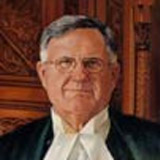
Hon. Gilbert Parent
Speaker of the House
Ruling Text
The Deputy Speaker:
Colleagues, on February 27 the honourable member for Yorkton—Melville sought to move an amendment to the motion for second reading of Bill C-68, An Act respecting firearms and other weapons.
A question was raised regarding the procedural acceptability of the proposed amendment. The Chair heard arguments from the honourable member for Glengarry—Prescott—Russell, who is the government whip, and the honourable House leader for the Reform Party before reserving his decision. The Chair wishes to thank those honourable members for their helpful comments.
The proposed amendment is asking the House not to proceed with the second reading of Bill C-68 on the grounds that its provisions link the licensing and registration of firearms with the creation of offences relating to firearms. This kind of amendment is known as a reasoned amendment.
The honourable chief government whip argued that this motion was out of order as a reasoned amendment because it was not opposed to the principles of the Bill. However, Speaker Lamoureux, in a ruling on August 30, 1966, noted that opposition to the principles of a bill is, and I quote:
only one of the several possible forms of a reasoned amendment.
[2]
Speaker Lamoureux pointed out that several forms of reasoned amendments were listed in May's Parliamentary Practice, 17th edition, at page 527 and that May indicated only that a reasoned amendment "may be declaratory of some principle adverse to, or differing from, the principles, policy or provisions of a bill".
Indeed, one of the other forms of reasoned amendment listed is that it "may express opinions as to any circumstances connected with the introduction or prosecution of the bill, or otherwise opposed to its progress".
Finally, Speaker Lamoureux cited Abraham and Hawtrey's Parliamentary Dictionary, which states in very clear terms what a reasoned amendment is. It reads at page 162 as follows:
This form of amendment seeks either to give reasons why the house declines to give a second or third reading to the bill, or to express an opinion with regard to its subject matter or to the policy which the bill is intended to fulfil.
The Chair finds, after careful consideration, that the proposed amendment respects the definition offered in Abraham and Hawtrey and one of the forms listed in May, and further that it follows a long line of similar amendments presented in this House which have expressed an opinion regarding the policy or the provisions contained in a bill. Consequently, the Chair rules the amendment in order.
Postscript Mr. Breitkreuz's reasoned amendment was defeated in a recorded division, on Wednesday April 5, 1995.
[3]
P0502-e 35-1 1995-03-13
Edit Metadata
Holding
"A reasoned amendment is procedurally acceptable even if it does not oppose the principles of a bill, as long as it expresses an opinion on the bill's provisions, policy, or the circumstances of its introduction."
AI Summary
The Speaker ruled a reasoned amendment admissible, clarifying that such amendments can express opinions on a bill's provisions and do not need to be strictly opposed to its core principles.
AI Analysis
- Outcome
- Denied
- Tone
- Educational
- Procedural Stage
- Government Orders
- Significance
Low
High