Question of Privilege
November 1, 1990
Oath/affirmation of allegiance: Member's right to sit in the House in the face of an alleged repudiation of oath; meaning and significance of the oath
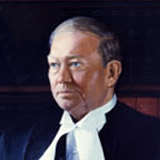
Hon. John Fraser
Speaker of the House
Ruling Text
The Speaker:
On Wednesday, October 3, 1990, the honourable Member for Parkdale—High Park rose on a question of privilege concerning the meaning of the Oath of Allegiance taken by all duly elected Members and the duties and obligations of Members relating thereto.
The Chair undertook to consider the matter carefully and to return to the House. I am now prepared to rule on the matter. The ruling I am about to deliver will touch not only on the question of privilege raised by the honourable Member for Parkdale—High Park, but on other important issues raised by other honourable Members during the discussion which ensued.
Let me preface my decision by saying that as your Speaker I am well aware of the importance of this matter, not only to honourable Members but to constituents across the country. Events of recent months have once again sharpened the focus of the Canadian public on the Members of this Chamber and the role they play in Parliament. Many constituents have contacted their Members of Parliament to express their views, and though their views may differ and differ sharply, the passion with which they hold those views is striking. Indeed, it is precisely because these views are so passionately held that the real issues can sometimes be obscured. The Chair hopes today to clarify the situation for honourable Members and perhaps no less importantly, for the public who are watching us.
First, the Chair will deal with the precise point at issue, namely the validity of the Oath of Allegiance taken by the honourable Member for Laurier—Sainte-Marie.
As all honourable Members are aware, Section 128 of the Constitution Act, 1867 requires all Members of Parliament to take an Oath of Allegiance to Her Majesty the Queen or to make an affirmation in lieu thereof before being allowed to sit or vote in the House of Commons. The wording of the oath dates back to 1867 and derives from the oath then used in the British Parliament. It reads as follows:
I...
—and the person's name is given— do swear that I will be faithful and bear true allegiance to Her Majesty, Queen Elizabeth II.
I point out that that is the oath and it is limited to these very brief words.
Thus, the taking of the Oath is a constitutional requirement and only those Members who have taken and subscribed to the oath are allowed to take their seats in the House of Commons.
As Beauchesne pointed out in the Fourth Edition of his Rules and Forms of the House of Commons of Canada, Citation 16(1):
It is not the oath that makes a person a Member of the House. He must be a Member before being sworn in...The object of the oath is to allow the Member to take his seat in the House.
On August 27, 1990, the honourable Member for Laurier—Sainte-Marie duly elected by his constituents on August 13, made a solemn affirmation and signed the test roll. In so doing, like all other honourable Members, he became entitled to take his place in the House and on September 24, 1990, when the House resumed sitting, the honourable Member was introduced and took his seat.
The current controversy springs from events of September 23, 1990. On September 23, the honourable Member for Laurier—Sainte-Marie made another statement outside this chamber expressing his loyalty to the people of Quebec. This statement, as the honourable Member for Shefford has pointed out, is very similar to one of two oaths taken by Members of the National Assembly of Québec. The honourable Member for Shefford sees no contradiction there. He argues, "...
l'un n'empêche pas l'autre." But this viewpoint is not universally shared. Others contend—contentions that have been fuelled by media reports and commentary—that the events of September 23 cast doubt on the legitimacy of the oath taken August 27.
Your Speaker is not empowered to make a judgment on the circumstances or the sincerity with which a duly elected Member takes the oath of allegiance. The significance of the oath to each Member is a matter of conscience and so it must remain.
The honourable Member for Laurier—Sainte-Marie has stated very clearly in this House that he has in no way repudiated the oath of allegiance he took on August 27. The honourable Member said:
I never mocked the Canadian Parliament nor the Queen. I swore the oath of allegiance with all due regard for the democratic institution that the Canadian Parliament is.
Whatever construction the media has put on the situation, whatever the perception or misperception of the events of September 23, it is a fundamental principle and long-established convention of the House to accept as true the word of an honourable Member. The Chair must therefore conclude that there has been no breach of privilege or contempt.
That being said, it is important to view this situation in its entirety. The honourable Member for Laurier—Sainte-Marie has been unambiguous on his perspective and that of his colleagues:
We insisted that it is with the utmost respect for Canadian parliamentary institutions that we are sitting here, while insisting that we would strive to achieve Quebec's sovereignty as soon as possible.
As the honourable Member for Cape Breton—East Richmond has eloquently stated, the fact that an honourable Member holds views which are vigorously opposed by other honourable Members can in no sense be allowed to detract from his right to present them.
A historical perspective on parliament here in Canada and in Great Britain reveals ample precedent for the presence in the House of duly elected Members whose ultimate goal may be at odds with, even inimical to, the constitutional status quo.
Only the House can examine the conduct of its Members and only the House can take action if it decides action is required. Should the House decide that an honourable Member has in some way committed a contempt, then it is for the House to take the appropriate steps.
The Chair wishes to thank all honourable Members who participated in the discussion of these important matters. The freedom of all Members of this House to represent their constituents and to perform their duties is a cherished right. The Chair hopes that the airing of these issues has helped to clarify the situation so that the work of the House can carry on in the best traditions of this place. I thank honourable Members.
F0130-e 34-2 1990-11-01.
[1]
Debates, October 2, 1990, pp. 13694-5.
[2]
Debates, October 3, 1990, pp.
13736 - 42.
Edit Metadata
Holding
"The Speaker cannot judge the sincerity of a Member's Oath of Allegiance, which is a matter of personal conscience, and must accept the Member's word that the oath was not repudiated; therefore, no breach of privilege or contempt occurred."
AI Summary
The Speaker ruled that a Member's external statement of loyalty to Quebec did not invalidate their constitutional Oath of Allegiance, as the oath's sincerity is a matter of conscience beyond the Speaker's judgment.
AI Analysis
- Outcome
- Denied
- Tone
- Educational
- Procedural Stage
- Other
- Significance
Low
High