Ruling
October 25, 1990
Statements by Ministers: right of reply; recognizing a political party; Speaker's authority to interpret statutes
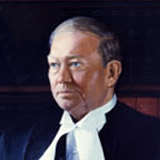
Hon. John Fraser
Speaker of the House
Ruling Text
The Speaker:
I want to thank the honourable Member for Shefford for his comments, and the other Members—the honourable Member for Ottawa—Vanier (Mr. Jean-Robert Gauthier), the honourable Member for Kingston and the Islands (Mr. Peter Milliken), the honourable Member for Kamloops (Mr. Nelson Riis), the right honourable Secretary of State for External Affairs (Rt. Hon. Joe Clark) and the Parliamentary Secretary (Mr. Albert Cooper).
This is very interesting, because the honourable Member for Shefford is seeking an interpretation from the Chair respecting certain laws of Canada. A legal interpretation might be very interesting. I am tempted but, unfortunately for the honourable Member for Shefford, it is not the Chair's role to interpret the Statutes of Canada. Consequently, I must reject the honourable Member's request. I have taken a few moments of the time of the House to discuss a matter which, as I said before, is most interesting but it is an area that is closed to the Chair.
I would like to draw to the attention of honourable Members [Stranding Order] rule 33. It is very clear.
33.(1) On Statements by Ministers, as listed in Standing Order 30(3), a Minister of the Crown may make a short factual announcement or statement of government policy. A Member from each of the parties in opposition to the Government may comment briefly thereon. The time for such proceedings shall be limited as the Speaker deems fit.
We are bound by the rules here and, as honourable Members have said, that is the rule. I think the honourable Member for Kamloops said the Speaker's hands were tied. That is certainly the case and, without consent or without a change in this rule, I must say to the honourable Member for Shefford that I am not in a position to allow the honourable Member to respond.
I want to point out to honourable Members, as has been mentioned in argument, and also to the public that this does not mean that the honourable Member for Shefford or others who sit in this Chamber outside the recognized parties at the moment do not have a chance to be heard. That would be an interpretation which is not accurate.
All Members have the right to speak during the period called Statements by Members each day, a full sixty second statement. Further, Members have the right to ask questions in Question Period. After that question is asked, under the rules, Members can go further. They can ask to be allowed to speak on the adjournment debate and, when their turn comes up, that is a seven-minute speech to which the Government responds for three minutes. There are other ways—and I have not precluded some other ways as well—in which these matters can be raised.
Unfortunately for the honourable Member for Shefford, I am bound by the rule. I see the honourable Member is indicating some understanding of that. His route, I think, is discussions with bis colleagues and, if there is to be a change, then of course I would abide by it.
It has been brought to my attention that there was a request by the honourable Member for Shefford to respond. Is there unanimous consent to allow the honourable Member for Shefford to respond?
An hon.
member:
No.
The Speaker:
I have to advise the honourable Member there is not unanimous consent.
F0319-e 34-2 1990-10-25.
[1]
Debates, October 25, 1990, pp. 14665-8.
Edit Metadata
Holding
"The Speaker is bound by the Standing Orders, cannot interpret the Statutes of Canada, and therefore cannot permit a Member who is not part of a recognized party to respond to a Minister's Statement."
AI Summary
The Speaker rules that the Chair cannot interpret statutes and that Standing Order 33 prevents a Member not belonging to a recognized party from replying to a Minister's Statement.
AI Analysis
- Outcome
- Denied
- Tone
- Educational
- Procedural Stage
- Routine Proceedings
- Significance
Low
High