Point of Order
October 22, 1990
Alleged abuse pointed out; withdrawal of a Government Order and ensuing amendments
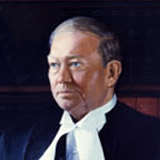
Hon. John Fraser
Speaker of the House
Ruling Text
The Speaker:
The honourable Member for Saint-Denis, who is one of the most senior Members here, has risen on a matter and is supported by the honourable Member for Burnaby—Kingsway (Mr. Svend Robinson) on [a] matter which I think is very serious indeed. I think it is serious because debate took place on a motion, the vote was deferred, and honourable Members expected to be voting on the motion that was debated. For reasons that we do not need to go into, by consent, the motion was changed. That means that honourable Members will go to vote on a different motion than that which was debated. I very much regret this.
The honourable Member for Saint-Denis has said that an abuse of Parliament by consent is just as much an abuse. We are at a time when the country is watching this institution very closely. Much of what the country sees, it is not happy with. All of us are going to have to make a much greater effort to give an example that is in keeping with the great tradition of this place, in keeping with the history of it, and in keeping with what I think most of us want this place to be in the hearts and minds of Canadians.
The honourable Member for Burnaby—Kingsway has stated correctly that the House can by consent do what it wishes. The reason that that is so is because ultimately this is the place where the people of Canada have sent all of us to do what we think is in the best interest of the country. If the House agrees and there is consent, then no matter what other rules we may have or whatever customs we may have, we can abridge those to do what the whole House consents to do.
There may have been, and there may well be, sound reasons under the circumstances where it was felt by some that it may have been in the national interest to change the motion. I do not want to get into that side of the debate. What I have to say to honourable Members is that, in my view, what happened was improper and an abuse. I am not in a position to change it, but I view it as a very serious matter. However, I want Members to know, and I want the public to know, that it was done by consent and we are now all bound by it. I would hope that not again for a long, long time, if ever, would honourable Members, such as the honourable Member for Saint-Denis, the honourable Member for Burnaby—Kingsway, or others have to rise to complain about an event which, while procedurally proper because of the consent, in my opinion, ought not to have happened.
Postscript On October 23, 1990, immediately after the prayers, the Speaker stated that his comments regarding the point of order raised by Mr. Prud'homme meant no reflection whatsoever on the House or the House leadership. He admitted that he probably went further than a Speaker should and reminded Members that the House can do by consent what it wishes to do.
[4]
F0415-e 34-2 1990-10-22.
[1]
Journals, October 18, 1990, pp. 2132-3.
[2]
Journals, October 19, 1990, p. 2138.
[3]
Debates, October 22, 1990, pp. 14507-9.
[4]
Debates, October 23, 1990, p. 14553.
Edit Metadata
Holding
"While changing a motion by unanimous consent after debate but before a vote is an abuse of the process, the Chair cannot intervene because the House is the master of its own proceedings and its consent is binding."
AI Summary
The Speaker rules that while changing a motion by consent after debate is an abuse, the Chair cannot overturn a decision made by the unanimous consent of the House.
AI Analysis
- Outcome
- Other
- Tone
- Stern
- Procedural Stage
- Government Orders
- Significance
Low
High