Question of Privilege
May 9, 1996
Private member's motion containing allegations of contempt by one member against another: not designated as votable; standing on the Order PaperJune 20, 1996
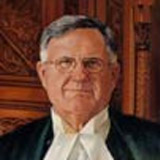
Hon. Gilbert Parent
Speaker of the House
Ruling Text
The Speaker:
I am now prepared to rule on the question of privilege raised on Tuesday afternoon by the honourable member for Lethbridge concerning the text of Motion No. 1 standing on the Order Paper in the name of the honourable member for Glengarry—Prescott—Russell.
I thank the honourable member for Lethbridge, the honourable member for Glengarry—Prescott—Russell and the honourable member for Fraser Valley East for their participation in the discussion.
For the benefit of all honourable members, I remind the House the motion in question contains a number of charges against the honourable member for Lethbridge relating to actions in which he participated at the beginning of this year.
Having rendered my ruling on Tuesday on the procedural acceptability of this motion being dealt with under Private Members' Business, I will now address the matter of what the honourable member contends is a breach of his rights.
The member submitted that having this motion standing unresolved on the Order Paper has and will continue to seriously affect his reputation and his ability to function as a member. Further, the member argued that given my earlier ruling and that he felt he could seek no other remedy for the situation, he had no option but to bring this matter before the House as a question of privilege.
It has been repeatedly acknowledged by my predecessors that parliamentary privilege is narrowly defined as being limited to matters which affect members in the discharge of their parliamentary duties.
For a breach of privilege to occur, a member must sufficiently demonstrate that something has obstructed or interfered with his or her ability to discharge duties as a member of the House.
In ruling on a question of privilege, I, as Speaker, have to decide whether or not at first glance there has been a breach of privilege.
In this instance, I must determine whether or not the motion sitting on the Order Paper violates the member's privileges by, in some way, impeding him from carrying out his duties.
In the past motions regarding the conduct of members have been placed on the Order Paper under Private Members' Business and have been allowed to remain there, in some cases for the remainder of a session, without ever being brought to a decision by the House.
I refer members to Motion No. 132, placed on notice on May 5, 1986, Motion No. 459, placed on notice on May 24, 1989, and Motion No. 167, placed on notice on February 28, 1996. This last motion died on the Order Paper in the First Session of this Parliament but, having been resubmitted under Private Members' Business in this session, was subsequently drawn and debated as a non-votable item of Private Members' Business on March 22, 1996. It was then dropped from the Order Paper without a decision of the House.
The motion now in question, Motion No. 1, was placed on notice on February 27, 1996. The honourable member for Lethbridge acknowledged he hesitated to bring this matter before the House until it had at least reached the point of debate.
While I recognize the honourable member's concern that in the near future he will not be able to respond to the charges made against him, I do not find the member has demonstrated his abilities to function as a member have in anyway been affected or impeded over the course of the months that this motion has been sitting on the Order Paper. As such, I cannot find that there has been a prima facie breach of privilege.
The honourable member for Lethbridge sought guidance on how he might be able to address his grievance were I to find this matter not to be a prima facie breach of privilege. In the case before us, while the House will not have to take a decision on the motion in question, the honourable member will have the opportunity to respond to the motion when it is brought up for debate in the House.
In addition, let me reiterate what I said Tuesday: the rules of the House now in place allow for the proceedings on this motion to go forward. Should the House choose to re-examine these rules, the Standing Committee on Procedure and House Affairs is empowered to undertake such an examination on its own initiative.
Might I therefore suggest that the honourable member consider pursuing this matter with the committee.
Again, I thank all honourable members for their contributions to this discussion.
Postscript The motion sponsored by Mr. Boudria was not debated in the House. On October 23, 1996, the Speaker informed the House that Mr. Boudria had advised the Chair in writing that because of his recent appointment to cabinet, he could no longer move private members' motions. The Speaker, who has the duty under the Standing Orders of ensuring the orderly conduct of Private Members' Business, thus directed that Mr. Boudria ‘s motion be removed from the Order Paper.
[2]
P1002-e 35-2 1996-06-20
Edit Metadata
Holding
"The mere presence of a motion on the Order Paper containing charges against a member does not constitute a prima facie breach of privilege without evidence that it actually impedes the member's ability to perform their parliamentary duties."
AI Summary
The Speaker denied a question of privilege, ruling that a motion on the Order Paper containing allegations against a member did not impede their ability to function.
AI Analysis
- Outcome
- Denied
- Tone
- Educational
- Procedural Stage
- Ruling on a Question of Privilege
- Significance
Low
High