Point of Order
November 5, 1998
Changes to Standing Orders and practice: concurrence in committee report; implementation of recommendations
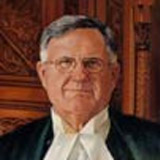
Hon. Gilbert Parent
Speaker of the House
Ruling Text
The Speaker:
After Question Period this afternoon the honourable member for Surrey Central raised a point of order concerning the events of yesterday evening when, by unanimous consent, a motion for concurrence in the 13th report of the Standing Committee on Procedure and House Affairs was presented and adopted in the House.
As honourable members know, the report comprises eight recommendations on the way the House handles Private Members' Business.
I thank the honourable member for Surrey Central, the honourable government House leader, the honourable whip of the New Democratic Party and the member for Elk Island for their contributions. I am now prepared to explain how the Chair will proceed on this matter.
Recommendation No. 5 concerning how recorded divisions on Private Members' Business are taken will be implemented immediately since it is a matter of practice.
Recommendation 8 on the priority for drafting private members' bills will be implemented immediately, because this is an administrative matter.
Recommendation No. 7 lies within the purview of the Board of Internal Economy. That will be taken up there.
With regard to the other recommendations, Nos. 1, 2, 3, 4 and 6, these in the opinion of the Chair call for substantive amendments to the Standing Orders and require various technical interpretations. I have therefore asked the Clerk to draft proposed amendments to the Standing Orders which would implement recommendations Nos. 1, 2, 3, 4 and 6 and to submit that draft to the House leaders.
As soon as the House has pronounced itself on the specific text of new Standing Orders to give effect to the recommendations it adopted last night, the Chair will be governed accordingly. In the meantime, however, because the Chair has no mandate to unilaterally change the text of the Standing Orders, the Chair will continue to be guided by the existent Standing Orders.
Postscript In drafting amendments to the Standing Orders, it was realized that recommendation No. 3 did not necessitate a change in the written rules, but could in fact be implemented through a simple change in the way an order for the taking of a deferred recorded division on a private members' bill or motion was indicated on the Order Paper. On November 30, 1998, during Routine Proceedings, the government House leader moved a motion to make specific amendments to the Standing Orders to implement the key provisions of recommendations Nos. 1, 2, 4 and 6.
[4]
The motion was adopted without debate.
P1006-e 36-1 1998-11-05
Edit Metadata
Holding
"The Chair will immediately implement administrative and practice-based recommendations from the adopted committee report, but substantive changes to the Standing Orders require a separate, formal motion from the House, as the Speaker cannot unilaterally alter the written rules."
AI Summary
The Speaker rules that while administrative changes from an adopted committee report can be implemented immediately, amendments to the Standing Orders require a subsequent formal motion from the House.
AI Analysis
- Outcome
- Other
- Tone
- Educational
- Procedural Stage
- After Question Period
- Significance
Low
High