Question of Privilege
October 11, 1990
Government Orders; notice of intention to move time allocation; interpretation of applicable Standing Order; notice ruled invalid
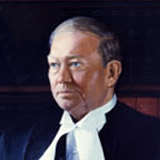
Hon. John Fraser
Speaker of the House
Ruling Text
The Speaker:
The honourable Member for Ottawa—Vanier rose earlier this morning on a question of privilege concerning whether or not the honourable Minister (Hon. John McDermid, Minister of State (Privatization and Regulatory Affaires)) had given valid notice pursuant to the provisions of sections 78(1), 78(2) and 78(3) of the Standing Orders relating to time allocation.
The honourable Minister said "I am informed that to date agreement has not been reached under the provisions," et cetera. I point out that he also said "we will try to get an agreement with the opposition parties on a reasonable length of time".
There has been considerable discussion this morning with respect to what is or what is not required under the Standing Order in terms of consultation or exchange of views between the Government and others in the Chamber.
I want it clearly understood that my ruling today does not turn in anyway, or on any particular, on any of the comments that were made during arguments as to the question of discussions between, or lack of discussions between, anybody in this Chamber at all.
My ruling does not take anything away from rulings of past Speakers, and especially my ruling of some months ago, in March I think of last year. It made it very clear that under the rules it is not for the Speaker to go behind the statement of the Minister and try to make a factual ruling as to whether or not discussions were adequate or inadequate or, for that matter, try to strain the rules and to try to give an interpretation that substitutes for the plain wording of the rule.
I have also indicated that it might be in the interests of the House that the entire rule was looked at again, reconsidered, and perhaps redrafted.
The rule I am bound by, and this place lives by the rule of law, is the plain words of [Standing Order] 78(3) and it states:
(3) A Minister of the Crown who from his or her place in the House, at a previous sitting, has stated an agreement could not be reached— It sometimes happens that when one has to try to interpret what is meant by words, some guidance or some difference shows up between the English and the French. There is, in my opinion, absolutely no difference whatsoever in the meaning of those words either in English or in French.
As I have pointed out, the honourable Minister said: "I have been informed to date that agreement has not been reached." I find on this very narrow ground, but one which I cannot ignore as your Speaker because it is clearly there in the rules, that the Minister should have said "could not be reached." That is what is required under the [rules] and, as a consequence, I have to rule that the notice given yesterday is not valid. Of course, it is for the Government to decide whether it wishes to give the notice again.
Postscript On October 22, 1990, the Government gave notice of its intention to apply allocation of time to the second reading stage of Bill C-84.
[3]
F0204-e 34-2 1990-10-11.
[1]
Debates, October 10, 1990, p. 14016.
[2]
Debates, October 11, 1990, pp.
14019 - 28.
[3]
Debates, October 22, 1990, p. 14523.
Edit Metadata
Holding
"A notice for time allocation is invalid because the Minister stated an agreement 'has not been reached' instead of the procedurally required wording 'could not be reached' as stipulated by Standing Order 78(3)."
AI Summary
The Speaker ruled a government notice for time allocation invalid because the Minister used the phrase 'has not been reached' instead of the procedurally required 'could not be reached'.
AI Analysis
- Outcome
- Sustained
- Tone
- Educational
- Procedural Stage
- Government Orders
- Significance
Low
High