Ruling
November 9, 1978
Infringing on financial initiative of the Crown (private Member's bill)
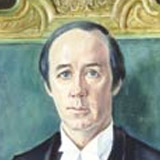
Hon. James Jerome
Speaker of the House
Ruling Text
<div class="DecisionMain" role="main">
<p class="decision-chapter">Content of Bills / Infringing on Financial Initiative of the Crown</p>
<p class="d-DecisionDate">
<time>November 9, 1978</time>
</p>
<p class="e-Debates">Journals <a href="https://parl.canadiana.ca/view/oop.HOC_3004_124_01/125">pp. 130-3</a></p>
<p class="e-Debates">Debates <a href="https://parl.canadiana.ca/view/oop.debates_HOC3004_01/977?r=0&s=1">pp. 975-7</a></p>
<div>
<h2 class="f-ContextResoEdNotePostscriptTitle">Background</h2>
</div>
<p class="g-contextResoEdNotePostscript">As the House was about to proceed to the second reading consideration of Bill C-214, an Act respecting a Canadian Bill of Rights for Children, the Deputy Speaker intervened to comment on an irregularity in the bill which created doubts about its procedural acceptability. The Chair explained that while the problem was not serious in this particular case, there was the risk that it would lead to further abuses in the future.</p>
<h2 class="f-ContextResoEdNotePostscriptTitle">Issue</h2>
<p class="g-contextResoEdNotePostscript">Does this private Member's bill infringe upon the financial prerogative of the Crown even though the bill includes a clause (Clause 6) which states that "nothing in the present Act shall be interpreted as requiring the expenditure of public funds"?</p>
<h2 class="f-ContextResoEdNotePostscriptTitle">Decision</h2>
<p class="g-contextResoEdNotePostscript">In this particular case, the bill will be allowed to proceed. However, this case must not be taken as a precedent.</p>
<h2 class="f-ContextResoEdNotePostscriptTitle">Reasons given by the Deputy Speaker</h2>
<p class="g-contextResoEdNotePostscript">The inclusion of "Clause 6 in this bill, and similar clauses in other bills, whatever their purposes or object may otherwise be, will not be given any consideration in determining whether or not there is any infringement of the financial initiative of the Crown."</p>
<p class="g-contextResoEdNotePostscript">The Chair cannot interpret "the incorporation of such a clause in a private Member's public bill as an acceptable way of eluding the requirement for a Royal Recommendation where such recommendation is required."</p>
<p class="g-contextResoEdNotePostscript">"The Speaker, and only the Speaker, has the duty and responsibility to determine whether any bill requires a Royal Recommendation ... The rules of financial procedure are so stringent that there is no provision whereby the Speaker might leave it to the House to decide whether or not a Royal Recommendation is required for a particular bill or to allow the House to do it by unanimous Consent."</p>
<h2 class="f-ContextResoEdNotePostscriptTitle">Authorities cited</h2>
<p class="g-contextResoEdNotePostscript">May, 19th ed., pp. 709, 754.</p>
<p class="g-contextResoEdNotePostscript">Standing Order 62.</p>
<p class="MsoNormal">British North America Act of 1867, sec. 54.</p>
</div>
Edit Metadata
Holding
"The private Member's bill is out of order as it infringes on the financial initiative of the Crown by proposing an expenditure without the required Royal Recommendation."
AI Summary
The Speaker ruled a private Member's bill out of order for infringing on the financial initiative of the Crown by proposing spending without a Royal Recommendation.
AI Analysis
- Outcome
- Sustained
- Tone
- Educational
- Procedural Stage
- Private Members' Business
- Significance
Low
High