Point of Order
February 20, 1979
Infringing on financial initiative of the Crown (private Member's bill)
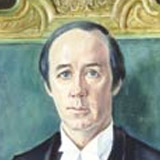
Hon. James Jerome
Speaker of the House
Ruling Text
<div class="DecisionMain" role="main">
<p class="decision-chapter">Content of Bills / Infringing on Financial Initiative of the Crown</p>
<p class="d-DecisionDate">
<time>February 20, 1979</time>
</p>
<p class="e-Debates">Journals <a href="https://parl.canadiana.ca/view/oop.HOC_3004_124_01/363">pp. 393-5</a></p>
<p class="e-Debates">Debates <a href="https://parl.canadiana.ca/view/oop.debates_HOC3004_04/29?r=0&s=1">pp. 3423-5</a></p>
<div>
<h2 class="f-ContextResoEdNotePostscriptTitle">Background</h2>
</div>
<p class="g-contextResoEdNotePostscript">The Chair, having authorized presentation of a number of bills at the first reading stage without deciding upon their procedural acceptability, reserved the right to subsequently declare any such bill out of order due to irregularity. As the second reading stage debate of Bill C-210, an Act to establish the Canadian Solar Energy Institute, was about to begin, the Deputy Speaker noted that in two aspects this bill appeared to infringe upon the financial prerogative of the Crown.</p>
<h2 class="f-ContextResoEdNotePostscriptTitle">Issue</h2>
<p class="g-contextResoEdNotePostscript">Can consideration of a bill be allowed to proceed, if it contains clauses which infringe upon the financial prerogative of the Crown?</p>
<h2 class="f-ContextResoEdNotePostscriptTitle">Decision</h2>
<p class="g-contextResoEdNotePostscript">While the bill does infringe upon the financial prerogative of the Crown and should properly be accompanied by a Royal Recommendation, the Chair is inclined to allow the debate to proceed. At the same time, however, the Chair reserves the right to oppose the bill's progress at another stage. Moreover, this decision is not to be considered a precedent.</p>
<h2 class="f-ContextResoEdNotePostscriptTitle">Reasons given by the Deputy Speaker</h2>
<p class="g-contextResoEdNotePostscript">One clause of the bill requires the appointment of five persons. There is no explicit provision that they will serve without remuneration and, according to the Interpretation Act, the power to appoint includes the power to pay.</p>
<p class="g-contextResoEdNotePostscript">It is also difficult to believe that the objectives of the bill can be achieved without some substantial expenditures, at least for an initial period. "Of course, this could only be of indirect consequence to the public purse and it could be corrected through the voting of a subsidy or a grant through estimates."</p>
<h2 class="f-ContextResoEdNotePostscriptTitle">Authorities cited</h2>
<p class="g-contextResoEdNotePostscript">Standing Order 62(2).</p>
<p class="g-contextResoEdNotePostscript">Interpretation Act, R.S.C. 1970, c. 1-23, s. 22 (3), (4).</p>
</div>
Edit Metadata
Holding
"A private Member's bill that creates a new charge upon the public revenue is out of order as it infringes on the financial initiative of the Crown and lacks the requisite royal recommendation."
AI Summary
The Speaker ruled a private Member's bill out of order for violating the financial initiative of the Crown by proposing a new public expenditure without a royal recommendation.
AI Analysis
- Outcome
- Sustained
- Tone
- Educational
- Procedural Stage
- Private Members' Business
- Significance
Low
High