Point of Order
April 4, 1990
Motion "That Strangers be ordered to withdraw"; acceptability; moving on a point of order
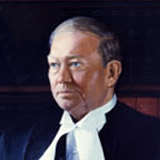
Hon. John Fraser
Speaker of the House
Ruling Text
The Speaker:
The honourable Member has moved a motion. First, I want to say to the honourable Member that I think precedent and procedural law are such that it is not appropriate to move that motion unless the honourable Member has the floor on debate, and I am so ruling. That does not mean that the honourable Member may not move the motion at another time...
The honourable Member for Ottawa—Vanier is concerned that there may have been an error in the Speaker's ruling and the honourable Member for Kamloops is indicating that he wants some clarification as well. Speakers are not infallible. I am going to stand the House down for a few minutes to respond to the concern that has been mentioned. Is that agreed?...
First of all, I want to thank all Members of the House for their courtesy, especially the honourable Member for Ottawa—Vanier and the honourable Member for Kamloops for allowing me a few minutes to respond to the question put by both honourable Members.
The matter arises from a motion put on a point of order by the honourable Member for Kamloops at the end of Question Period. That motion is in effect a motion which when the honourable Member sees a stranger involves putting the matter to the House. The House would vote as to whether or not the House ought to be cleared. That is, all people in this Chamber whether they are guests or the public or whether they work for the House, other than Members of Parliament, would have to clear the House. The House would then move to a secret session.
The ruling I made was that it is not appropriate to move that particular motion on a point of order. At that point both honourable Members in a very courteous way asked if I could give them authority to do that.
I have considered the authorities and I would like to share them with honourable Members. First, I am referring to Beauchesne Fifth Edition, Citation 234(2):
A Member cannot rise on a point of order to move a motion.
The second citation I wish to bring to the attention of the House is Beauchesne Sixth Edition, Citation 318(2):
A Member cannot rise on a point of order to move a motion—except for a motion that a Member be now heard.
I refer to the Annotated Standing Orders, page 459, footnote No. 1:
Although Members cannot move motions when recognized on a point of order ( Beauchesne, 5th ed., p. 78), if the Chair has not recognized a Member to move a motion "That a Member be now heard— —and goes on to discuss that particular exception. I have tried to accommodate honourable Members and give the reason for the order, and as I have said before, if there are practices here that honourable Members do not agree with in terms of our rules and procedures then of course there is a time and place to decide to change them if possible. I think I have to say that the ruling I made must stand.
I want to point out something else. This ruling is on the narrow point as to whether or not the honourable Member could move the motion on a point of order. That is all it is. There may be another discussion with respect to what it was the honourable Member from Kamloops wanted to do.
I thank honourable Members for their courtesy.
F0205-e 34-2 1990-04-04.
[1]
Debates, April 4, 1990, pp. 10185-6.
Edit Metadata
Holding
"A Member cannot move a motion when recognized on a point of order, with very specific and narrow exceptions not applicable in this case."
AI Summary
The Speaker ruled that a motion cannot be moved on a point of order, citing Beauchesne as the procedural authority.
AI Analysis
- Outcome
- Sustained
- Tone
- Educational
- Procedural Stage
- End of Question Period
- Significance
Low
High