Question of Privilege
February 12, 1990
Recorded divisions: Members who allegedly voted twice; use of dilatory tactics
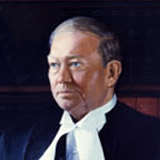
Hon. John Fraser
Speaker of the House
Ruling Text
The Speaker:
I wish to bring to the attention of the House a ruling on a question which honourable Members will remember was raised by the honourable Member for Calgary West on Wednesday, January 24, following several recorded divisions that day. Put simply, there was the suggestion that some honourable Members may have voted twice.
Subsequently, these incidents were raised by the honourable Member for Calgary West. The honourable Member claimed, as a question of privilege, that contrary to the established rules and practices of this House, two members voted twice on those divisions. This charge was denied by the Members involved, both on Wednesday when the issue was first raised, and again on Thursday.
The issue was extensively discussed last Thursday, and I wish to thank all honourable Members who made presentations.
On Friday, the honourable Member for Windsor—St. Clair offered an apology to the House for any unintended misunderstandings caused by his actions during the divisions in question. This apology closes the matter in so far as the question of privilege is concerned.
However, as Speaker, I want to make a few comments on the events that took place. It is accepted practice that when the House is considering an item of government policy that is highly contentious, Members of the opposition will seek to use any means available to them to delay the proceedings. As we have witnessed over the years the ingenuity of the opposition to find ways to delay the business of government is considerable. Such dilatory tactics, are of course, an important part of the adversarial nature of this place and a legitimate tool for the opposition. At the same time, however, I must point out that any such tactics by the opposition must fall squarely within the rules or practices of the House and I would ask all honourable Members to keep this in mind.
At no time should dilatory tactics ever detract from the authority or the dignity of the House. In the heat of the moment, Members may sometimes depart from the normal courtesies, but the basic respect for our practices must be insisted upon. The Chair would be derelict in its duties to all honourable Members and to this institution if it were to tolerate any erosion of that respect.
Therefore, I urge Members on all sides of the House to consider their behaviour carefully, and most especially, in the heat of partisan debate in order that we may preserve and protect the dignity and respect due to this Chamber in which we have all been called to serve.
I thank honourable Members for their interventions.
Postscript Following the changes to the Standing Orders adopted in May 1991, motions for leave to introduce a bill, for its first reading and printing are deemed carried without debate, amendment or question put.
F0412-e 34-2 1990-02-12.
[1]
Debates, January 24, 1990, pp. 7438-40.
[2]
Debates, January 24, 1990, p. 7441.
[3]
Debates, January 25, 1990, pp. 7473 - 80.
[4]
Debates, January 26, 1990, p. 7495.
Edit Metadata
Holding
"An apology offered by the member involved is sufficient to close the question of privilege regarding an alleged voting irregularity; however, all members are reminded that dilatory tactics, while a legitimate tool, must not undermine the dignity of the House."
AI Summary
A ruling accepting an apology for a voting irregularity as closing a question of privilege, while cautioning against dilatory tactics that undermine the House's dignity.
AI Analysis
- Outcome
- Other
- Tone
- Educational
- Procedural Stage
- Following Recorded Divisions
- Significance
Low
High