Point of Order
January 30, 1990
Recorded divisions: length of bells; "maximum" length of time for calling Members to a vote; television digital clock; interpretation of Standing Order relating to division bells; role of WhipsJanuary 30, 1990 and March 20, 1990
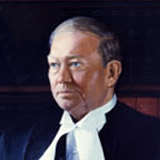
Hon. John Fraser
Speaker of the House
Ruling Text
January 30, 1990 The Speaker:
I think perhaps it might be helpful to Members and to the public to understand exactly what has taken place here.
The honourable Member for Skeena has risen and explained to the Chair that watching the television set, which is available in the offices of all honourable Members, he noticed a vote was about to take place. There is for the convenience of Members a digital clock that appears on the face of the television set. It is there for convenience only. I am prepared to certainly consider what might be done in order to make sure that no honourable Member is misled by what the television screen shows.
However, I want to explain to honourable Members and to the public, that when the bells ring, in most cases unless there has been some arrangement otherwise, they are either what is called a 15-minute bell or a 30-minute bell. There is also a long convention in this place that if the two Whips walk back in the Chamber and take their seats earlier than either 15 minutes or 30 minutes, then we are bound to proceed with the vote. Now that is a rule of the House and it is an old and long-time tradition.
The only thing that I am concerned about at the moment has nothing to do with why the bells rang. If honourable Members are interested in why the bells rang or if members of political science classes or the public want to know why the bells rang, they can look at Hansard and see that a motion was moved. Upon that motion being moved, and it has been moved many times by all parties in this place upon occasion, there is a vote called.
It is not for me in listening to this point of order to comment whatsoever on the tactics used, the whys or the wherefores of it. What I am applying my mind to is solely the question of television coverage, and once the vote is called, that is end of the coverage of the Chamber. All we have is the ticking clock. Perhaps the solution might be to have television coverage of the Chamber. Honourable Members could see Whips come in. However, that is not for me to say.
I will look at the question of the clock. I have some indication that Members other than those of the party of the honourable Member for Skeena may have also found themselves in some difficulty today. But that is the sole issue and I want it clearly understood. I will see if something can be done to convenience Members, but I point out the reason the clock is there is a matter of convenience only.
March 20, 1990 The Speaker:
Another issue relating to the bells was raised by the honourable Member for Nickel Belt (Mr. John Rodriguez) on January 30, 1990. He asked whether a 15-minute bell or a 30-minute bell is not required to sound for the full time provided in the Standing Order. In other words, he maintains that a 15-minute bell must ring for a full 15 minutes and a 30-minute bell for the full 30 minutes. With respect to this point, I should bring to the House's attention the wording of Standing Order 45. The relevant words are found in subsections (3) and (4). They are "—the bells to call in the Members shall be sounded for not more than 15 minutes" or "—for not more than 30 minutes." The important words appear to be, "for not more than", which would indicate that the bells can be sounded for any period of time which does not exceed the time mentioned in the Standing Order. It implies, however, that the time for the bells to ring may be less than the total stipulated. Thus, the process followed in the circumstances complained of was proper...
F0411-e 34-2 1990-01-30 1990-03-20.
[1]
Debates, January 30, 1990, p. 7598.
[2]
Debates, January 30, 1990, p. 7614.
[3]
Debates, January 30, 1990, pp. 7614-7.
[4]
Debates, January 30, 1990, pp. 7615-6, March 20, 1990, p. 9513. Please note that the extract of March 20, 1990 was from a Speaker's ruling on points of order raised by David Barrett (Esquimalt—Juan de Fuca) and Jean-Robert Gauthier (Ottawa—Vanier) concerning committees continuing to sit while division bells were ringing.
Edit Metadata
Holding
"The digital clock on the internal television feed is for convenience only and is not the official signal for a vote. Standing Order 45 provides for a maximum time for division bells ('not more than'), which can be shortened by the convention of the Whips entering the Chamber to signal readiness."
AI Summary
The Speaker ruled that division bells can ring for less than the maximum prescribed time if the Whips agree, and the digital clock on the internal TV feed is for convenience only.
AI Analysis
- Outcome
- Denied
- Tone
- Educational
- Procedural Stage
- Following a Recorded Division
- Significance
Low
High