Question of Privilege
December 18, 1989
Committee proceedings; notice of meeting; items on the agenda; changes in the agenda; non-interference by the Speaker in committee proceedings; notice of motion not required
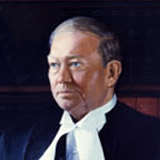
Hon. John Fraser
Speaker of the House
Ruling Text
Mr. Speaker:
I am now ready to rule on the question of privilege raised on Friday, October 20 by the honourable Member for Glengarry—Prescott—Russell regarding proceedings in the Standing Committee on Consumer and Corporate Affairs and Government Operations the previous day. The honourable Member had made the case that he had been convened to a meeting of the Committee to discuss the specific subject matter, that during the course of the meeting a motion was moved relating to an entirely different subject, and that this constituted a breach of his privileges as a Member.
He further argued that the Committee notice of meeting is equivalent to the Order Paper of the House and that if a single item of business appears on the committee notice of meeting then only that item can be dealt with by the committee.
I have carefully considered the argument of the honourable Member and the excellent points made by honourable Members on both sides of the question. The Chair finds itself in some difficulty in addressing the specifics of the case made by the honourable Member for Glengarry—Prescott—Russell. According to our traditions and practices, the Chair ought not to intervene with the proceedings of a committee unless a problem has been reported by the committee to the House or in extremely unusual circumstances. It is also clear that disputes arising from committee meetings ought to be dealt with in that committee and not raised on the floor of the House. I will therefore not comment on the specific incident in the Standing Committee on Consumer and Corporate Affairs. The Chair is pleased, however, to comment on the larger questions which arose during the discussion of the honourable Member's grievance, which relates to Committees dealing with business other than that listed on the green sheet announcing the date, time and place of the meeting.
Although Standing Order 116 states in part that "in a standing, special or legislative committee, the Standing Orders shall apply so far as may be applicable," it is nonetheless a long-standing convention that notice is not required for any motion in committee.
Beauchesne Fifth Edition in Citation 571 reminds us that flexibility is the watchword in committee deliberations when it states:
Proceedings in the Committees are more relaxed in nature than those in the House as the requirements which must be observed in the Chamber are not so strictly enforced when Members sit [as] Committees.
This difference in practices between the House and its Committees is nowhere more evident than when dealing with motions in amendment to the clauses of a bill. Motions to amend a bill in committee require no notice whatsoever. In the House, on the other hand, the Standing Orders specifically require that 24-hour written notice be given for motions in amendment at report stage of a bill.
This being the case, and while some Members may feel that it causes inconvenience and creates difficulties for the orderly pursuit of a committee's agenda, the Chair must rule that there is no procedural impediment to a committee's dealing with any matter within its mandate at any meeting of that committee regardless of the stated purpose or purposes of a particular meeting.
The Chair must also inform honourable Members that it has been unable to find any procedural authority to support the position of the honourable Member for Glengarry—Prescott—Russell and other honourable Members that the committee notice of meeting constitutes an Order Paper for the committee.
Should the House in its wisdom wish to alter this long-standing practice it can certainly do so, and there are several avenues open to achieve this end.
I thank the honourable Member for Glengarry—Prescott—Russell for raising this most interesting issue.
I hope that this judgment has helped to clarify the matter for all honourable Members.
F0912-e 34-2 1989-12-18.
[1]
Debates, October 20, 1989, pp. 4927-33.
Edit Metadata
Holding
"A committee notice of meeting is not equivalent to the House Order Paper, and committees can consider any matter within their mandate at any meeting without prior notice, as flexibility is a key feature of committee proceedings."
AI Summary
The Speaker ruled that standing committees are not bound by their notices of meeting and can consider any matter within their mandate at any time.
AI Analysis
- Outcome
- Denied
- Tone
- Educational
- Procedural Stage
- Question of Privilege
- Significance
Low
High