Point of Order
December 7, 1989
Designation of allotted days: filing of multiple notices of opposition motions from the same party; withdrawal of a notice of motion; selection of a motion by the Chair
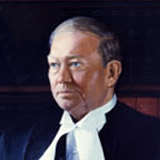
Hon. John Fraser
Speaker of the House
Ruling Text
Mr. Speaker: On Monday, October 30, 1989, the Parliamentary Secretary to the Government House Leader raised as a point of order several questions regarding the conduct of business on a supply day.
The honourable Member for(Kingston and the Islands) (Mr. Peter Milliken) and several others offered comments on these questions. I want to thank Members for their contributions to this debate on an interesting procedural matter. I have considered the matter carefully and am now prepared to respond.
The first question asked by the Parliamentary Secretary was whether it was necessary for the government to designate a supply day before the opposition can give notice of a motion they want debated. The Parliamentary Secretary maintained that it was a necessary precondition. The honourable Member for(Kingston and the Islands) suggested that in this specific case it was not necessary and that, in any case, it had been done in anticipation of Friday being a votable supply day.
According to our rules and practice, the purpose of notice is to give warning to the House of an item of business that might be raised for debate. The notice does not necessarily mean that the item will actually be debated or that it will be debated any time soon.
The Order Paper contains numerous items for which notice has been given but which have not yet been debated. The Parliamentary Secretary suggested that proceedings on supply days are different.
While I agree that certain aspects of supply have a character distinct from other proceedings, it seems to me that unless the rules on supply are explicit, the usual practices should be followed. This is the case with notice.
It is competent for any opposition Member to file a motion that might be debated on a supply day. Normally what happens is that Members file supply day motions at the latest possible moment after a day has been designated by the Government, but this does not preclude the right to give notice of the supply motion well in advance of a supply day. Indeed this has happened.
In 1982 a supply day motion originally filed on February 11 remained on the Notice Paper for almost six weeks and through three supply days before being taken upon the final allotted day in the supply period ending late in March. While it may be unusual to have the supply day motion filed well in advance of a designated day, it is not prohibited by either our rules or our practice.
As his second point, the Parliamentary Secretary asked a question relating to the intent of Standing Order 81(12)(c), which gives the Speaker the power to select opposition motions on allotted days when notice has been given of more than one. He felt that the idea behind this Standing Order was to cover those situations where motions had been put on notice by both of the opposition parties, but that it was not the intention that one party could put down more than one notice or the same notice but in the name of another honourable Member.
The recognition of two opposition parties is not explicitly contemplated in the Standing Orders. Speakers in the past have indicated that they have selected motions with a view to the proportional balance of the opposition parties in the House, but this does not necessarily address the entire issue of selection.
Other considerations might need to be taken into account, particularly in instances where there are several notices, some of which could be submitted by Members of the same party. The date of the notice, the sponsor of the motion, the subject matter raised and whether the motion is votable or not can be weighed by the Speaker when making a final decision.
I would agree with the Parliamentary Secretary that the political parties are factored into any decision, but I would have to add that it is not the only criterion used nor is it necessarily the most important one and, as I have stated earlier, there is nothing in the Standing Orders which in any way limits the number of notices which may be given.
The third question of the Parliamentary Secretary has to do with the withdrawal of a notice of motion. The Parliamentary Secretary asks if it is in order "for any or all notices for such motions to be withdrawn without the consent of the House." The simple answer to this question is yes. As long as a motion has not been proposed to the House, as long as the House is not properly seized of the motion, then it is still only a notice and it remains possible for the sponsor to secure its withdrawal unilaterally. The sponsor of the notice of motion could even refuse to move it when the order is called and it would be dropped. Once it is in the possession of the House, however, the motion becomes the property of the House and it is the House which must then consent to the motion being withdrawn from further consideration or possible decision.
The authorities are clear on this.
Beauchesne, Bourinot and May all confirm that Members retain the right to withdraw notices of motions before they have been proposed to the House. See, for example, Beauchesne Fifth Edition, Citation 398 on page 144 and Bourinot Fourth Edition, page 296 where one reads:
A notice of motion may be withdrawn at any time by the Member upon merely notifying the Clerk of the House of his desire so to do, [...]
British practices are comparable to our own with respect to withdrawal of notice, and I would refer Members to pages 353 and 377 of May Twentieth Edition: "Notice withdrawals are usually done by a letter to the Clerk signed by the Member concerned." In the fourth issue raised by the Parliamentary Secretary I am asked to deal with the power of selection as set out in Standing Order 81(12)(c). In the 20 years that this rule has been part of our Standing Orders the Chair has only occasionally been obliged to select motions for debate on a supply day.
The task is perhaps not as daunting as the Parliamentary Secretary suggests. It is not so much impossible as unenviable. As I pointed out earlier, there are certain criteria which the Speaker uses in evaluating the supply day motion when more than one has been filed.
Speakers in the past have tried to announce to the House as soon as they are able what motion will be selected for the supply day, but this may not always be satisfactory given that notices can be filed up to the very last minute, that is, up to six o'clock in the evening prior to a supply day or five o'clock on a Friday, thus leaving little time for Members to prepare for a debate.
While the Speaker can be sympathetic to the pressures exerted on Members who routinely have to come into the House with speeches on short notice, there is little that the Chair can do except to enforce the rules as they are written and as they have been applied for two decades since the rules of supply have been changed.
I hope that this explanation of the rules relating to opposition day motions and notice has been helpful to the Parliamentary Secretary and to the House and I thank the Member for giving me the opportunity to clarify the matter.
F0608-e 34-2 1989-12-07.
[1]
Debates, October 30, 1989, pp. 5268-9, 5302-4.
Edit Metadata
Holding
"Opposition members may file notices for supply day motions before a supply day is designated, a single party may file multiple notices, and notices may be withdrawn unilaterally by the sponsor at any time before being formally proposed to the House."
AI Summary
A ruling clarifying that opposition supply day motions can be filed in advance, in multiples by one party, and withdrawn unilaterally before being proposed to the House.
AI Analysis
- Outcome
- Other
- Tone
- Educational
- Procedural Stage
- Supply
- Significance
Low
High