Ruling
June 22, 1989
Closure: interpretation of standing order; amount of time allotted to last speaker recognized to participate in debate prior to "cut-off" time
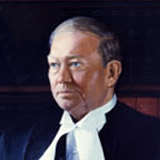
Hon. John Fraser
Speaker of the House
Ruling Text
The Speaker:
First, I want to thank the honourable Member for Trinity—Spadina for letting the Chair have notice of this matter. I have, as I am sure others have, looked at Hansard and what the honourable Member for Trinity—Spadina relates does not show up in Hansard. However, I have made inquiries this morning and I understand that the question asked by the honourable Member for Trinity—Spadina with respect to whether he had more time or not does come through on the tape.
The point the honourable Member makes is an important one. I would ask his cooperation to let the Chair consider the matter, and I will report back very quickly with respect to the situation.
I also want to point out to honourable Members that I thank the honourable Member for Trinity—Spadina for the way he has put his point of order. He is asking for clarification, and I am grateful that he is not putting the Chair in the position of having to contemplate whether or not the vote that followed is invalid. I think I can advise honourable Members that the vote would have to stand, but I appreciate the way the honourable Member has put the point of order, and I will come back very shortly with clarification.
Editor's Note Later the same sitting, following Oral Questions:
The Speaker:
This morning, as Members will recall, the honourable Member for Trinity—Spadina raised a matter with the Chair asking for clarification as to the time allowed at the closing hour after a closure motion. Honourable Members will remember that as recorded by the honourable Member for Trinity—Spadina at the hour, the Speaker in the Chair at that time rose and apparently the honourable Member for Trinity—Spadina was trying to send a message or send a question as to whether or not he could continue because he would still have had 15 minutes of his 20 minutes speaking time.
As I say, I have looked at the Hansard record and that does not show up. However, there is an indication that indeed the Honourable Member for Trinity—Spadina did try to ask a question, at least that is what appears on the tape. It would appear that that was not heard by the Chair at that time. The honourable Member for Trinity—Spadina is asking a narrow but important question, and that is that if something like this does happen again, does the speaker who has the floor have the right to use up the still existing part of his or her 20-minute speech.
I draw the attention of honourable Members to the Annotated Standing Orders which have been brought out recently, on page 196 in the second paragraph, and I think that this is helpful.
All questions necessary to dispose of the closured business will be put no later than 1:00 a.m., or as soon as possible thereafter, to allow any Member who might have been recognized before 1:00 a.m. to finish speaking. No Member shall be given the floor after 1:00 a.m. to debate the question. When the Speaker interrupts at 1:00 a.m. or shortly thereafter, any bells summoning Members to a recorded division to dispose of the question or questions— Et cetera.
So I think that clearly sets out the situation. I would draw honourable Members to a ruling of the Speaker as recorded in 1964. Speaker Macnaughton was in the Chair and this exact point was raised. I might read this.
Objection was raised by the honourable Member for Bow River (Mr. Woolliams) who proposed a motion "That the Right Honourable the Leader of the Opposition be now heard". We have had a vote on that motion. Therefore, I now have before me an Order of the House directing the Chair, according to my view, that the Right Honourable the Leader of the Opposition be not now heard but that the Right Honourable the Prime Minister be now heard. I must have regard to the effect and terms of Citation 167, paragraph 2, of Beauchesne which is in these words: "If a Member has taken the floor at 12:55 o'clock, he is entitled to speak for 20 minutes, but no Member" shall rise to speak "after one o'clock".
[3]
I hope this helps to clarify the situation for all honourable Members. Again, I want to thank the honourable Member for Trinity—Spadina for the careful way in which he assisted the Speaker by putting the point of order to me this morning.
F0503-e 34-2 1989-06-22.
[1]
Debates, June 21, 1989, pp. 3484-5.
[2]
Debates, June 22, 1989, p. 3492.
[3]
Journals, December 14, 1964, p. 1000.
Edit Metadata
Holding
"A Member who has been recognized to speak before the time limit set by a closure motion is entitled to finish their full allotted speaking time, even if it extends beyond that deadline."
AI Summary
The Speaker ruled that a Member who has the floor before a closure deadline is entitled to complete their full speaking time, even if it extends past the deadline.
AI Analysis
- Outcome
- Other
- Tone
- Educational
- Procedural Stage
- Routine Proceedings
- Significance
Low
High