Ruling
June 8, 1989
Opposition motion: order binding on the Government; amendment exceeding the scope of the motion
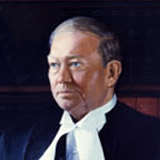
Hon. John Fraser
Speaker of the House
Ruling Text
The Deputy Speaker (Mr. Danis):
The honourable Member for Davenport proposed to move an amendment to the motion on the environment which we have been debating throughout the day. I am now prepared to rule on the acceptability of the proposed amendment.
An examination of the wording of the proposed amendment suggests to the Chair that the honourable Member is attempting to expand and add to the proposition envisaged in the original motion.
If I may remind honourable Members of Beauchesne Citation 437(2), [3]
it is not in order by means of an amendment to raise new questions which should be considered as distinct motions moved after proper notice. With regret, I must therefore rule the proposed amendment of the honourable Member for Davenport out of order.
Now to the second ruling. Earlier today, the Deputy Leader of the Government in the House rose to object to the wording of the opposition motion under discussion today on the grounds that a motion which might, if agreed to, become an order binding on the Government, was out of order.
After deliberation, I am ready to rule on the point of order.
Beauchesne Fifth Edition at Citation 412 says:
[...] By its orders the House directs its committees, its members, its officers, the order of its own proceedings and the acts of all persons they concern;- It appears to the Chair that there are instances in which the House, in directing "the order of its own proceedings", also gives orders to the Government. Such instances are found in Standing Order 36(8), which directs the Ministry to answer petitions; Standing Order 111(4), which directs a Minister's office to produce documents; and Standing Order 123(1), which specifies that a committee report on delegated legislation, when concurred in, becomes an Order of the House to the Ministry.
The Chair notes that the relevant parts of the motion proposed today involve the introduction of a bill and the tabling of documents, processes which are, at least arguably, parts of the procedure of the House in the same way as the examples cited above. Furthermore, both Speaker Lamoureux, on March 6, 1973 and Speaker Jerome, on November 14, 1975, have expressed strong reluctance to interfere with the freedom of the opposition to choose the motion to be debated on an allotted day.
[4]
For these reasons, I am also reluctant to infringe this freedom, except in the clearest cases of irregularity. I therefore find that this particular motion is in order.
Before closing, however, I wish to advise the House that this decision should not be taken as a precedent by which any opposition motion could order or instruct the Government on a particular course of action. The Chair will continue to examine each motion before the House with close attention as to its form and content, and will not hesitate to rule against any motion that it finds irregular.
F0611-e 34-2 1989-06-08.
[1]
Debates, June 8, 1989, pp. 2756-9.
[2]
Debates, June 8, 1989, p. 2804.
[3]
Beauchesne Fifth Edition, p. 155.
[4]
Debates, March 6, 1973, pp. 1944-5; November 14, 1975, p. 9072.
Edit Metadata
Holding
"An amendment cannot raise new questions distinct from the original motion and is therefore out of order. However, the Chair is reluctant to rule an opposition motion on an allotted day out of order, even if it could be binding on the government, to preserve the opposition's freedom to choose the subject of debate."
AI Summary
The Speaker ruled an amendment out of order for being out of scope, while simultaneously permitting the main opposition motion to proceed despite potentially binding the government.
AI Analysis
- Outcome
- Other
- Tone
- Educational
- Procedural Stage
- Government Orders
- Significance
Low
High