Point of Order
May 4, 1989
Use of Governor General's Special Warrants while Parliament stands adjourned; Members deprived of opportunity to examine pertinent Appropriations Bill; Speaker bound by Special Order; Speaker does not rule on constitutional or legal matters
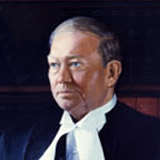
Hon. John Fraser
Speaker of the House
Ruling Text
Mr. Speaker: I said a few minutes ago, in response to points of order raised by the honourable Member for(Kingston and the Islands) and the honourable Member for Glengarry—Prescott—Russell (Mr. Don Boudria) that I would consider the points. It is important to understand the point that both honourable Members are making. Put as simply as I can put it, it comes down to the following.
While the House was adjourned there were certain special warrants issued because the Government needed money. Those Special Warrants were issued under the provisions of the Financial Administration Act. There is a Bill which will be voted on tonight at 5:45 p.m. which, among other things, in Clause 3, and I am reading from the note in the margin, refers to the confirmation of payment under special warrants for the fiscal year 1988-89. Those are the special warrants complained of by the honourable Members.
In order that everyone does understand, ordinarily a Bill comes in, there is first reading, second reading, second reading debate, and if that passes it goes to committee, comes back again in report stage, and then there is third reading.
This Bill which confirms those warrants will not proceed in that manner, because there is a special order which states:
That, when the House reaches Orders of the Day on Thursday, May 4, the House shall debate an Opposition motion, notice of which shall have been given the previous day, and no later than 5:45 o'clock p.m. on May 4, the Speaker shall interrupt debate and put, forthwith and successively, without amendment or debate, every question necessary to dispose of the said motion; and then the Speaker shall put forthwith, and successively, without amendment or debate, every question that may be necessary to dispose of any motion relating to interim supply and for the passing at all stages of the bill based thereon, following which the Speaker shall adjourn the House....
That is the Special Order, and I know that honourable Members know that I am bound by that special order. I cannot interrupt it or interfere with it. It is an Order of the House. I point out that it is also an order that applies today by consent, but that is not a matter which changes the substance of the issue.
The effect of this Special Order is that provided the opposition motion is debated throughout the rest of the afternoon, there will be no time under this Special Order to debate the content of this Bill. In other words, honourable Members have put the point that there is no opportunity to debate the contents, the whys and the wherefores of the moneys asked for and spent under the special warrants. I think I have the honourable Members' point.
I suppose it could also be said that if the opposition motion ended early today, technically there might be some time for debate, but one cannot foretell that. There is a very real possibility that there would not be any time for debate.
The honourable Members also referred to a special report which was filed with the House by the then President of the Treasury Board in 1980. I have been informed that that particular report was filed for information purposes only and it does not form part of the supply process. While it might very well be a good thing that such reports are given to the House under those circumstances, it is not required and I cannot insist upon it.
In my view honourable Members have clearly expressed what to them is a grievance. As I stated at the beginning, that grievance is that the House will pass tonight in all stages a Bill confirming the special warrants, and they have not been debated nor has there been an opportunity for the House to examine and debate them and go through the usual procedure.
The point honourable Members are making is that this would seem, on the face of it at least, to be a breach of parliamentary tradition. We heard some very incisive arguments put a few days ago on the necessity for Parliament to be in command of the spending and that honourable Members have the obligation, which is part of the ancient history of this place, to examine the spending requirements of a Government and either to reject them or pass them.
Having said that, the probability is, as honourable Members have pointed out, that there will not be any examination or debate on these particular warrants. The House, of course, that is, all the Members of this place, at least in theory could defeat the Bill tonight. I say nothing further.
In any event, the position comes down to this: nothing has been done which breaches the rules of this place. That does not mean that the grievance the honourable Members have may not breach some tradition or some convention of this place. But upon that I am helpless to react or to change.
It seems to me the solution is to either amend the Financial Administration Act or to amend the Standing Orders. The honourable Members have raised the point in the Chamber a few minutes ago, suggesting that perhaps the Government would refer the whole matter to the appropriate standing committee. Again, as I indicated, I am powerless to order that. That is a matter for consultation between both sides of the House.
In any event, I come back to the point raised by the honourable Member for(Kingston and the Islands) and the honourable Member for Glengarry-Prescott Russell. The point they make is clear. The probability is there will be no chance to examine and debate the warrants. Unfortunately, for those Members who are complaining about this, the Speaker is not in a position where the matter can be remedied. But the point the honourable Members have made is there for all to see.
I thank honourable Members for their interventions.
F0603-e 34-2 1989-05-04.
[1]
Debates, May 4, 1989, pp. 1316-9.
Edit Metadata
Holding
"The Speaker is bound by a Special Order of the House and cannot intervene to force debate on a supply bill, even if that order prevents traditional scrutiny, as no specific rule or Standing Order has been violated."
AI Summary
The Speaker ruled that he was bound by a Special Order and could not intervene to force debate on a supply bill, even though it bypassed traditional parliamentary scrutiny of government spending.
AI Analysis
- Outcome
- Denied
- Tone
- Educational
- Procedural Stage
- Government Orders
- Significance
Low
High