Ruling
April 27, 1989
Budget: budget leak; attempt to withdraw unanimous consent previously given for the Minister of Finance's budget presentation; budget secrecy; questions of privilege raised
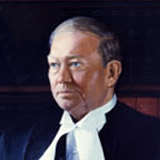
Hon. John Fraser
Speaker of the House
Ruling Text
Mr. Speaker:
On April 19, 1989, an Order was made by this House. It was a unanimous order as a consequence of discussions as so often happens here between Leaders of all three Parties. That Order—I am citing this so that honourable Members and the public will clearly understand what is taking place—related to the presentation of a Budget. The agreement entered into prior to the Order being presented to the House and the unanimous consent that was given to the Order when it was presented to the House were clearly based on the expectation that the Minister of Finance would rise today and present his Budget. I read the Order:
That, notwithstanding any Standing or Special Order of this House, at 5:00 o'clock p.m. on Thursday, April 27, 1989, the Speaker shall interrupt any proceedings then before the House and proceed forthwith to the consideration of Ways and Means Proceedings No. 1, for the purpose of hearing the budget statement of the Minister of Finance; That, immediately following such budget statement, the House shall revert to the Routine Proceedings "Introduction of Government Bills" and, following introduction and first reading of a bill or bills, the Speaker shall recognize a Member of the Official Opposition in debate on Ways and Means Proceedings No. 1; and That would mean in the usual course a representative of the Official Opposition would speak and, if that took place, would have unlimited time. It continues:
That the House shall not adjourn until the adjournment of the debate on Ways and Means Proceedings No. 1, following which the Speaker shall adjourn the House until the next sitting day.
And by unanimous consent it was ordered:
That, on Friday, April 28, 1989, the House shall meet at 11 o'clock a.m. with Statements by Members pursuant to Standing Order 31 at that time, Oral Questions at 11:15 o'clock a.m., until 12 o'clock noon, followed by the Daily Routine of Business; That, immediately upon the completion of the Daily Routine of Business, the House shall proceed to Government Orders, Ways and Means Proceedings No. 1 (the Budget motion); That, during the debate on the Budget motion, on that day, there shall be one speaker for the Official Opposition followed by one speaker for the New Democratic Party and, that both speakers will be allowed whatever time is necessary to complete their speeches; and That, immediately upon completion of the speech by the New Democratic Party speaker, but in any event not later than 3:30 o'clock p.m., the Speaker shall adjourn the House until Monday, May 1, 1989, at 11 o'clock a.m.
That is the Order which was entered into by consent.
Several things have happened in the last 24 hours as honourable Members and the public know and as a consequence the Government decided that the Minister of Finance had to proceed with the presentation of the Budget byway of a press conference yesterday evening rather than wait until today and present the Budget by way of the Special Order.
It is not for me to argue about these events except to record, as honourable Members and the public are aware, that the Official Opposition and the New Democratic Party have argued this afternoon that it is not appropriate to proceed under this Order even though consent was given before because circumstances have changed.
Both the Official Opposition and the New Democratic Party have taken the unusual step of advising the House that under the circumstances they withdraw their consent. By that I take it to mean that they no longer feel that they ought to agree that the House should proceed under the provisions of the Special Order.
I am quick to point out that there are negotiations that take place here all the time and sometimes when agreement seems to have been reached, but prior to it having taken effect on the floor of the House, circumstances may change.
Sometimes what may have seemed to have been consent earlier is not followed through because of changed circumstances.
The difficulty the Speaker is in, in this present situation, is that while fully understanding the position of the Official Opposition and the New Democratic Party and fully understanding the reason for it, the fact of the matter is that we now have a House Order, which was passed by the House. I can see no way that I can unilaterally change that.
This House Order could be changed, of course, if the House wishes to direct me in that way, but I have not received such a direction. I am bound to follow it unless, of course, I am directed otherwise. As I say, the House has not done so.
There was another argument advanced, that is, that the Budget ought not to go ahead until the argument over privilege—because there are a number of privilege applications all being heard in one debate—is completed.
I am continuing to hear argument on what may or may not be a contempt of this House. I do not prejudge that. While the matter to be heard under this special House Order that I have described, and the questions of contempt and privilege are related questions, I have looked at them carefully and it is my view that they are not dependent one upon the other. Each stands alone as a unique proceeding.
The Speaker cannot foresee the future, that is, what the House may eventually do if there is a prima facie case of contempt or privilege. As I said, I intend to hear further argument on the privilege matter. It is not closed off this afternoon by any means.
However, while I do not know what may eventually happen on the privilege issue, I do know what the House has done with the special House Order. I must advise honourable Members that I am bound by it. Therefore, it is my duty to recognize the honourable Minister of Finance.
Postscript On May 1, 1989, following comments made by Mr. Nelson Riis, the Hon. Herb Gray (Windsor West) and the Hon. Doug Lewis (Minister of Justice and Attorney General of Canada), the Speaker agreed to stand down the debate on the questions of privilege arising from the Budget leak until hearing from the House Leaders. These issues were never fully addressed in the House again.
F0613-e 34-2 1989-04-27.
[1]
Debates, April 19, 1989, pp. 690-1.
[2]
Debates, April 27, 1989, pp. 1004-5.
[3]
Debates, April 27, 1989, pp. 1005-10.
[4]
Debates, April 27, 1989, pp. 1010 - 23, 1036 - 57.
[5]
Debates, April 27, 1989, pp. 1057-9.
[6]
Debates, May 1, 1989, pp. 1107-10. See Postscript above.
Edit Metadata
Holding
"A formal House Order, once passed, is binding on the Speaker and the House, and cannot be unilaterally altered by the Speaker even if the unanimous consent on which it was based is later withdrawn by some parties due to changed circumstances."
AI Summary
The Speaker ruled that a formal House Order made by unanimous consent is binding and cannot be unilaterally set aside by the Chair, even if the parties who gave consent later attempt to withdraw it due to a budget leak.
AI Analysis
- Outcome
- Denied
- Tone
- Educational
- Procedural Stage
- Government Orders
- Significance
Low
High