Question of Privilege
February 9, 1988
Interference with Member's office: alleged breach of privacy of Members' offices; removal of electronic files in personal computers by House of Commons staff
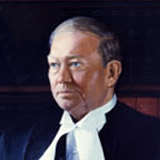
Hon. John Fraser
Speaker of the House
Ruling Text
The Speaker:
On January 28, 1988, the honourable Member for Thunder Bay—Atikokan claimed that the rights of three Members of Parliament had been breached in relation to the privacy of their physical offices. He contended that House of Commons staff had removed software from computers in Members' offices without informing either the members concerned or their staff what they were doing. I undertook to look into the specific circumstances of this issue and report back to the House. I am now ready to do so.
There is a pilot project underway at the present time in relation to the installation of personal computers in the offices of Members of the House. There are some 29 participants involved in this pilot project at the present time.
In an effort to proceed as expeditiously as possible with the pilot [project], interim software was installed in various personal computers in order for the evaluation phase of the project to proceed on schedule. This interim software was intended to be utilized only until the customized software was available.
On December 2, 1987 sufficient copies of the customized software were available for installation and evaluation in nine of the twenty-nine pilot machines, and the substitutions were made. The balance of the pilot project participants [was] provided with copies of the final version of the software on January 27, 1988.
It would appear that the intention of staff in the OASIS group was simply to ensure that Members' offices were equipped with the most up-to-date software and, in the case of pilot project participants, that they be provided with the same software that will shortly be provided to all Members' offices.
Clearly, however, the extent to which OASIS staff apprised Members' staff of what they were doing was insufficient. In that context, the complaint raised by the honourable Member for Thunder Bay—Atikokan is not without foundation. More important, he underscores an issue that pertains to policies and procedures for servicing and maintaining members' personal computers so as to ensure the confidentiality and integrity of data stored and manipulated on these machines.
I am satisfied that what has occurred in this case was done innocently. However, the point made by the honourable Member for Thunder Bay—Atikokan that electronic information should be treated no differently from "hard copy" material is well taken. All staff involved in providing electronic equipment or electronic data processing services to Members have been cautioned on the importance, in future, of fully briefing Members' staff and obtaining their prior authorization before any alterations or changes are effected to Members' data bases or data processing equipment or software.
In addition, a policy statement covering these issues is now being prepared and will be submitted to the Standing Committee on Management and Members' Services for discussion, as quickly as possible.
This policy statement is to include not only the procedures and practices to be followed by House staff in relation to their access to and maintenance of computer hardware and software in Members' offices, but also the whole question of the safety and security of computerized data stored in members' offices. This is an issue of vital importance and one which is to be addressed immediately.
In view of these facts, it would be the Chair's contention that there is no necessity to proceed with a question of privilege at this time.
I would like to thank the honourable Member for Thunder Bay—Atikokan for having raised this very serious issue and assure him, and all Members of this House, that corrective steps have been put in place to ensure that such an occurrence does not take place again.
F0124-e 33-2 1988-02-09.
[1]
Debates, January 28, 1988, pp. 12361-2.
Edit Metadata
Holding
"While the removal of software from Members' computers by House staff was inappropriate, it was done innocently and does not constitute a prima facie case of privilege; however, new policies requiring prior authorization will be implemented to protect the confidentiality of Members' electronic data."
AI Summary
A Speaker's ruling establishes that Members' electronic data has the same expectation of privacy as physical documents and requires staff to obtain prior authorization before making changes.
AI Analysis
- Outcome
- Other
- Tone
- Conciliatory
- Procedural Stage
- Speaker's Ruling
- Significance
Low
High