Ruling
January 28, 1988
The House of Commons and officials: actions of Commissioner appointed under the Canada Elections Act
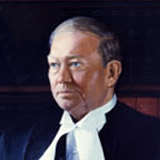
Hon. John Fraser
Speaker of the House
Ruling Text
The Speaker:
On Monday, January 25, the honourable Member for Kamloops—Shuswap raised a matter relating to the actions of the former Commissioner of Canada Elections, Mr. Joseph Gorman, in rendering a decision after an investigation into alleged breaches of the Canada Elections Act by the honourable Member for Frontenac.
The honourable Member for Kamloops—Shuswap argued that the decision of the Commissioner not to charge the minister "diminished the public's respect for the House of Commons and for Members of Parliament" and, further, that this failure to charge was contempt of this House.
Let me first refresh honourable Members' memories about the provisions of the Standing Orders of the House on the required notice.
Standing Order 20(2) clearly provides as follows:...any Member proposing to raise a question of privilege, other than one arising out of proceedings in the Chamber during the course of a sitting, shall give to the Speaker a written statement of the question at least one hour prior to raising the question in the House.
Former Speakers have been clear on this. The purpose of the rule is to save the time of the House so that the Speaker, in advance, can look into the situation or matter being brought forward. The notice should be complete enough so that the Chair is as fully informed as possible of the matters to be raised.
With respect to the issue brought forward on January 25 by the honourable Member for Kamloops—Shuswap, when some time was obviously taken to prepare the arguments in advance of raising them in the House, the notice could have been given earlier and could perhaps have been more explicit. I merely caution all Members in this respect, and I do so in the interest of the good functioning of our proceedings.
I come now to the specific issue dealing with the actions of the former commissioner, Mr. Gorman. While he is not an officer of Parliament in the usual sense of that expression, he is an official who is appointed by, and reports to, the Chief Electoral Officer who is an officer of Parliament. Mr. Gorman was appointed Commissioner of Canada Elections under Section 70 subsection (3) of the Canada Elections Act. Under subsection (4) of Section 70 the commissioner is given certain authority, namely, the power to give or withhold consent to prosecution under that Act. The House of Commons, indeed, Parliament gave him that authority.
In the argument presented in the House, it was clear that Mr. Gorman was exercising powers given to him under the Act. The exercising of powers given to an official under an Act cannot be a matter for the Speaker to rule on unless there are circumstances which amount to a breach of privilege or a contempt of Parliament. In this case there is nothing before the Chair to support a claim of breach of privilege or contempt. Thus, there is no role for the Speaker in this case.
I would remind the House that it is not the duty of the Speaker to judge the actions of public officials in the fulfilment of their duties. It is my duty only to determine whether or not sufficient evidence has been presented to judge if there has been a prima facie breach of privilege or a contempt of the House. In this case, I do not find that either has occurred.
During question period in the past several days the suggestion has been made that the Standing Committee on Elections, Privileges and Procedure should look into this matter. As all honourable Members know, standing committees now have permanent orders of reference. In the case of the privileges Committee, the process followed by the Chief Electoral Officer and his officials, in particular, the Commissioner of Canada Elections, could be looked into by the committee. However, only the Committee can decide to look at this matter. It is a decision for the Committee to take, it is not one for the Speaker.
I would caution Members that no charge of misconduct has been laid against any public official or any Member of the House in this case. The committees powers are limited to studying and reporting on matters relating to the process and procedure under the relevant statute. Again, this is a decision for the committee to make, but my reading of the statute did not discover any provision for review by, or appeal to, a committee of this House of the decisions or specific cases made by an electoral commissioner. Having said that, the committee should not be shy of reviewing the process and procedures that Parliament has enacted.
This is an important question to which the House has devoted a lot of time during the oral question period. However, with all due respect, I cannot conclude that a case has been made for the Chair to rule that the actions or omissions of the former commissioner constitute contempt of the House or a breach of privilege.
Let me close by thanking the honourable Member for Kamloops—Shuswap, the Minister of State (Hon. Doug Lewis) and the Parliamentary Secretary to the President of the Privy Council (Mr. Jim Hawkes) for their contributions.
Postscript Immediately following the Speaker's ruling, the Hon. Doug Lewis rose on a point of order. He indicated that the Government was willing to have the Standing Committee on Elections, Privileges and Procedure "examine the mandate of the commissioner and the decision-making process." Mr. Rod Murphy (Churchill) for the New Democratic Party and the Hon. Herb Gray (Windsor West) for the Official Opposition welcomed this announcement. Mr. Gray, however, warned that even should the committee study the matter, the Official Opposition would continue to raise the issue during Question Period. The Speaker concluded the exchange by stating that "provided the questions are appropriate, the ruling in itself does not preclude them." [3]
The Standing Committee on Elections, Privileges and Procedure examined the issue of the role and the authority of the Commissioner of Canada Elections in its Eighth Report tabled on March 8, 1988.
[4]
The Committee found, inter alia, that Mr. Gorman did not deviate from the pattern followed in previous investigations of that nature.
F0115-e 33-2 1988-01-28.
[1]
Debates, September 25, 1985, p. 6963.
[2]
Debates, January 25, 1988, p. 12246-9.
[3]
Debates, January 28, 1988, pp. 12360-1.
[4]
Journals, March 8, 1988, p. 2264.
Edit Metadata
Holding
"The actions of a public official exercising powers granted to them under a statute do not constitute a prima facie breach of privilege or contempt of the House, and therefore are not a matter for the Speaker to rule on."
AI Summary
The Speaker denied a question of privilege, ruling that an official acting within powers granted by Parliament does not constitute a contempt of the House.
AI Analysis
- Outcome
- Denied
- Tone
- Educational
- Procedural Stage
- Question of Privilege
- Significance
Low
High