Ruling
December 9, 1987
Intimidation of witnesses; committees' rights and powers; non-interference by the Speaker in committee proceedings; committees master of their own proceedings; alleged breach of Members' privileges
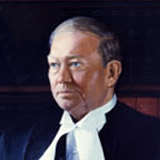
Hon. John Fraser
Speaker of the House
Ruling Text
Mr. Speaker:
On Wednesday, November 25, 1987, the honourable Member for Burnaby raised serious matters in the House which he believed were tantamount to contempt of the Standing Committee on Justice and Solicitor General during its recent visit to the various penal institutions in the Kingston area.
The honourable Member maintained that witnesses from Correctional Service Canada who appeared before the Standing Committee had been subject to pressure on the part of their superiors about what they should or should not say before the Committee. The Chair has allowed the House to spend quite some time discussing this matter because any allegation of suborning witnesses should be a matter of concern to all Hon. Members.
I wish to thank the Solicitor General (Hon. James Kelleher), the honourable Members for York South—Weston (Mr. John Nunziata), Ottawa West (Mr. David Daubney), Niagara Falls (Mr. Rob Nicholson) and London East (Mr. Jim Jepson) for their timely interventions in this important matter.
After hearing these Members, especially the Chairman of the Committee, the honourable Member for Ottawa West, and after due consideration, I must repeat what I said following comments by honourable Members on November 26, namely that "the Chair is really not in a position to interfere with the affairs of a committee I want to re-emphasize that, generally speaking, Members with a complaint should go back into the Committee and sort it out there." [3]
For further clarity, I refer all honourable Members to a previous ruling I made on November 18, 1987, which is found on page 10930 of House of Commons Debates, and I quote:
Previous rulings and parliamentary custom are quite clear. Committees are definitely in control of their own procedures. In this respect, I may refer honourable Members to Beauchesne, Fifth Edition, Citation 569(3), which reads as follows:
The Speaker has ruled on many occasions that it is not competent for him to exercise procedural control over the Committees. Committees are and must remain masters of their own procedure.
From these and other citations quoted in that ruling I thus feel that the precedents are clear and, with regret, I cannot find that the honourable Member for Burnaby made out a prima facie case of privilege.
This matter may or may not merit further consideration but it should be first raised in the Standing Committee on Justice and Solicitor General. It is in that forum that the honourable Member should pursue the issue and ask the Committee to report the matter to the House. In this respect I refer all honourable Members to the Debates of April 28, 1987 and May 5, 1987, when a situation involving a committee matter was reported to the House following which Members raised a question of privilege thereon.
[4]
The Chair has taken this opportunity to review several of the recent matters that have been raised in the House that relate to events in or around the Committees of the House. I have told the House before that the Speaker has been somewhat tolerant because the new rules were made permanent just last June. It was, I think, predictable that the new committee system would experience some growing pains. In every case that I have reviewed since last June, every question of privilege on a committee matter probably should have been raised first in the committee.
The reason I mention this in this ruling is that I am increasingly concerned with the time consumed by the House on committee problems that are now fully within the Members' own reach and control. I regret that I must serve notice to all honourable Members that unless there is something of extraordinary seriousness I will be less disposed to allowing debate on such matters unless a committee has first reported thereon.
The reform of Committees has conferred upon them larger mandates and greater powers. With that reform comes the responsibility and the challenge for committee members to deal with issues within the new parameters of the redefined committee system.
I would like to add, and this is only by way of a suggestion from the Chair which might prove to be helpful to all honourable Members, that perhaps Members, when they are carrying out their duties in Committees, could go that extra mile to ensure that the sensibilities of fellow committee members are taken into account. If that is kept in mind, then some of the matters that have come before the Chair might well be able to be resolved with perhaps much less dispute and much less time consuming debate.
I thank all honourable Members for bringing these matters to the Chair. I hope that we can keep in mind the necessity that the Chair is bound by the rulings and the precedents and that Members will try to resolve these matters in committee. There is always a possibility of some extraordinary matter happening and, of course, under those circumstances I would want to look very carefully at that. I am not saying I would never take an application under those circumstances, but I would ask the co-operation of honourable Members, the co-operation of the chairman and members of Committees to resolve the matters there.
F0908-e 33-2 1987-12-09.
[1]
Debates, November 25, 1987, pp. 11171-8.
[2]
Debates, November 26, 1987, pp. 11220-6.
[3]
Debates, November 26, 1987, p. 11225.
[4]
Debates, April 28, 1987, pp. 5299, 5329-30; May 5, 1987, pp. 5737-42. This question of privilege is considered in the present chapter; see the decision of May 14, 1987.
Edit Metadata
Holding
"A question of privilege concerning events within a committee, such as alleged witness intimidation, will not be heard by the Speaker until the committee has first dealt with the matter and reported it to the House, as committees are masters of their own procedure."
AI Summary
The Speaker ruled that allegations of witness intimidation at a committee must be addressed by the committee itself before being raised as a question of privilege in the House.
AI Analysis
- Outcome
- Denied
- Tone
- Educational
- Procedural Stage
- Speaker's Ruling
- Significance
Low
High