Ruling
December 9, 1987
Private Members' Public Bills; committee consideration; obstruction by committee members
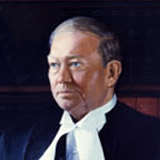
Hon. John Fraser
Speaker of the House
Ruling Text
Mr. Speaker:
On Wednesday, November 25, 1987, the honourable Member for Broadview-Greenwood raised in the House the manner in which her Private Members' Bill C-204 is being dealt with in the legislative committee appointed to study the Bill.
The honourable Member for Broadview-Greenwood claimed that the Committee's proceedings were being systematically obstructed by Government Members sitting on the Committee and by the Committee's Chairman or Acting Chairman. She said that Government Members did not look favourably on the Bill and that the actions of the Acting Chairman on Thursday, November 24, 1987, reflected his prejudice against the Bill before the Committee.
I wish to thank the Deputy Prime Minister (Hon. Don Mazankowski) and the honourable Member for Mission—Port Moody (Mr. Gerry St. Germain) for their contribution to this important matter. The honourable Member for Sarnia—Lambton must also be mentioned, and I thank him for his helpful intervention.
I wish to remind all honourable Members of my ruling of November 18, 1987, [3]
where I cited several excerpts from the rulings of my predecessors concerning the established custom and traditions of the House in not interfering in committee proceedings until such committees have reported to the House. This is an important rule that has clear underpinnings in logic, and I, of course, want to follow it.
Thus, after careful consideration, I have come to the conclusion that the honourable Member's complaint ought properly to be dealt with in committee and, therefore, it is not a question of privilege and cannot be dealt with here unless the matter is reported to the House by the committee.
There are established practices which have been followed for a long time. One is that Members refrain from criticizing the actions of another Member without the making of a clear charge set out in a motion. The traditional and proper way of dealing with the type of conduct alleged by the honourable Member for Broadview-Greenwood would be by appealing the conduct of the chairman to the committee, or by way of a motion proposed to the committee and, if it is adopted, reporting the same to the House.
I hope that in future honourable Members will be guided by what I said on November 18, 1987 and will formulate their complaints and grievances in the committees, which are entirely capable of dealing with these matters, instead of wasting the precious time of the House. The precedents are clear: These questions do not come under the jurisdiction of the Chair.
F1003-e 33-2 1987-12-09.
[1]
Debates, November 25, 1987, pp. 11169-71.
[2]
Debates, December 1, 1987, pp. 11370-3.
[3]
Debates, November 18, 1987, p. 10930.
Edit Metadata
Holding
"Complaints regarding proceedings or the conduct of the chair within a committee are not a valid question of privilege and must be addressed by the committee itself, which may then choose to report the matter to the House."
AI Summary
The Speaker ruled that allegations of obstruction within a committee are not a question of privilege and must be addressed by the committee itself before being brought to the House.
AI Analysis
- Outcome
- Denied
- Tone
- Stern
- Procedural Stage
- Ruling on a Question of Privilege
- Significance
Low
High