Question of Privilege
November 17, 1987
Interference with Member's office: alleged interception or monitoring of telephone conversation between an assistant to a Member and penitentiary inmate
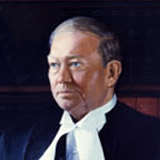
Hon. John Fraser
Speaker of the House
Ruling Text
The Speaker:
I bring to the attention of honourable Members that I am now ready to give my ruling on a matter raised by the honourable Member for York South—Weston on Monday, October 26. I wish to thank both him and the Solicitor General for their co-operation in assisting the Chair in arriving at a decision.
Honourable Members who were able to hear the argument will recognize that the facts are as follows. The office of the Member for York South—Weston received a phone call from a constituent whose husband was an inmate at the time in the Joyceville Medium Security Penitentiary. She indicated her husband, head of the inmates' committee, wished to speak to the honourable Member and to his assistant, a certain Mr. Pratt. The member's assistant contacted the inmate and reported to the honourable Member. Mr. Pratt received further instructions and again contacted the inmate who, in tum, according to the honourable Member for York South—Weston "relayed a list of concerns with regard to the situation at Joyceville".
The honourable Member then told the House: "As a result of this conversation the inmate was transferred to the maximum security penitentiary at Millhaven and put in segregation." At no time did the honourable Member for York South—Weston meet or speak directly with the inmate.
The Solicitor General is in basic agreement with the statement of facts outlined by the honourable Member for York South—Weston, but added that the phone and room used by the inmate in Joyceville had the following sign clearly displayed:
All activities, including conversations and telephone communications in this area, are subject to monitoring and may be recorded.
The Solicitor General also told the House that a Correctional Services officer was in the room with the inmate. Upon overhearing what the inmate said to Mr. Pratt, the officer reported to the warden of Joyceville and he, in turn, reported to his superiors. The inmate was subsequently transferred to another institution, Millhaven.
The grievance expressed by the honourable Member for York South—Weston was ably supported by the honourable Member for Glengarry—Prescott—Russell, the honourable Member for Vancouver—Kingsway, and the honourable Member for Windsor West; the Solicitor General and the Minister of State also helped the Chair. I thank all honourable Members for their very useful contributions.
The request of the honourable Member that the matter be ruled to be a prima facie breach of privilege raises several points. I will now consider them one by one.
Members will have heard the definition of parliamentary privilege before, but it bears repetition.
May 's Twentieth Edition, at page 70, sets out the classic definition.
Beauchesne Fifth Edition repeats that definition at page 11 in Citation 16:
Parliamentary privilege is the sum of the peculiar rights enjoyed by each House collectively as a constituent part of the High Court of Parliament, and by Members of each House individually, without which they could not discharge their functions and which exceed those possessed by other bodies or individuals. Thus, privilege, though part of the law of the land, is to a certain extent an exemption from the ordinary law.
The distinctive mark of a privilege is its ancillary character. The privileges of Parliament are rights which are "absolutely necessary for the due execution of its powers". They are enjoyed by individual Members, because the House cannot perform its functions without unimpeded use of the services of its Members; and by each House for the protection of its members and the vindication of its own authority and dignity.
Maingot, in [the First Edition of]
Parliamentary Privilege in Canada, at page 12, gives further but similar definitions. I should add that Canadian Speakers have put such definitions on the record many times.
Apart from the definitions, we must consider the fact that the House cannot create new privileges. On this point I would refer honourable Members to page 75 of May Twentieth Edition. Similar views can be found in all authoritative parliamentary texts. On April 29, 1971, Mr. Speaker Lamoureux said in that respect:
Privilege is that which sets honourable Members apart from other citizens giving them rights which the public do not possess. I suggest we should be careful in construing any particular circumstance which might add to the privileges which have been recognized over the years and perhaps over the centuries as belonging to Members of the House of Commons. In my view, parliamentary privilege does not go much beyond the right of free speech in the House of Commons and the right of a Member to discharge his duties in the House as a Member of the House of Commons.
[3]
On February 20, 1975, Speaker Jerome cited that ruling with approval stating that "...improvement upon it is impossible and...unnecessary". Speaker Jerome continued and made the following comment:
The consequences of extending that definition [of Mr. Speaker Lamoureux] to innumerable areas outside this Chamber into which the work of an MP might carry him, and particularly to the great number of grievances he might encounter in the course of that work, would run contrary to the basic concept of privilege.
[4]
The Chair was unable to find in these various definitions and quotations anything which would extend parliamentary privilege to the actions of a member of the staff of an honourable Member of this House.
That being said, I am sure honourable members will appreciate that this matter does not fall within the restricted scope of the concept of parliamentary privilege.
Indeed, I can go further and state that even without the direct involvement of the staff person and with the direct involvement of the Member himself, I could not find that a prima facie case of privilege exists. Let me explain by quoting Speaker Jerome again.
In 1975, in ruling on an alleged warning given by the National Harbours Board to its staff against communicating with Members of Parliament, Mr. Speaker Jerome clearly stated:...the classic definition of a question of privilege does not fit circumstances in which a Member in his duties outside this House finds that his scope is being restricted or attempts are being made to restrict his scope of intervention and effective work on behalf of not only his own constituents but his point of view as a Member of the federal Parliament.
He continued:...I feel absolutely certain that the classic definition of a question of privilege as we know it does not fit because it does not affect the right of speech of the honourable Member in this House. Indeed, his right of speech in this House to complain and to raise this grievance is unquestioned.
[5]
That statement of Speaker Jerome is very clear indeed.
As to the assertion made by several honourable Members that an opposition critic has some special privileges, the short answer is obviously that while they certainly have some extra responsibilities and obligations, they do not have any special privileges. Critics receive, and certainly should receive, every courtesy to assist them in their duties, but they have no privileges above those of any other Member.
Mr. Speaker Lamoureux made a ruling on April 29, 1971, which may be helpful to honourable Members in this connection and I commend it to them.
I want to assure all Members that the Chair recognizes the importance of this matter and the seriousness of the situation brought to our attention by the honourable Member for York South—Weston, but I regret that under the circumstances it should not and cannot be dealt with as a question of privilege.
I can only say that I hope that having given the honourable Member a chance to raise this serious matter in this Chamber may have assisted the honourable Member and others to find some satisfactory resolution to the situation which the honourable Member has brought to the attention of the House. I thank the honourable Member for his intervention and for bringing this matter to our attention.
F0123-e 33-2 1987-11-17.
[1]
Debates, October 26, 1987, pp. 10385-7.
[2]
Debates, October 27, 1987, pp. 10447-9.
[3]
Debates, April 29, 1971, p. 5338.
[4]
Debates, February 20, 1975, p. 3386.
[5]
Debates, February 26, 1975, p. 3580.
Edit Metadata
Holding
"Parliamentary privilege does not extend to the actions of a Member's staff, nor does it apply to a Member's work outside the House of Commons when that work does not impede their right of free speech within the Chamber."
AI Summary
The Speaker ruled that the punishment of an inmate after contacting a Member's office is not a breach of privilege as this protection does not extend to a Member's staff or their work outside the Chamber.
AI Analysis
- Outcome
- Denied
- Tone
- Educational
- Procedural Stage
- Ruling on a Question of Privilege
- Significance
Low
High