Ruling
June 30, 1987
Presenting Petitions: petition directly requesting a grant
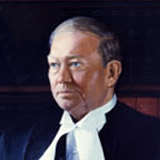
Hon. John Fraser
Speaker of the House
Ruling Text
The Speaker:
I am now prepared to rule on the point of order raised on June 15 by the honourable member for Churchill concerning a petition he had hoped to present on child care.
The petitioners were calling upon Parliament to provide the provinces and territories with the immediate short-term funding to expand non-profit child care.
The Clerk of Petitions advised the honourable member that his petition was out of order because it entailed public expenditures.
Let me say at once that the advice given to the honourable member by the Clerk of Petitions was totally supported by long-standing precedents. Citation 685(3) of Beauchesne Fifth Edition states:
The House will refuse to receive any petition that directly asks for a grant of money out of the public revenues unless such grant has first been recommended by the Crown.
This citation is substantiated by all previous editions of Beauchesne in even greater detail, and also in all four editions of Bourinot's Parliamentary Procedure.
In addition, we have numerous precedents on the record in the form of Speakers' rulings, dating back to May 7, 1868.
[2]
There was one case, on May 19, 1947, where the Speaker allowed a petition praying for an increase in old age pensions, but this was because the Governor General's recommendation had already been signified to a bill having the same objective.
[3]
An important ruling of June 7, 1972 emphasized that the Chair was obliged to ensure that petitions conform to "the historic practices and usages of the House". The Speaker added, and I quote:
At many times the House has shown itself willing to waive its rules, however strict, to allow the introduction or the passage of a measure it desires, but it has consistently refused to do the same with petitions.
[4]
Like so many of our practices, this is one we inherited from the British Parliament. It has been governed by a Standing Order of the British House of Commons since 1713, and the financial initiative of the Crown was rooted in parliamentary procedure long before then.
We must, however, remember that at one time all legislation originated with a petition, and the practice of originating expenditure by means of a petition accompanied by a royal recommendation was not an unusual occurrence in the British Parliament.
On page 794 of Erskine May Twentieth Edition, it is indicated that "the regular use of petitions for initiating expenditures has lapsed", and the British House of Commons now has a Standing Order which prevents the reception of petitions proposing public expenditures in all circumstances.
It is interesting to note, however, that until 1963, a petition from the British Museum for a grant in aid was presented annually by the Home Secretary, who signified the royal recommendation.
Faced with such a weight of precedent, the Chair feels unable to reverse a long-standing practice, about which there is no doubt whatsoever. However, I have great sympathy for the argument made by the honourable member for Churchill, an argument which, as honourable members will recall, was fully supported by the honourable Parliamentary Secretary to the Deputy Prime Minister and President of the Privy Council.
The right to petition Parliament is fundamental to our parliamentary system, and it is not unreasonable to assume that the remedy, in many a situation, could only be found through the expenditure of public funds. A petitioner is entitled to petition for relief in a burdensome situation, so that a mere change in wording could well render a petition in order which might otherwise be out of order. A petition praying for the enactment of a measure which would provide the relief being sought might avoid the restriction imposed by our practice.
Personally, I think that a petition does not fall into the same category as bills, and that if it seeks to change the current practice, however deeply anchored in history it may be, the House ought to consider this procedure. This is the kind of question which the Standing Committee on Elections, Privileges and Procedure might very well entertain, and I intend to draw the attention of the committee chairman to my ruling.
I would say to the honourable member for Churchill and the honourable parliamentary secretary that this is certainly a matter in respect of which the Chair can say, despite the deep and long history, which makes it very unwise for the Chair to unilaterally change the practice, the House should consider the practice again; and if the House wishes to make changes, it is perhaps time to consider doing so.
I thank both honourable members for their interventions.
F0329-e 33-2 1987-06-30.
[1]
Debates, June 15, 1987, p. 7097.
[2]
Debates, May 7, 1868, p. 645.
[3]
Journals, May 19, 1947, p. 423.
[4]
Debates, June 7, 1972, p. 2921.
Edit Metadata
Holding
"Petitions directly requesting a grant of public money are out of order unless they have first been recommended by the Crown, a practice the Chair cannot unilaterally change despite its restrictive nature."
AI Summary
The Speaker upheld the long-standing rule that petitions requesting public funds are out of order without a royal recommendation but suggested a House committee review this practice.
AI Analysis
- Outcome
- Denied
- Tone
- Conciliatory
- Procedural Stage
- Speaker's Ruling
- Significance
Low
High