Question of Privilege
June 29, 1987
Application of closure; legitimacy of use; discretion of the Chair
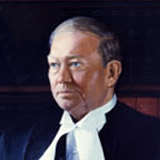
Hon. John Fraser
Speaker of the House
Ruling Text
Mr. Speaker:
On Friday last, just before the House adjourned, the honourable Deputy Prime Minister (Hon. Don Mazankowski) renewed notice of his intention to move a motion under Standing Order 57 in relation to Government Business No. 5.
If the closure motion is moved and adopted later this day, the result will be that at one o'clock Tuesday morning all debate on the motion for the reinstatement of capital punishment will end and the House will divide on the motion and any amendments thereto.
On Friday, June 19, the day after the Deputy Prime Minister first gave notice of closure, the honourable Member for York Centre rose on a question of privilege, arguing that the Deputy Prime Minister was making illegitimate use of the rules of the House. The honourable Member for York Centre, in his argument, referred to a ruling by the Chair on April 14, 1987, and asked the Chair to apply the same logic used then to the present situation.
When the Chair ruled on April 14, the House was at a standstill. Routine Proceedings were, for several days, totally taken up by dilatory tactics that were a matter of grave concern to me. I refer honourable Members to page 5120 of Hansard, where I reported my dilemma as follows:
The House is nevertheless facing an impasse which it has been unable to resolve for itself. There comes a time when the Chair has to face its responsibilities. When circumstances change, and the rules of procedure provide no solution, the Chair must fall back on its discretion in the interests of the House and all its Members.
Further, on page 5121 of Hansard, I said the following:
I repeat my conviction that the entire question of the use of dilatory motions during Routine Proceedings needs to be examined and that no procedures should be sanctioned which permit the House to be brought to a total standstill for an indefinite period. Division bells are no substitute for debate.
If honourable Members have taken from my ruling of April 14 that the Chair would, in the future, exercise discretion on any or all of the rules of the House, they have misunderstood the letter and the spirit of the ruling. The discretion I exercised on that day was in the context of an absolute lack of any guidance in the Standing Orders—I repeat, in the context of an absolute lack of any guidance from the Standing Orders—or in the precedents, or practices, or conventions of this House. Nor was there any direction from the House itself, at that moment.
The honourable Member for York Centre and the honourable Member for Burnaby were skilled advocates in the arguments they presented on June 19 last. The Chair appreciates that it may be very difficult for honourable Members on both sides of the capital punishment debate to focus only on the Speaker's role at this time. It is essential, I might add, that the Chair refrain from showing sympathy with one side or the other on such an important national debate. What the Chair must now address is, quite simply, the terms of Standing Order 57, which have been unchanged since 1913.
Notice of closure has been given 23 times since 1913; it has been moved and adopted 19 times. It is not a new Standing Order, even if only infrequently used. This present situation is not without precedent. Closure has been used by all Parties while in Government; it has been used after much, and after very little debate. It remains to this day a procedural avenue available to the Government. By and large, the timing of its use becomes a political issue, but some debate clearly must have taken place. Thus, the timing of closure in debate is clearly not a procedural matter...
The British practice, which has been referred to, is quite different. When closure is applied in Great Britain no further debate can take place. In our Commons, debate continues after the adoption of the closure motion until 1 a.m. on that sitting day. The British rule is more severe, and thus their Speaker is given by a specific Standing Order the discretion to refuse the motion. The Canadian Commons has not given its presiding officer such discretionary power.
I have reviewed all of the arguments put forward by the honourable Member for York Centre, the honourable Member for Windsor West (Hon. Herb Gray), the honourable Member for Kamloops—Shuswap (Mr. Nelson Riis), the honourable Member for Humber—Port-au-Port—St. Barbe (Mr. Brian Tobin), and the honourable Member for Burnaby. Politically speaking, I can understand their concern; procedurally speaking, as your presiding officer, as were many Speakers before me, I am without authority to intervene when a Standing Order is used according to our rules and practices.
The House has adopted Standing Order 57. The House must accept its consequences, if it is invoked. The honourable Deputy Prime Minister, having given notice at a previous sitting, has so far complied with the terms of Standing Order 57. If he chooses to move the appropriate motion later today, I shall have no choice but to put the question to the House.
F0202-e 33-2 1987-06-29.
[1]
Debates, June 18, 1987, p. 7354.
[2]
Debates, June 19, 1987, pp.
7375 - 9.
[3]
Debates, June 26, 1987, pp. 7706-9.
Edit Metadata
Holding
"The Speaker has no discretionary authority to prevent the government from moving a motion for closure under Standing Order 57, provided the procedural requirements for notice have been met."
AI Summary
The Speaker ruled that he has no discretion to prevent the government from using a closure motion as it is a valid procedural tool explicitly provided for in the Standing Orders.
AI Analysis
- Outcome
- Denied
- Tone
- Educational
- Procedural Stage
- Government Orders
- Significance
Low
High