Point of Order
June 29, 1987
Tabling of documents: respect for statutory requirements; designation of a committee to consider a report required by statute
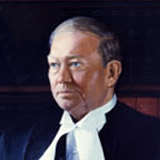
Hon. John Fraser
Speaker of the House
Ruling Text
The Speaker:
I shall now deal with the point of order raised on June 26 by the honourable Member for Cochrane—Superior [...] He argued that the report to Parliament tabled by the honourable Minister of Indian Affairs and Northern Development (Hon. Bill Knight) on the implementation of the 1985 changes to the Indian Act failed to meet the requirements of the statute on two counts. He claimed that it did not provide the complete response required by the statute and that the standing committee of this House to which the report was referred is not the appropriate committee.
I will deal with the second point first. The Act refers to a committee of Parliament, and the honourable Member contends that this can only mean a special joint committee of both Houses appointed ad hoc to consider the report.
While the interpretation of statutes is not a function of the Chair, I think it can be said that any committee of this House or of the other place, or a joint committee, must be a committee of Parliament. Therefore, I can find no procedural violation in the reference of the report to the Standing Committee on Aboriginal Affairs and Northern Development pursuant to Standing Order 67(4).
I would suggest, however, that the committee has a clear duty to examine the report to enable the honourable Member for Cochrane—Superior and other members of the committee to express any concerns they may have in the light of the report.
As to the adequacy or inadequacy of the response provided by the report, I can only repeat what I said earlier in ruling on the question of privilege of the honourable Member for Nickel Belt (Mr. John Rodriguez) [2]. The Chair cannot pass judgement on the contents of any document tabled in this House. It cannot determine the adequacy of a report tabled pursuant to an Act of Parliament any more than it can determine whether or not a government response to a report of a parliamentary committee is comprehensive. Such complaints can only be pursued through the political process. Nevertheless, as I think I have indicated earlier in this judgement, I recognize that it is very important that they should be pursued, and in this case the appropriate forum in which to do so is the Standing Committee on Aboriginal Affairs and Northern Development to which the report stands deferred.
I think I can add this, that rules have to have some meaning. While it is certainly true and procedurally correct, it is not the place for the Chair to interpret all the words in every rule that we have. It would be very helpful for the business of this place if all honourable Members try to put as reasonable an interpretation on those words as is possible.
I thank honourable Members for their interventions.
F0317-e 33-2 1987-06-29.
[1]
Debates, June 26, 1987, pp. 7700-3.
[2]
Debates, June 29, 1987, pp. 7749-50.
Edit Metadata
Holding
"The Chair cannot rule on the adequacy of a report tabled pursuant to statute, as this is a matter for political debate, and the referral of the report to a standing committee was procedurally correct."
AI Summary
The Speaker ruled that the Chair cannot judge the content or adequacy of a government report tabled in the House, as that is a political matter for the relevant committee to consider.
AI Analysis
- Outcome
- Denied
- Tone
- Educational
- Procedural Stage
- Routine Proceedings
- Significance
Low
High