Point of Order
June 8, 1987
Sub judice: Civil matter: Supply proceedings
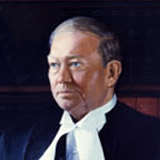
Hon. John Fraser
Speaker of the House
Ruling Text
Mr. Speaker:
In the interests of not holding up debate, the Chair has decided that, rather than reserve in this matter, the Chair will rule immediately.
In the interests of honourable Members and of the public watching and listening, I want to be sure that everyone understands the issue that has been raised here. It is an issue that is always likely to be raised in the House, especially with respect to a matter being debated here which may be the subject of consideration by the courts.
I would say at the outset that the honourable Parliamentary Secretary raises a matter of concern to honourable Members and a matter upon which the Chair has had occasion to comment in the past. In order to make the issue absolutely clear, I will read the motion. Mr. Broadbent, seconded by Mr. Riis, moves:
That the Government should seek to restore existing rights of Canadians in Yukon and the Northwest Territories to the Constitutional Accord, 1987; and further, to make a commitment to hold a First Ministers' Conference to discuss aboriginal concerns, in particular self-government.
One of the points the honourable Parliamentary Secretary has made is that the view of the Government is, and I think I have his words correctly, that it has not diminished the rights of Canadians in Yukon and the Northwest Territories. That may very well be, but that is of course a matter of debate. However, I have taken the honourable Parliamentary Secretary's point.
The reason that there has been throughout the centuries the admonishment by Speakers, contained in the learned comments on procedure, with respect to debates which concern matters before the courts is of course fundamentally to ensure that the rights of those who are before the courts are not prejudiced. Again, so that all honourable Members and the public will understand, I would like to refer to [Citation] No. 335 in Beauchesne Fifth Edition which reads as follows:
Members are expected to refrain from discussing matters that are before the courts or tribunals which are courts of record.
There is no question that in this case the action that has been taken with respect to Yukon and the Northwest Territories is before a court of record. The rule goes on:
The purpose of this sub-judice convention is to protect the parties in a case awaiting or undergoing trial and persons who stand to be affected by the outcome of a judicial inquiry. It is a voluntary restraint imposed by the House upon itself in the interest of justice and fair play.
[Citation] 336 goes on to say:
The sub-judice convention has been applied consistently in criminal cases The precedents in criminal cases are consistent in preventing reference to court cases before a judgment is rendered the convention is applied again when an appeal is launched.
In the view of the Chair, this clearly is not a criminal matter. [Citation] 337 goes on to say:
(1) No settled practice has been developed in relation to civil cases, as the convention has been applied in some cases but not in others.
(2) In civil cases the convention does not apply until the matter has reached the trial stage.
I think it is common knowledge that even were the rule to apply in this particular case the matter has not reached the trial stage.
I also draw to the attention of honourable Members Citation 479(2) of Beauchesne. It reads:
The Opposition prerogative is very broad in the use of the allotted day and ought not to be interfered with except on the clearest and most certain procedural grounds.
In this case the issue which has been raised is a matter of public debate and a great deal of comment on both sides. No trial has yet commenced and if indeed it ever comes to trial it will certainly be treated as a civil matter.
Therefore, the case against proceeding with the debate is not strong enough on procedural grounds to move the Chair to set aside [Citation] 479(2), that the use of the allotted day ought not be interfered with except on the clearest and most certain procedural grounds.
Having said all that, I know honourable Members will want to support the Chair in the suggestions and admonishments that I have made in the past with respect to comment on cases before the courts. I have urged honourable Members to be very careful and to extend the principles of fair play, which is the basis of this place. I do want honourable Members to understand that nothing I say in this ruling takes away from the very paramount necessity for all honourable Members to guard with great care the rights of any citizen who may be involved in a court case, most especially, of course, a criminal case, which this is not.
I thank the honourable Parliamentary Secretary for raising a matter which does warrant the consideration of the House and the Chair. I regret that I have not had time, under the circumstances, to give as extensive a ruling as I may have wished to in this case, but under the circumstances this morning the Chair will allow the debate.
F0715-e 33-2 1987-06-08.
[1]
Debates, June 8, 1987, pp. 6817-9.
Edit Metadata
Holding
"The debate is allowed to proceed because the sub judice convention is not strictly applied to civil matters that have not reached the trial stage, and this does not meet the high procedural threshold required to interfere with the Opposition's use of an allotted day."
AI Summary
The Speaker denied a point of order, ruling that the sub judice convention does not prevent debate on a civil matter not yet at trial during an Opposition Supply day.
AI Analysis
- Outcome
- Denied
- Tone
- Educational
- Procedural Stage
- Supply
- Significance
Low
High