Question of Privilege
May 26, 1987
Conflict of Interest Code: Minister offended by remarks alleging conflict of interest
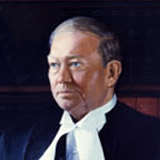
Hon. John Fraser
Speaker of the House
Ruling Text
The Speaker:
I am now ready to rule on the question of privilege raised by the honourable Minister of Consumer and Corporate Affairs on Thursday, May 21.
I have studied quite carefully the question which the honourable Member for Vancouver—Kingsway asked and about which the Minister complained, as well as the exchange which then followed. I am grateful to all honourable Members who took part in the discussion, because they dealt with points which go beyond the narrow limits of a definite issue, points which interest us all considerably and which I shall deal with in this ruling.
In a previous ruling, which I delivered on May 5, I warned against the over extended use of our absolute privilege of freedom of speech. At the time, I said:
Questions concerning conflict of interest guidelines are, of course, legitimate. Members are entitled to use facts they have been able to obtain and verify as the basis for such questions.
[2]
The question of the honourable Member for Vancouver—Kingsway was clearly related to conflict of interest, although he stated by way of a supplementary question that he was not suggesting that the Minister was in a conflict of interest situation. He did, however, in the course of his question, refer by name to an individual who was involved in fund raising for the honourable Member's constituency association. This led some of the honourable Members who participated in the discussion to express concern with regard to the potential for abuse of our absolute privilege of freedom of speech, particularly when individuals outside this House are referred to by name. It is not simply that such people could be slandered, with impunity, without any redress available to them, but that wrongdoing may be implied simply by making a personal reference.
The media are swift to report any matter which smacks of scandal or impropriety, and false impressions can be created, not necessarily intentionally, by reporting parliamentary questions of the kind put by the honourable Member for Vancouver—Kingsway to the honourable Minister of Consumer and Corporate Affairs.
I think I should repeat what I said before, that the absolute privilege of this place is something that is necessary for free speech. It is necessary because Members of Parliament have to be able to speak freely without fear. That, of course, is why we have this privilege and its history is clear. But we are living in a day when anything said in this place is said right across the country and that is why I have said before and why I say again that care ought to be exercised, keeping in mind that the great privilege we do have ought not to be abused.
The honourable Minister in raising his complaint, did so not only on his own behalf, but also in defence of the gentleman referred to in the question. The honourable Parliamentary Secretary to the Deputy Prime Minister (Mr. Doug Lewis) echoed this concern in referring to "the phrasing of questions which slander within the walls of the House not only the Minister but innocent people out there".
The honourable Member for Peace River (Mr. Albert Cooper) as Chairman of the Standing Committee on Elections, Privileges and Procedure, has a particular interest and concern in this fundamental area of our responsibilities and expanded on this aspect of the matter. Frankly, I appreciated his thoughtful expose of the problem, and the concern he expressed over what he described as "an evolving practice in the House of Commons of using names in here of people who are not Members of the House and, therefore, have no opportunity, no right and no chance to defend themselves." I am sure that all honourable Members would agree that we have a responsibility to protect the innocent, not only from outright slander, but from any slur directly or indirectly implied.
With the indulgence of the House, I should now like to refer to the issue of conflict of interest in the context of a Member's relationship with those who are active in fundraising on behalf of his or her constituency association. These remarks, of course, can apply to the relationship between any Member and any person in a riding association of that particular Member having to do with whatever activity might be in support of that Member.
The honourable Minister for Consumer and Corporate Affairs freely acknowledged that some Members of his riding executive were employees of oil companies. He also said:
I suggest that there are in this Chamber over 100 Members who have farmers as members of their associations but who nevertheless regularly participate in agricultural debates and vote on agricultural measures. I submit that there are at least 30 Members opposite whose association memberships include union executives, and yet they regularly participate in discussions and votes pertaining to labour matters. In no such instance would it occur to me to suggest a conflict of interest.
Those are the words of the honourable Minister during the discussion on this particular point.
The honourable Member for Cape Breton—The Sydneys (Mr. Russell MacLellan) agreed with the Minister that members of oil companies are entitled to be members of his organization. The honourable Minister of State for the Canadian Wheat Board (Hon. Charles Mayer), in what I think can be said a forceful intervention, endorsed these views and pointed out that many of the members of his own riding executive were farmers. Presumably no one would contest the propriety of the inclusion of doctors on the riding executive of the Minister of National Health and Welfare (Hon. Jake Epp), of lawyers on that of the Minister of Justice (Hon. Ray Hnatyshyn), or of women on that of the Minister of State for the Status of Women (Hon. Barbara McDougall).
Reductio ad absurdum perhaps, but I think this illustrates the point.
Before going into the question of privilege itself, I felt I had to express a few general considerations on the points connected with it. It is always useful to set guidelines and I feel that we should avoid as much as possible mentioning by name people who are unable to defend themselves in any context whatsoever against innuendos. I suggest also that in the absence of any concrete evidence, we should avoid suggesting that there might be a conflict of interest simply because a member of a county association [riding] is involved in an activity of some sort or is a member of a given profession.
I come now to the complaint of the honourable Minister of Consumer and Corporate Affairs. I have already stated that questions concerning conflict of interest guidelines are legitimate, and I did not rule out of order the question of the honourable Member for Vancouver—Kingsway. The honourable Minister, nevertheless, saw in the question an implied slur against himself and another individual named in the question. The honourable Member for Vancouver—Kingsway assured the House that he made no accusation either against the Minister or the other person. His assurance was quite unequivocal, and I must take this into account. In addition, the Minister's direct and forthright statement, and the contributions to the discussion made by other honourable Members, satisfy me that the Minister's reputation has suffered no damage and that no one is likely to question his integrity.
I, therefore, find that I cannot accord this matter precedence over other business. However, I would again remind the House that while questions concerning conflict of interest guidelines are legitimate, great care should be taken in framing them. I would particularly exhort honourable Members to avoid referring by name to persons who do not enjoy our immunities. There may, from time to time, be exceptional circumstances in which the national interest calls for the naming of an individual. Such circumstances are rare, however, and I am sure that none of us would wish to take the slightest risk of harming an innocent person.
I would, however, like to add something. As I indicated before, matters like this are giving the Chair considerable difficulty. Of course, the Chair must, when a question of privilege is taken arising out of questions which offend someone, keep in mind that the question I have to decide, on a question of privilege, is whether or not the question has reduced the capacity of the honourable Minister to do his or her duty as a Member of this place. That is the narrow question I have to face, and in this case, I have no hesitation in saying that, as a consequence of the questions and the exchange that followed, the honourable Minister's integrity is left without any question at all.
In my view, there has been no damage done to the honourable Minister. As I have said, no Minister could have made a more frank response to the alleged innuendo of the question. Free speech in this place is dependent upon order. It is very important, especially when considering the extraordinary privileges we all enjoy here, that a lot of common sense be used.
I also want to say something else. I said the other day that the Opposition has the undoubted right to ask questions and to probe, and I also said that the Opposition has the undoubted duty to do so. I do not think there is any student of parliamentary history who would quarrel with that affirmation. I intend to be very vigilant in ensuring that those rights and duties are properly protected in this place. However, if ever there is an occasion when a Member feels very strongly that something should be revealed here, then I would ask that honourable Members pursue that particular issue through a fact-finding mission of some care. If it is not required to do so in this place, then the appropriate procedure is to lay a charge and there are procedures under our rules providing for that.
In the interests of order, common sense and some concern for each other, I would ask all honourable Members to be extremely careful on these matters. I thank all honourable Members for their interventions the other day which, frankly, I found helpful.
F0128-e 33-2 1987-05-26.
[1]
Debates, May 21, 1987, pp.
6299 - 306.
[2]
Debates, May 5, 1987, p. 5766.
Edit Metadata
Holding
"There is no prima facie question of privilege as the Minister's capacity to perform his duties was not impeded, but Members are strongly cautioned against naming private citizens who cannot defend themselves in the House."
AI Summary
The Speaker ruled that a question implying a conflict of interest did not constitute a prima facie breach of privilege but cautioned Members against naming private citizens.
AI Analysis
- Outcome
- Denied
- Tone
- Educational
- Procedural Stage
- Oral Questions
- Significance
Low
High