Ruling
April 9, 1987
Televised broadcast of committee proceedings without authorization of the House; breach of the practices of the House by allowing filming of committee's proceedings by the media
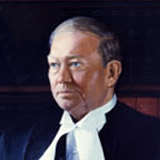
Hon. John Fraser
Speaker of the House
Ruling Text
Mr. Speaker:
First, I want to say this is very important. I thank the honourable Member for Ottawa—Vanier for his intervention and also for the various points he made on the present position. It is clear. There is no objection to the principle of television in Committees, but to a decision that shifts the authority, the power, against the rules. It is not appropriate for a committee to have televised broadcasting of its proceedings.
No one is pretending for a moment that what was done was other that a breach of the rules. There have been suggestions made that certain circumstances justify breaching rules. I remind all Members that that is a position which the Chair is sometimes very much tempted to take, but I try mightily to stay within the rules. If l did not, I am sure all honourable Members would have something to say to the Chair, because I am your servant. The rules are made by this place and, of course, they are made to be obeyed.
Especially for the public which is listening to this debate I want to reassert that we are Members of Parliament; we are law makers, we are the inheritors of a tradition of the rule of law. As a consequence, none of us ought to take lightly the breaking of rules.
It so happens that in this case the very distinguished, remarkable and much loved Coretta Scott King was before the Committee. By the way, in my view the Committee had other options. It could have sat as an ad hoc group. It could have appended the proceedings to the further proceedings when they regrouped as a full committee. Perhaps that did not occur to the Committee, but I point out that there are other ways in which this could have been approached.
It is clear that there has been a disposition among some Members of Parliament to bring television into Committees, or at least into some Committees. The honourable Member for Cochrane—Superior (Mr. Keith Penner) pointed out very well that Question Period, while at its best is the finest accountability session in any free country, is not all of Parliament. I was pleased to hear him point out the incredible amount of work that goes on in Committees. I am glad it has been said and repeated by Members, because as Speaker I often have to remind the public that when this place is not packed after Question Period it is because Members are at Committees, of which there are 30 or 40 sitting at any given time including the legislative Committees.
However, remembering that we do live by the rule of law I must remind honourable Members that our rules here are the precedents of rulings set by Speakers and the Standing Orders that honourable Members have set for themselves.
I remind honourable Members that on November 6, 1980, Speaker Sauvé said on exactly this point:
After listening very carefully to the debate this afternoon, I have not been persuaded to change my opinion or to reverse the opinion of my predecessor, and I must hold the view that the televising of proceedings of standing and special Committees of the House may be authorized only by the House itself.
[4]
Some time ago, before I became Speaker, the Board of Internal Economy suggested a form of order that could be presented to the House which would cover the televising of Committees, or some Committees. But that resolution has never been put to the House. As other honourable Members have pointed out today, if it is the disposition of this place to have television in the Committees, or in some Committees, or in some circumstances, then clearly the obligation lies on Members of all Parties to put the procedural rules in place to enable this to happen. Members from all Parties were at the committee today and all, quite frankly, have stated that they did want television for that proceeding. I can understand the reasons for that.
The honourable Member for Ottawa—Vanier, as he said at the beginning, has raised this matter before and it is not because he is against television in committee-which I understand-but because he has, I believe, a very appropriate regard for the fact that we make rules and we must live by them.
There has been some suggestion that perhaps this is a question of privilege. I do not think that it is in the interest of Members for me to really inquire very far in that direction. I think that enough has been said. I believe there is no question that what was done was against the rules, what was done could have been done in another way, and if it is to be done again it is up to honourable Members to make sure that it is done lawfully.
F0911-e 33-2 1987-04-09.
[1]
Debates, April 9, 1987, pp. 5011-2.
[2]
Debates, October 28, 1986, pp. 822-5.
[3]
Debates, April 9, 1987, pp. 5012-6.
[4]
Debates, November 6, 1980, pp. 4531-2.
Edit Metadata
Holding
"The televising of proceedings of standing and special committees may be authorized only by the House itself; committees do not have the authority to make this decision on their own."
AI Summary
The Speaker ruled that a committee breached House rules by televising its proceedings without prior authorization from the House itself.
AI Analysis
- Outcome
- Sustained
- Tone
- Educational
- Procedural Stage
- Routine Proceedings
- Significance
Low
High