Point of Order
December 11, 1986
Presenting Petitions: discrepancy between wording of petition and Members' statements upon presentation of petition
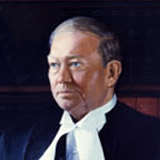
Hon. John Fraser
Speaker of the House
Ruling Text
The Speaker:
This is my ruling as a consequence of an intervention by the honourable member for Victoria on November 6, 1986, who rose on a point of order to object to the remarks of the honourable member for Windsor—Walkerville on presenting a petition. The honourable member for Victoria alleged that the honourable member for Windsor—Walkerville had gone far beyond the content of the petition, thereby misleading the House and misrepresenting the petitioners. The honourable Parliamentary Secretary to the Deputy Prime Minister and President of the Privy Council made the same allegations about the petitions presented by the honourable member for Spadina, the honourable member for Winnipeg North Centre, as well as the honourable member for Comox—Powell River.
The Chair heard arguments from several members on both sides of the House, including the honourable members for Windsor—Walkerville and Winnipeg North Centre, who counterargued that their remarks were merely an attempt to paraphrase the contents of the petitions.
First, let me remind the House that since February 24, 1986, the rules regarding the presentation of petitions have changed considerably. The major change is that members are now required to obtain certification from the Clerk of Petitions that their petitions meet the requirements of our Standing Orders and of our practices.
On presenting their petitions members are permitted to give a brief summary of the content of the petition and, when members have not been brief, my predecessors and myself have not hesitated to call members to order and insist that they shorten their remarks. Members have been consistently reminded to keep their remarks short and pertinent. I refer honourable members to such interventions by Speaker Francis on January 24, 1984, as reported at page 702 of Hansard, and by Speaker Bosley on November 5, 1985, as reported at page 8376 of Hansard. I will spare the House all such references for they are too numerous to list here. There has been some indication that there has been, and perhaps continues to be, a problem.
May I also remind the House that, as reported in Hansard at page 1131 on November 6, [1986] the Chair intervened while the honourable member for Windsor—Walkerville was presenting his petition, particularly when he used the words "American blackmail". In my opinion he was going beyond the thrust of the petition and entering into debate about a matter for which he obviously had strong feelings.
The issue of whether some members have "unwittingly misled the House and misrepresented petitioners" is a more difficult one. The honourable member for Victoria has not charged that any member has intentionally misled the House. His complaint is that the language used exceeds the language of the petitioners. As I have pointed out, the Chair interrupted the honourable member for Windsor—Walkerville on exactly this point.
I can assure the House that I will continue to be diligent and will remind honourable members that they are to describe only the substance of the petitions when representing them to this House. I would like to thank especially the honourable member for Victoria for bringing this matter to the attention of the Chair and the chamber.
F0327-e 33-2 1986-12-11.
[1]
Debates, November 6, 1986, p. 1131.
[2]
Debates, November 6, 1986, pp. 1147-51.
Edit Metadata
Holding
"Members presenting petitions must confine their remarks to a brief and pertinent summary of the petition's content and are not permitted to enter into debate on the matter."
AI Summary
The Speaker ruled that members must strictly adhere to summarizing the content of petitions and not use their presentation to enter into debate.
AI Analysis
- Outcome
- Sustained
- Tone
- Educational
- Procedural Stage
- Routine Proceedings
- Significance
Low
High